

Le Crozet
Auvergne-Rhône-Alpes, Loire
ENTER
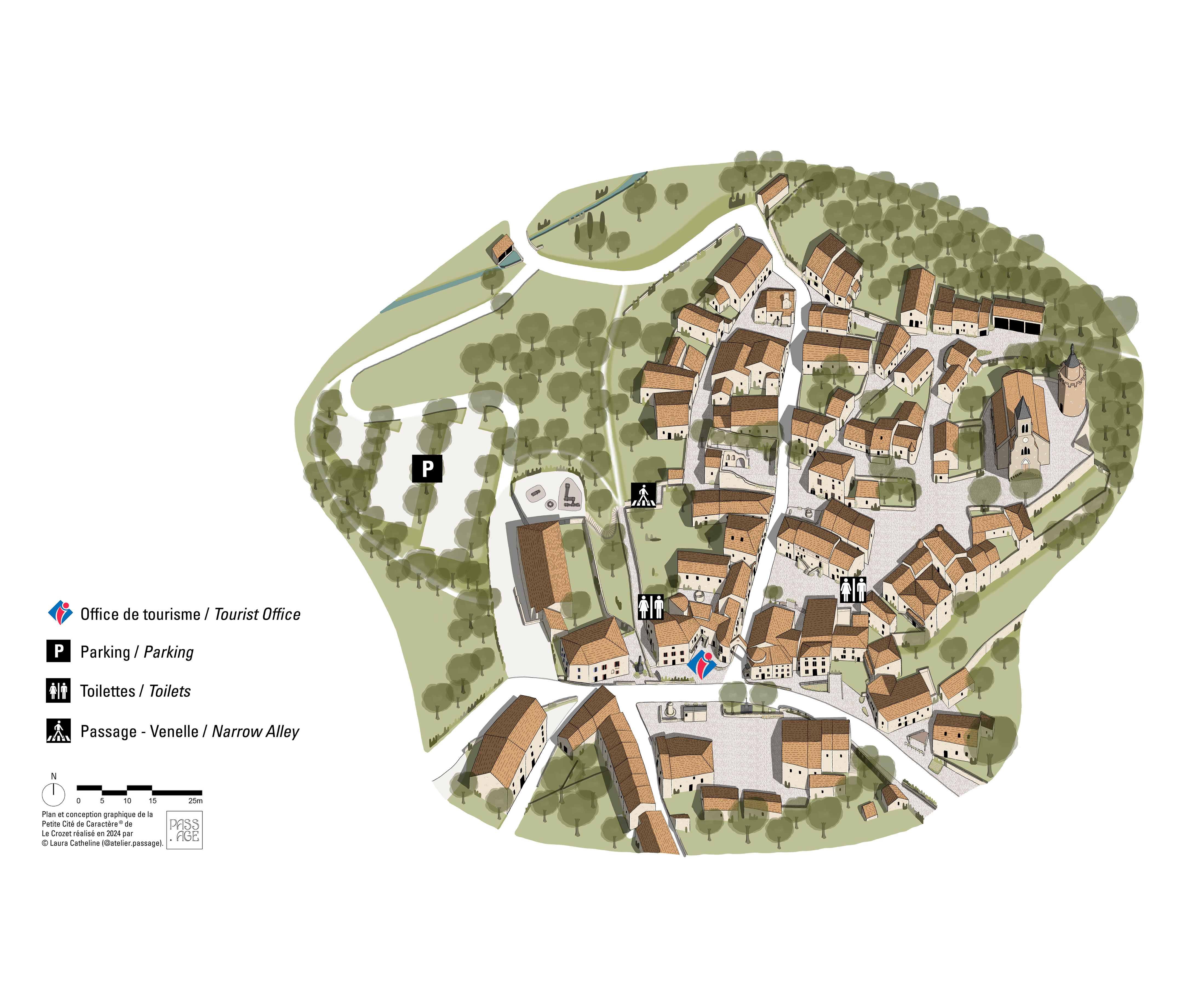
Le Crozet welcomes you and invites you to cross its fortifications and enter this small town of character. A former stronghold, you'll discover its cobbled streets, its history through the magnificent Renaissance mansions that bring grace and fantasy to these dwellings made of wood, stone and glazed brick. Don't hesitate to climb to the top of the Donjon to admire the impressive and unique viewpoint, demonstrating that LE CROZET, a small town of character, dominates from every point of view.
THE GREAT GATE
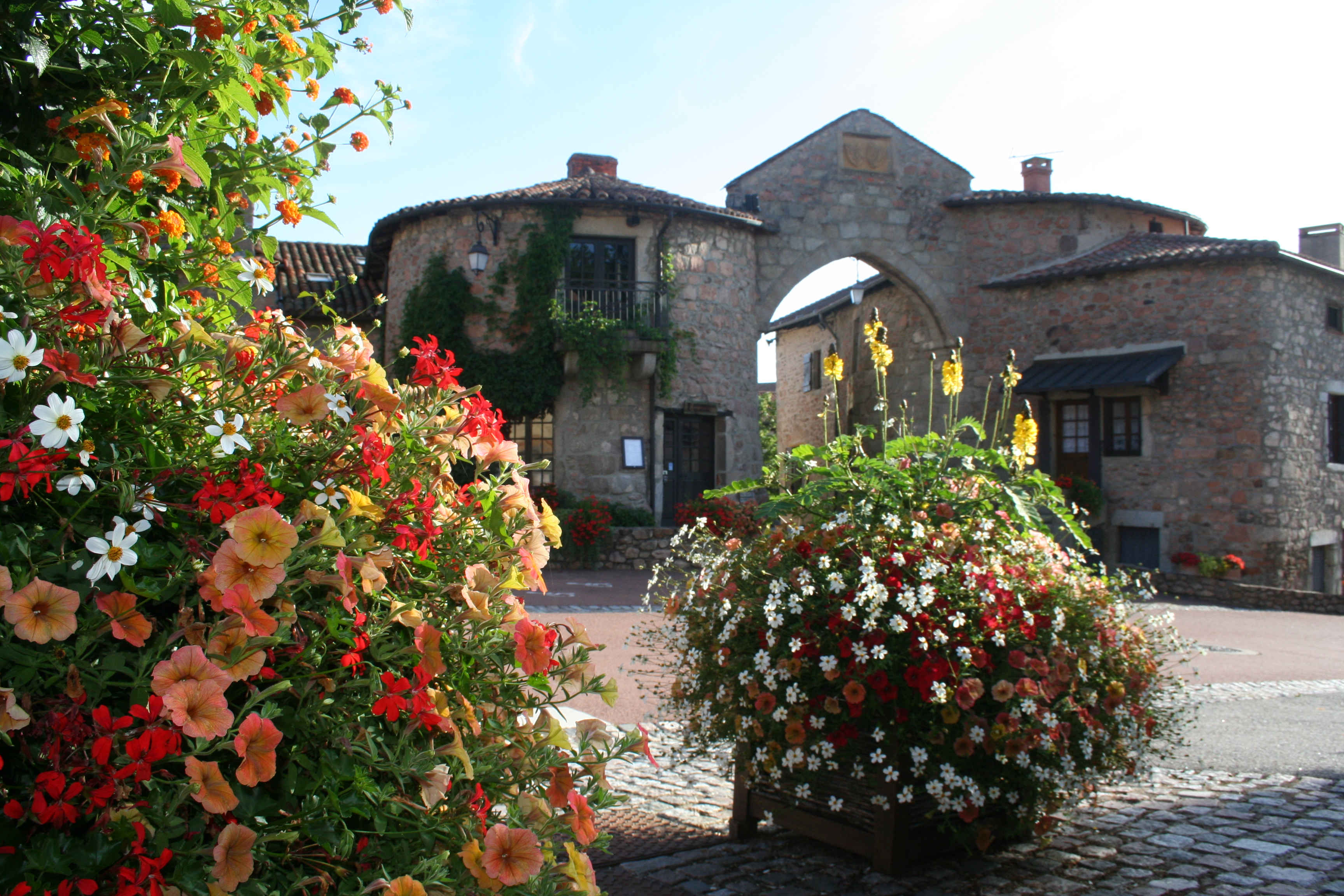
The gate you enter the village by is the main one of two gates that used to stand on both sides of Rue de la Grande Charrière. This gate used to give entrance to the village via a drawbridge. Nowhere else are the ramparts so thick, with walls 2.5 metres thick. The open pointed arch features the coats of arms of the Dukes of Bourbon and the Counts of Forez, created by sculptor Théophile THEVENET.
THE WOODEN HOUSE CONNETABLE
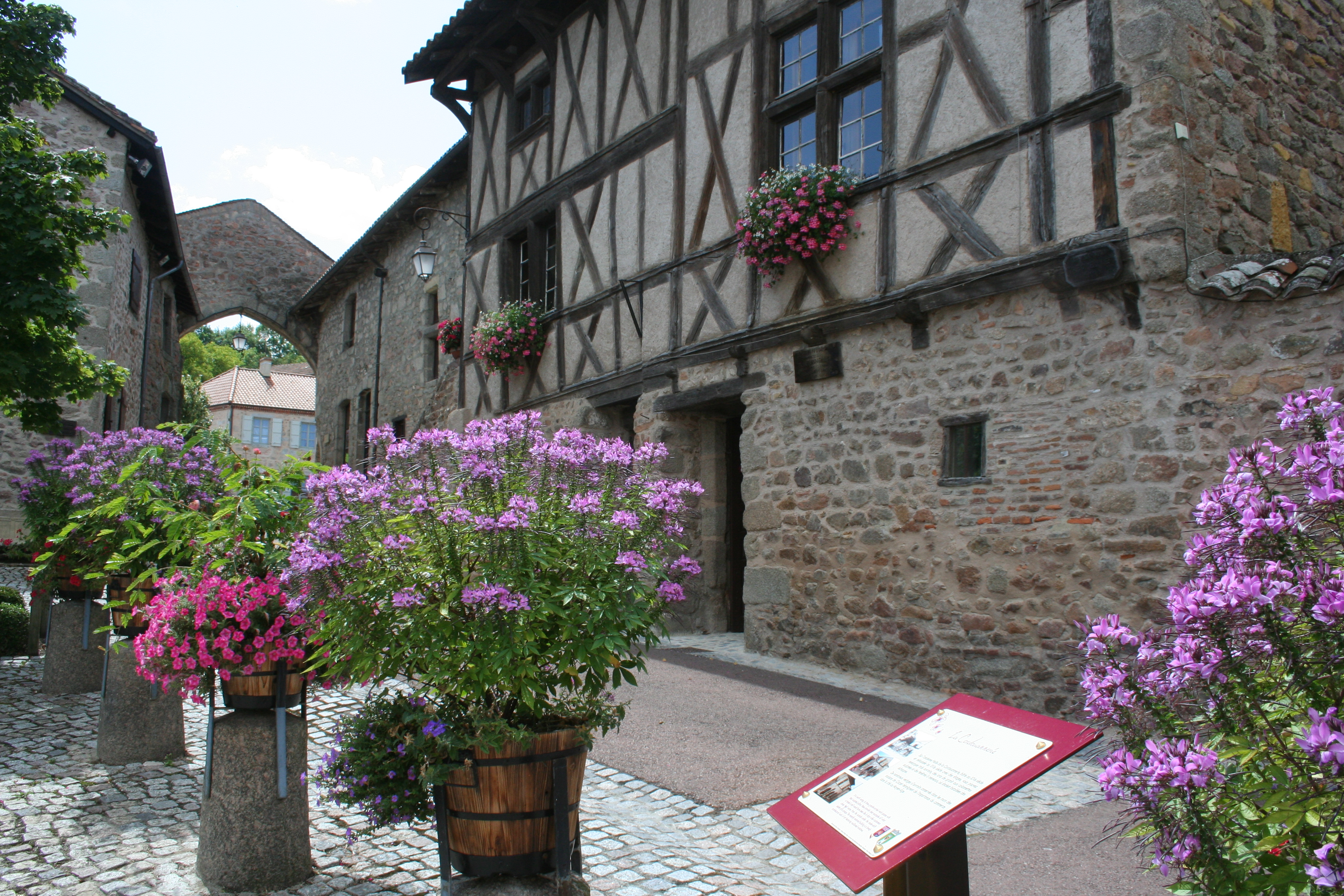
This half-timbered house dates back to the 13th century and was home to the famous expert on Greek culture, Mario Meunier. In 1982, the Mairie (Town Hall) took up residence here and the place resumed its initial purpose because in the Middle Ages it used to be the Prévost's house.
PLACE MARIO MEUNIER
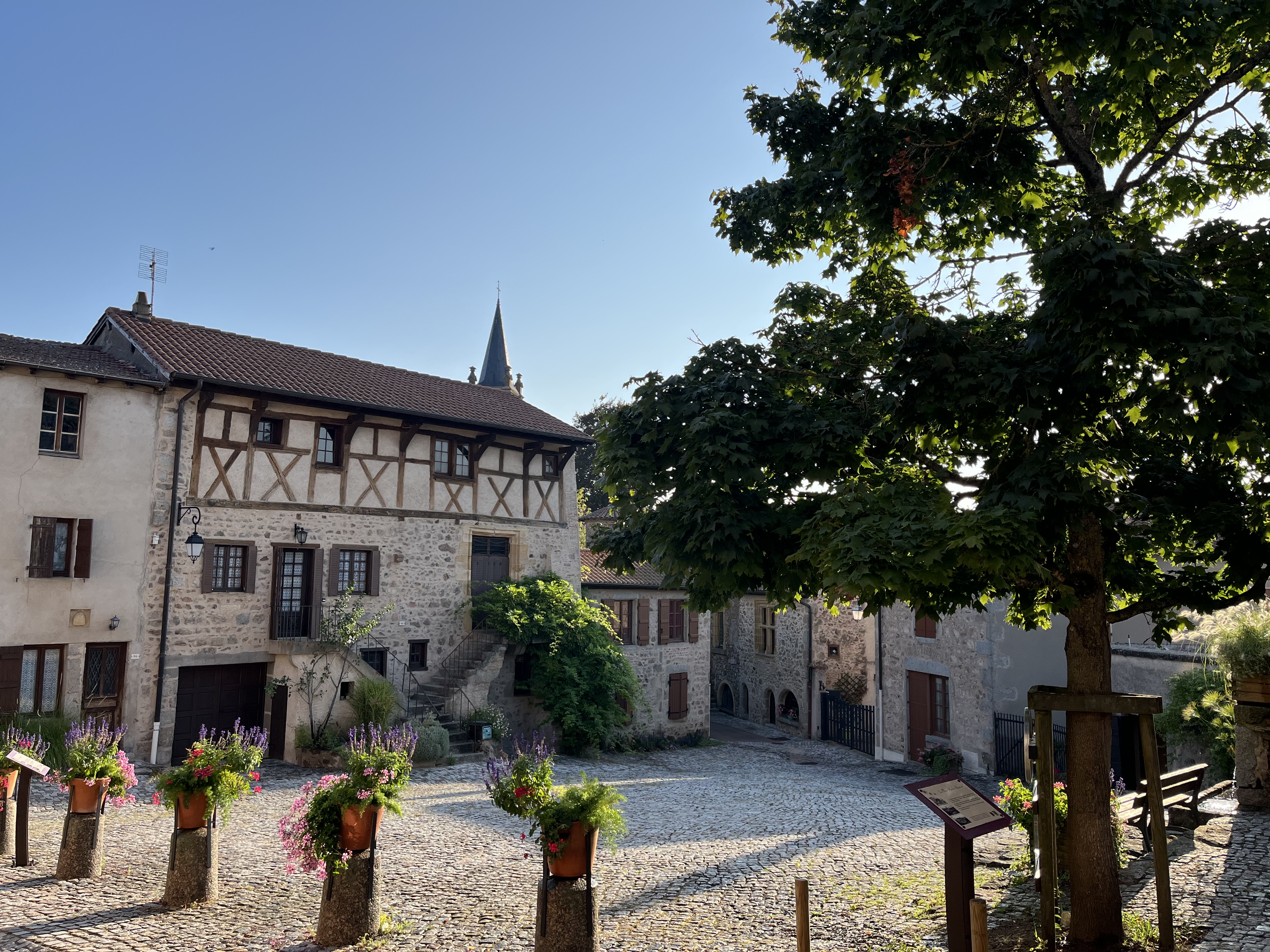
n the beginning it must have been quite modest, but due to the demolition of certain houses of no particular value, it has become the heart of the village. Today, it has a hand in showcasing some of the houses renovated round and about. It has also been a venue for vintage vehicles since the village was awarded the label.
THE BEAK TOWER
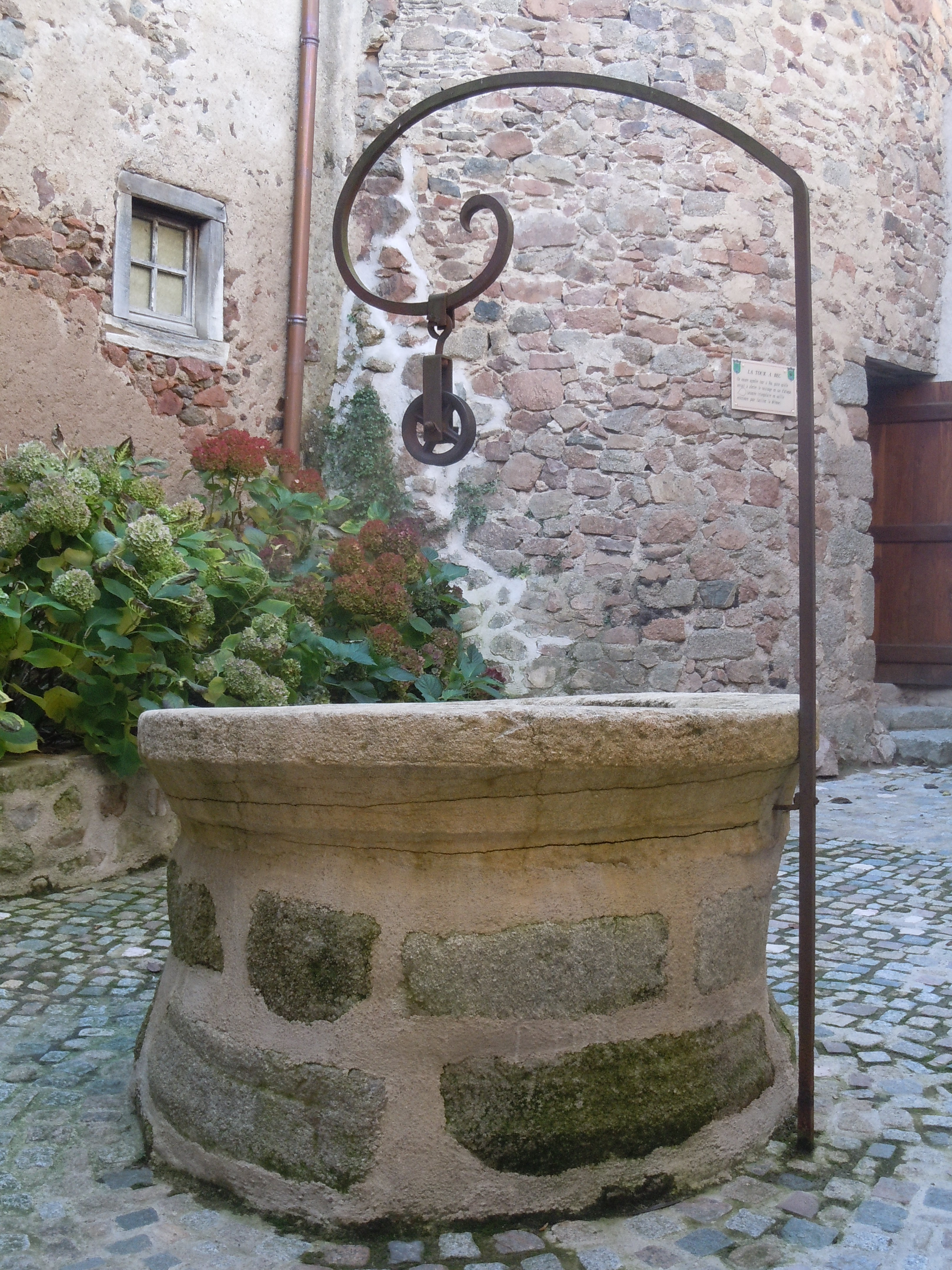
ogether with the Grande Porte (Main Gate), it is all that remains of the 12th century walls and its unusual shape is unique in the Roanne area. This shape helped it to withstand showers of projectiles more effectively during an attack and to afford archers better lines of fire. In the middle of the courtyard, you can see an old well with the stone forming its edge in one piece.
THE OLD CORDOUANNERIE HALL
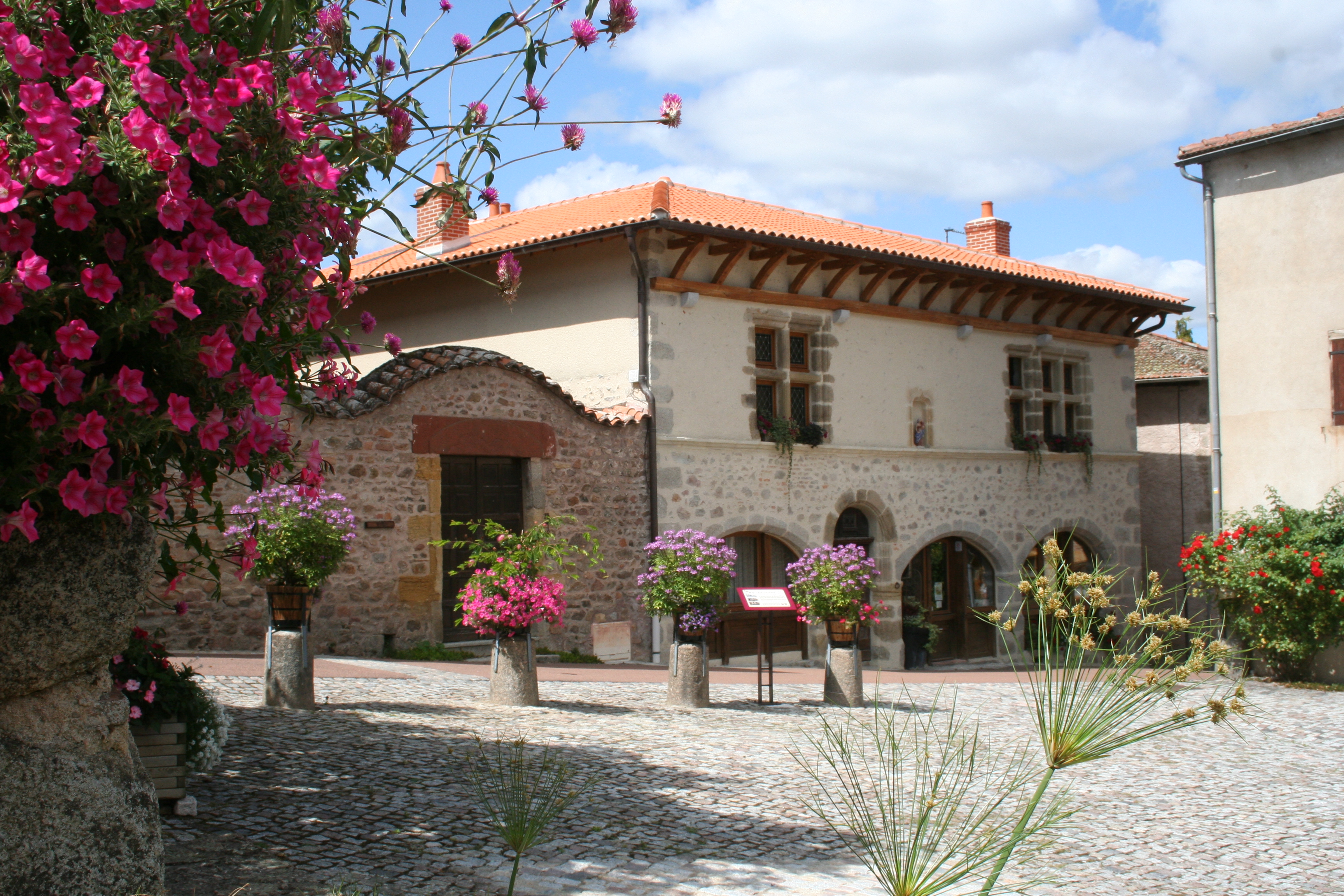
It is worth noting its three granite-arched work spaces with their sculpted pillars; these provide clear examples of what a trader's stall would have been like in days when customers chose their wares from the outside under the make-shift shelter of a canopy. The recently restored building is a lovely architectural work of art featuring mullioned windows.
THE HOUSE DAUPHIN
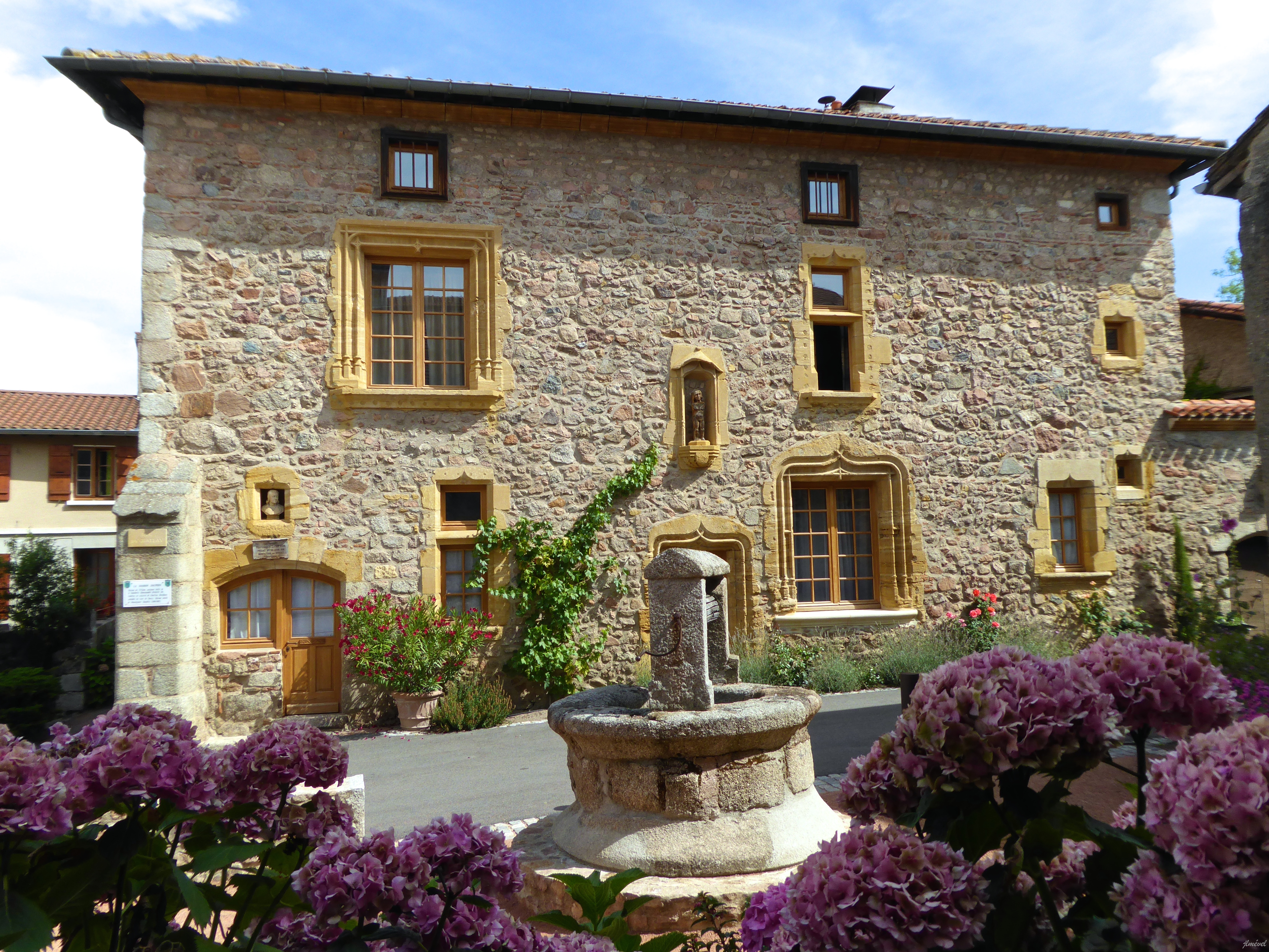
This was formerly the Halle de la Boucherie (Butchers’ Market) with its workrooms on the west-facing side. It was built in the late 15th century as can be seen from the window mouldings. This beautifully restored building is a wonderful example of the style of architecture that flourished in the reign of Louis XII.
THE OLD CHURCH
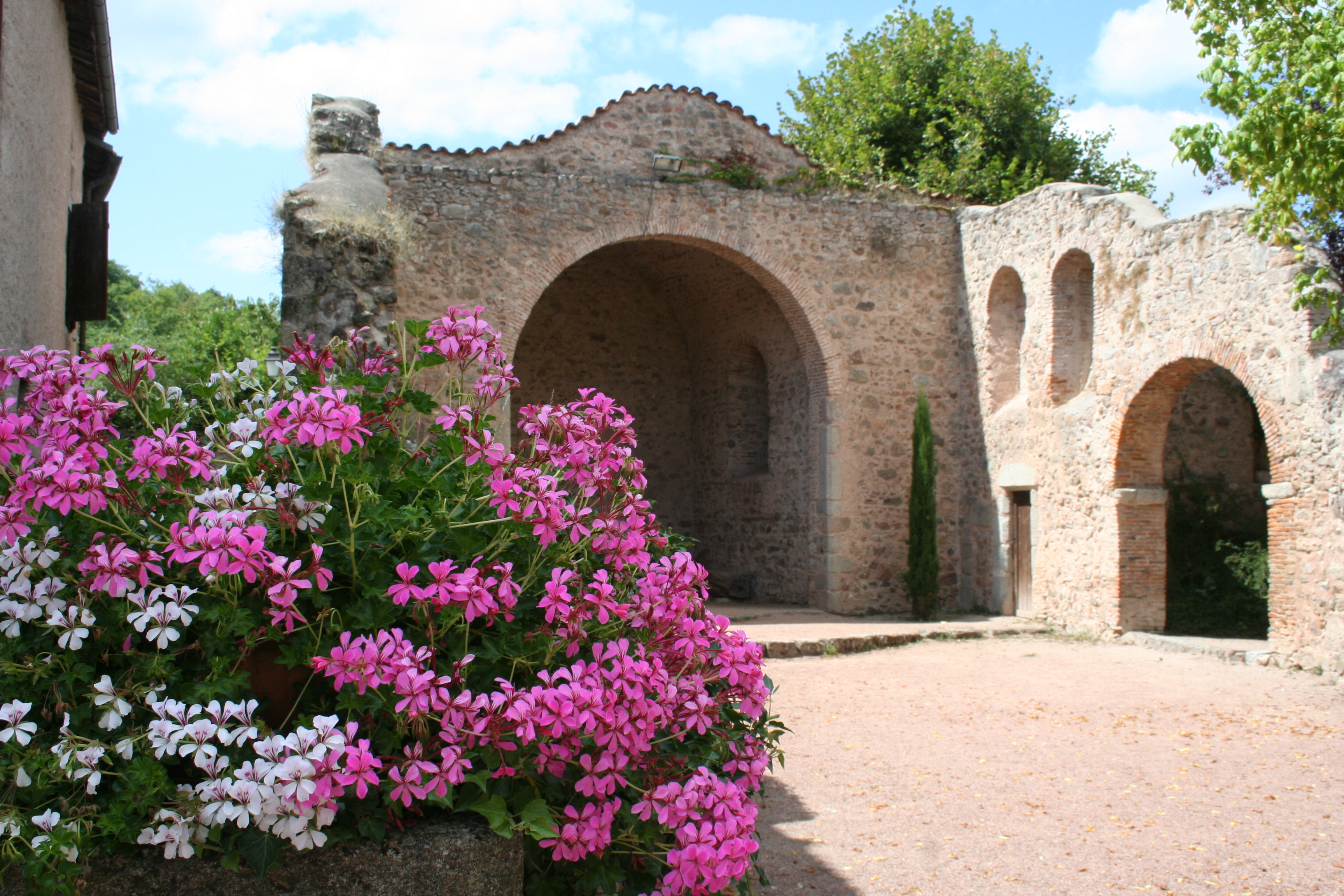
Initially built in 1180, Owned by the Association of Friends of Le Vieux Crozet, the Vieille Église (Old Church) or “Former Chapel of the Viscounts of Mâcon” was the first church to be built in Le Crozet. It was seriously damaged in the 16th century during the Wars of Religion and eventually collapsed in the winter of 1978. Today, this place, along with so many others in the village, is a showcase for the talent of the village's artisans, notably the glassmakers.
THE SUNDIAL HOUSE
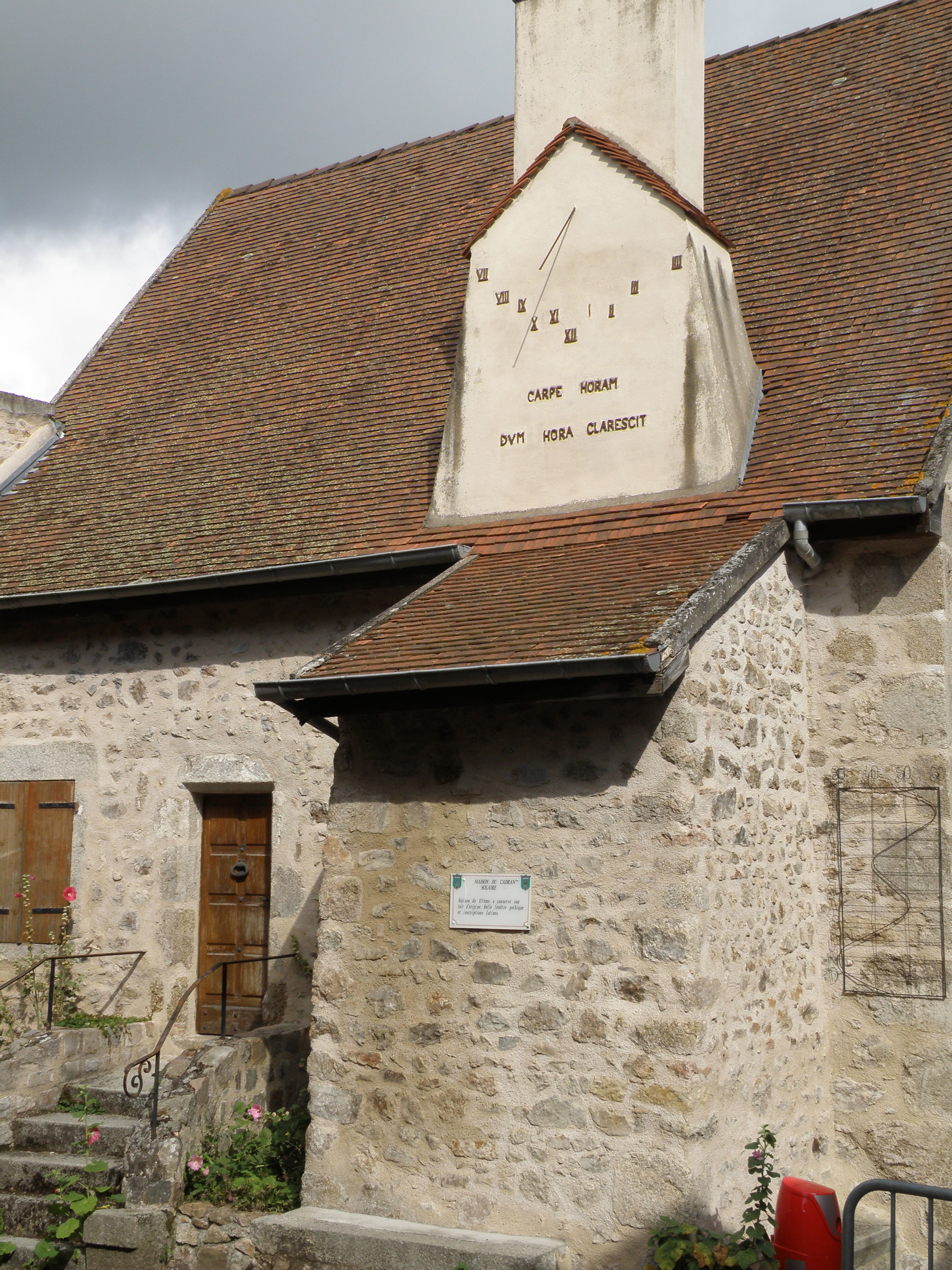
Use the graph of equation of time to correct the sundial reading: select the month on the Yaxis and add the correction obtained in minutes on the X-axis. Be careful not to forget to add the winter (+ 1 hour) or summer (+ 2 hours) time correction too.
THE WASH HOUSE
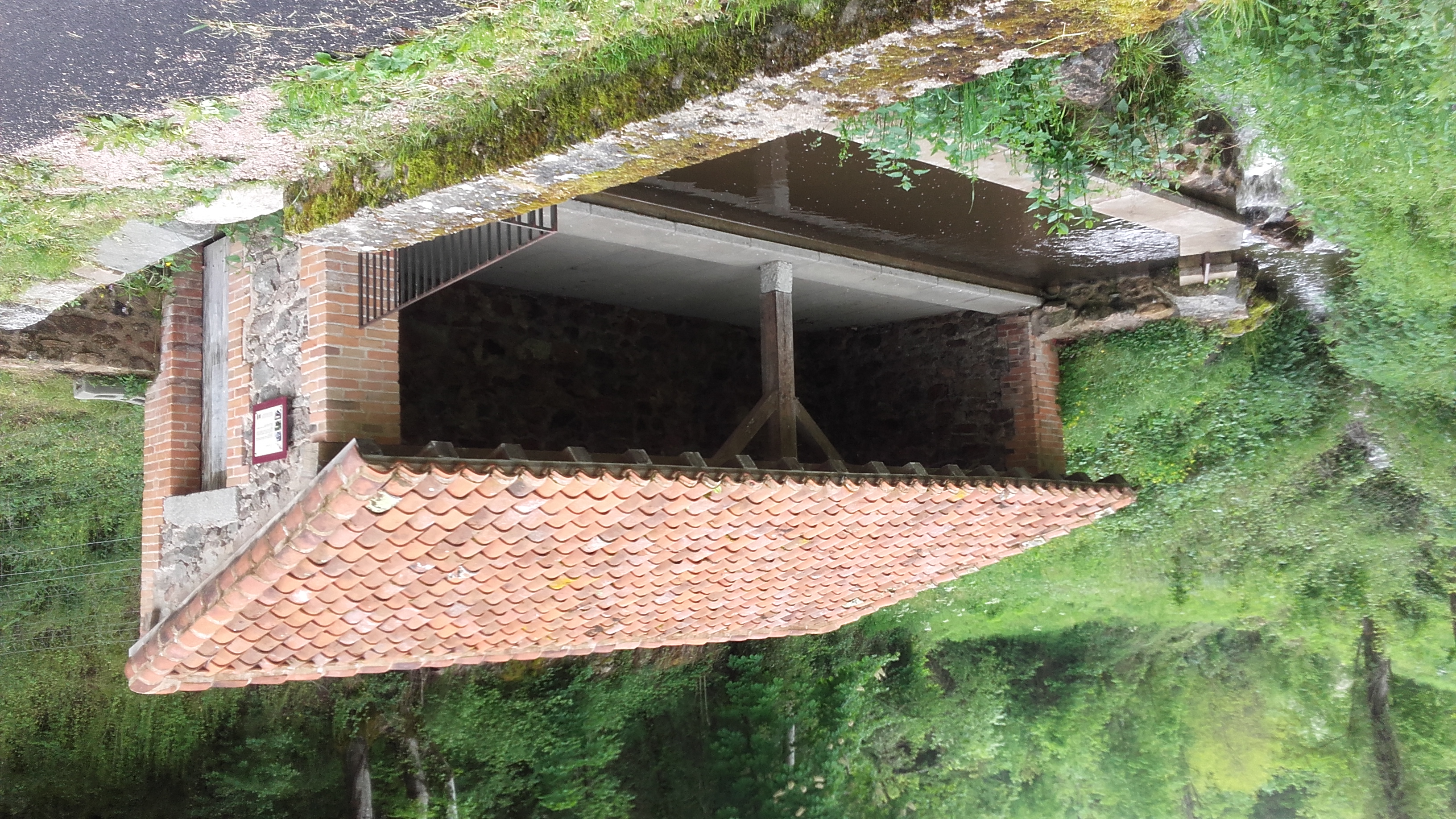
In the middle of the last century, the main purpose of this natural spring water-sourced basin was to rinse laundry after it had been washed. Renovated in 2016, this building is an integral part of Le Crozet’s common heritage. A place of calm, silence and greenery, with a large picnic area by the river.
THE DUNGEON
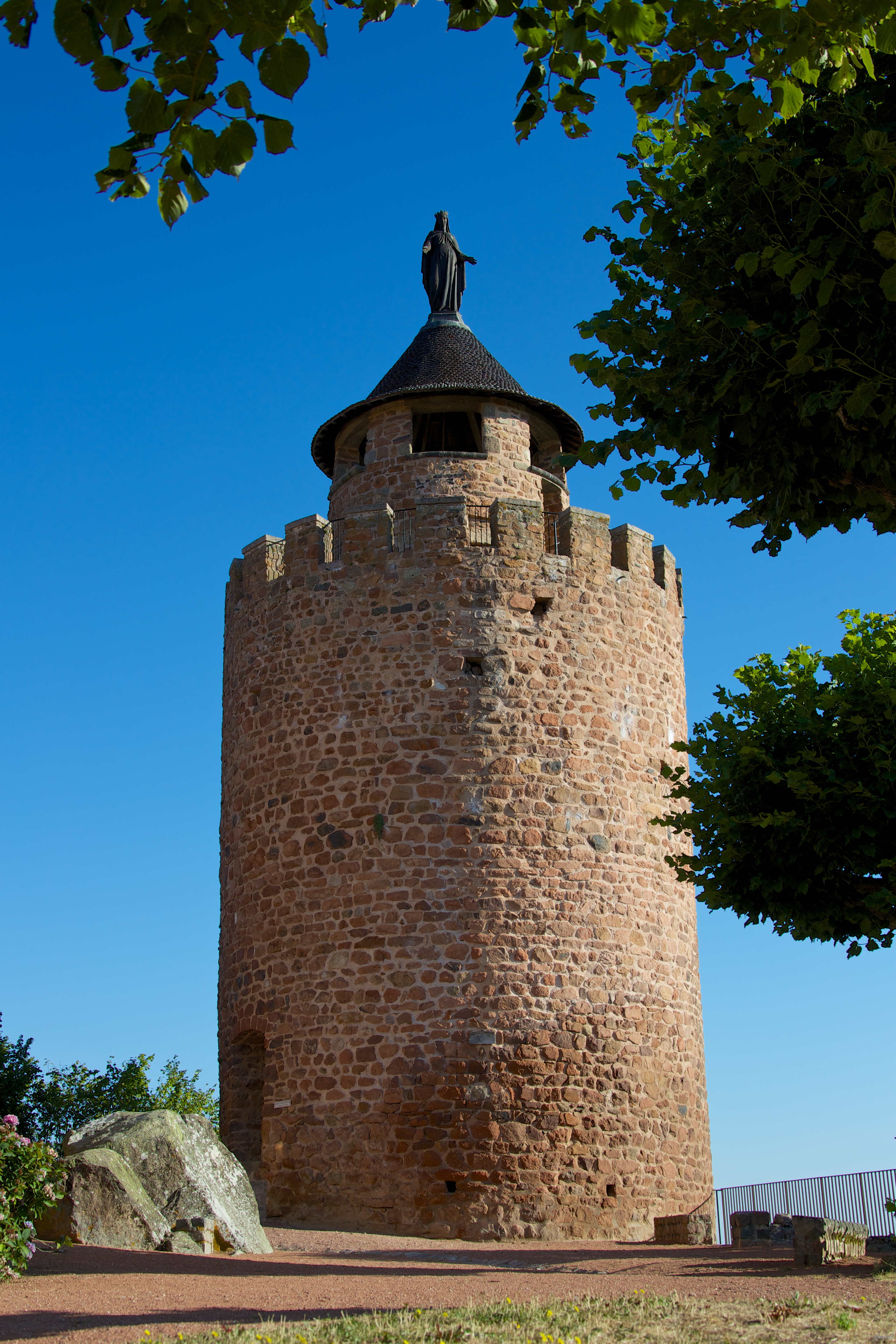
You are in front of one of the most outstanding viewpoints in Le Crozet overlooking the surrounding area. Cast your eye over the Monts du Morvan on your left round to the Monts du Lyonnais on your right. From this viewpoint you can also admire La Pacaudière, the village in the foreground, and the multi-coloured tiled roof of its Petit Louvre.
THE TUNNEL TRAGEDY
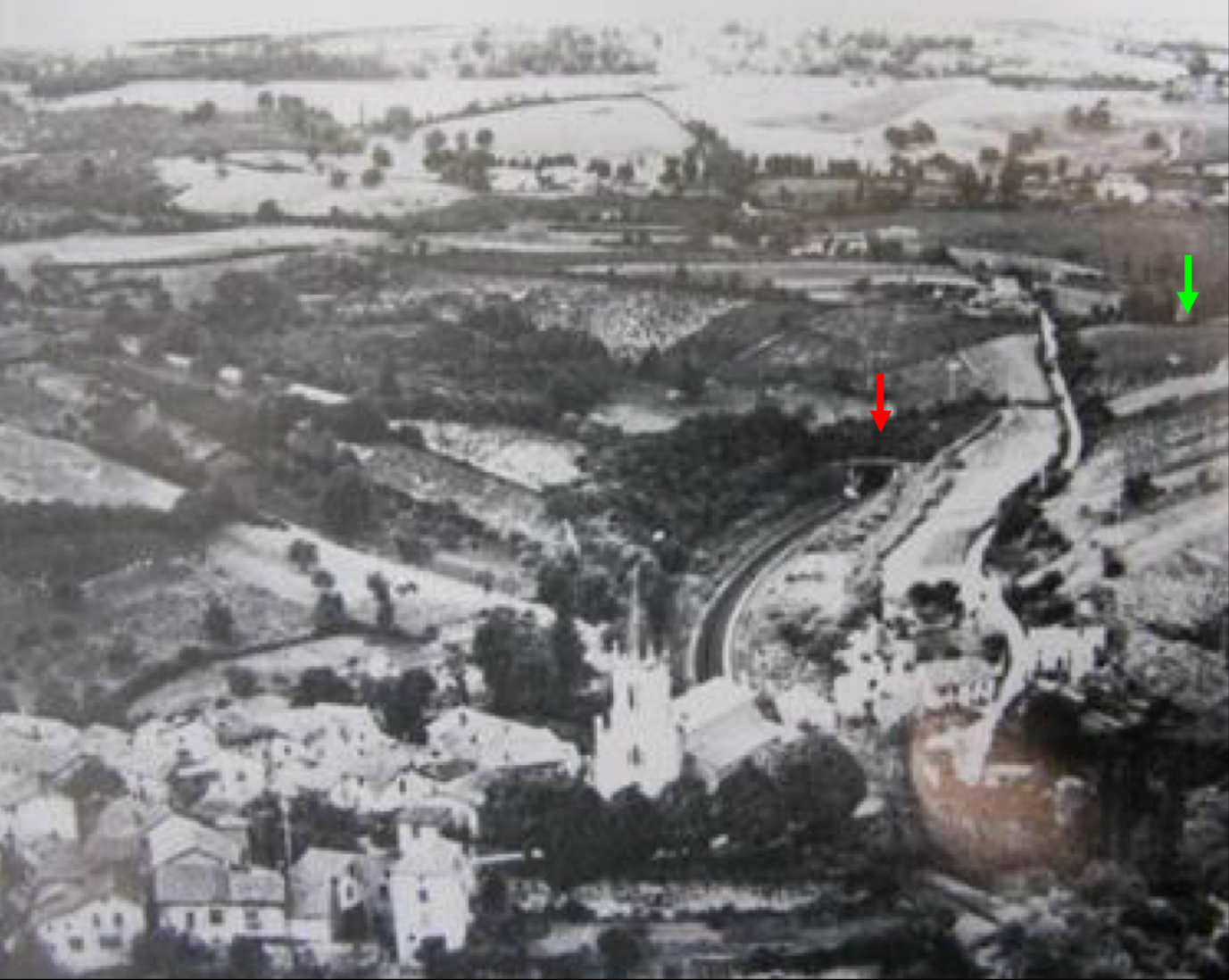
On Saturday March 20, 1971, at 4:15 a.m., the terrible Crozet tunnel accident took place, evoking for those who lived through it both the agonizing tragedy of the gigantic, uncontrollable fire after two trains collided head-on under the tunnel, and the three deaths this catastrophe caused, but also the courage and obstinacy of all the men who worked to transform this cursed tunnel into an open cut. Nowadays, who could have imagined that this was the site of a tunnel built 150 years ago after three years of hard work.
THE NEW CHURCH
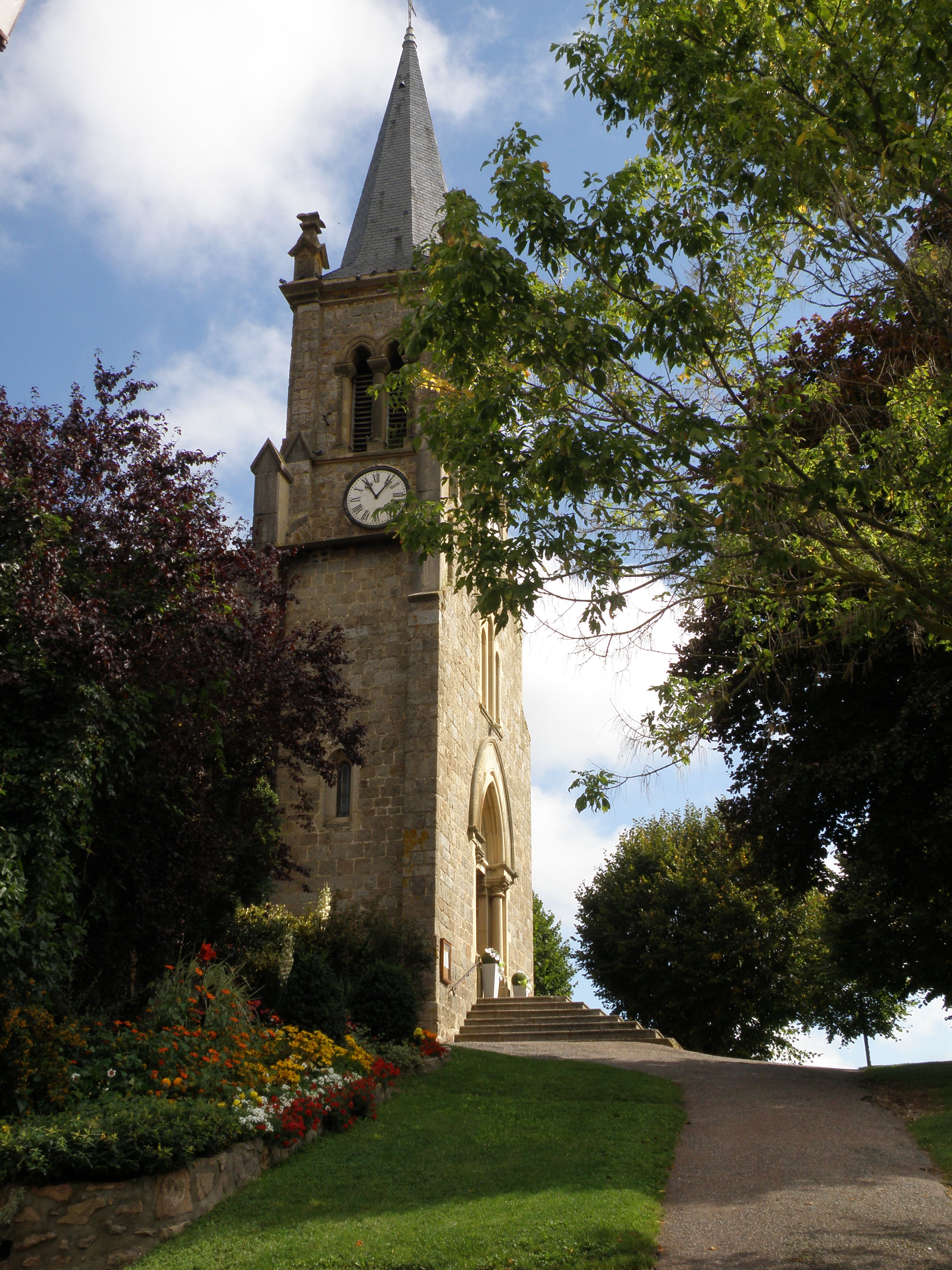
You are at the foot of the Donjon de Crozet (Crozet Keep) built in the 12th century by the Viscounts of Mâcon at the same time as the castle. To your left, the new Church was built in 1862 on the site of the former castle. It was constructed thanks to Monseigneur Dauphin, benefactor of this parish. His tomb can be found in the left-hand aisle of the church.
THE MUSEUM
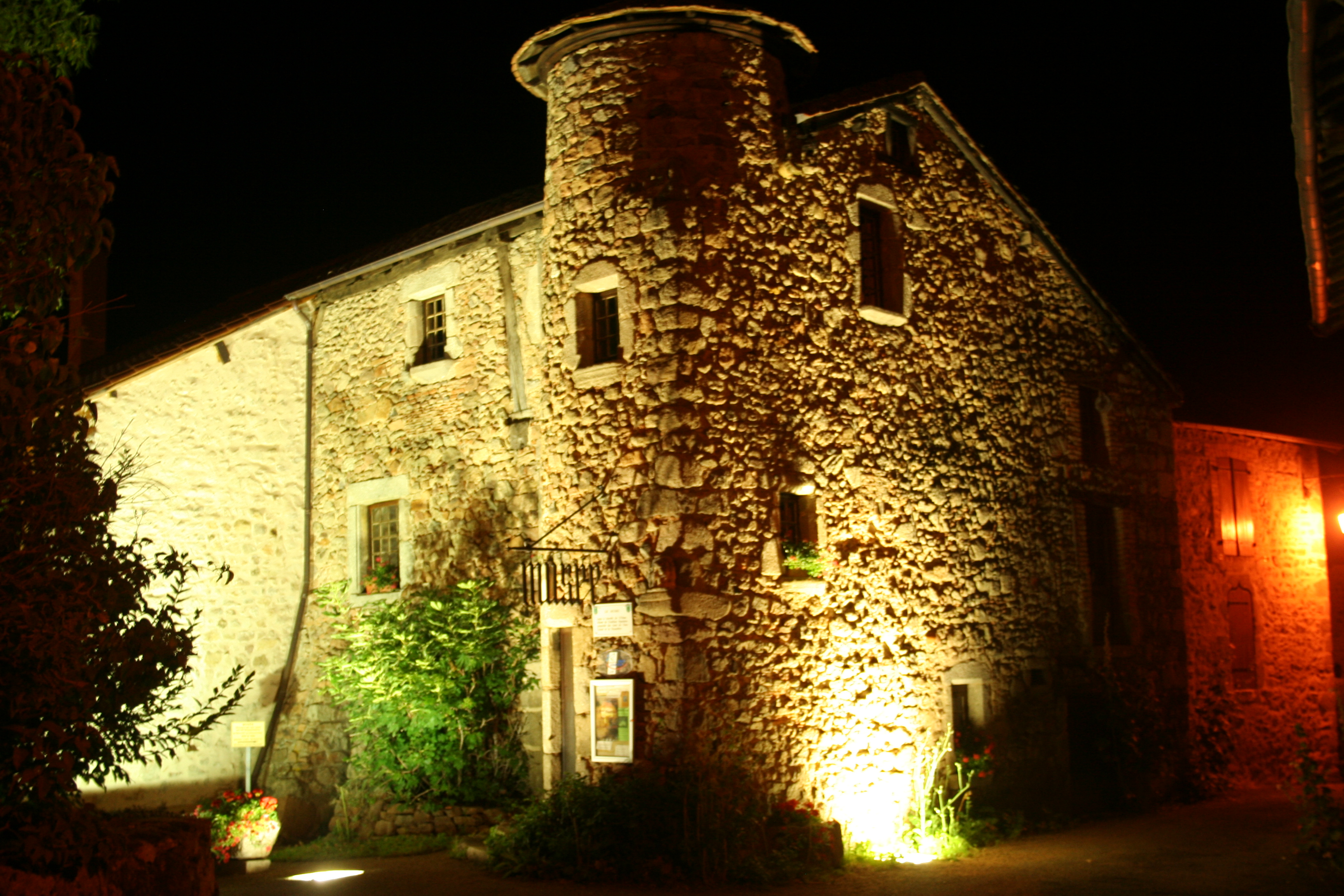
Property of the Association of Friends of Le Vieux Crozet and La Pacaudière. This house dating back to the 15th century, with an adjoining small corner turret housing a staircase, has been home to Le Crozet’s Musée des Arts et Traditions Populaires (Folklore Museum) since 1959.
THE PAPON HOUSE
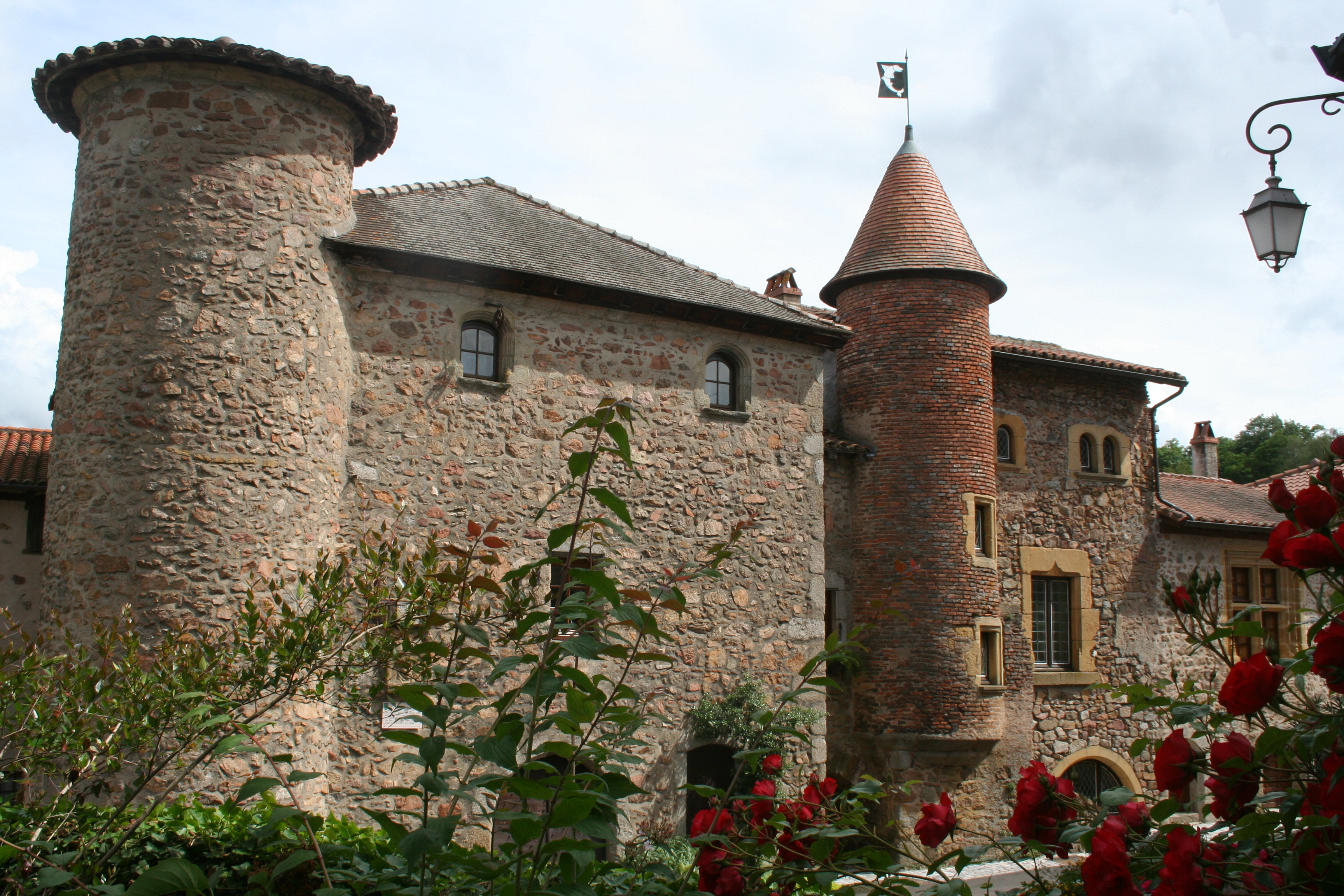
In front of you is the birthplace of the famous legal advisor hailing from the Forez: Jean Papon (1500-1590), who finished building the house begun in the 15th century by his father Pierre Papon, notary in Le Crozet. The Italian Renaissance style main façade, featuring multicoloured bricks, is decorated with medallions and bas-reliefs with engravings in Latin that reflect Jean Papon's personality.
THE FORMER PAPON KITCHENS
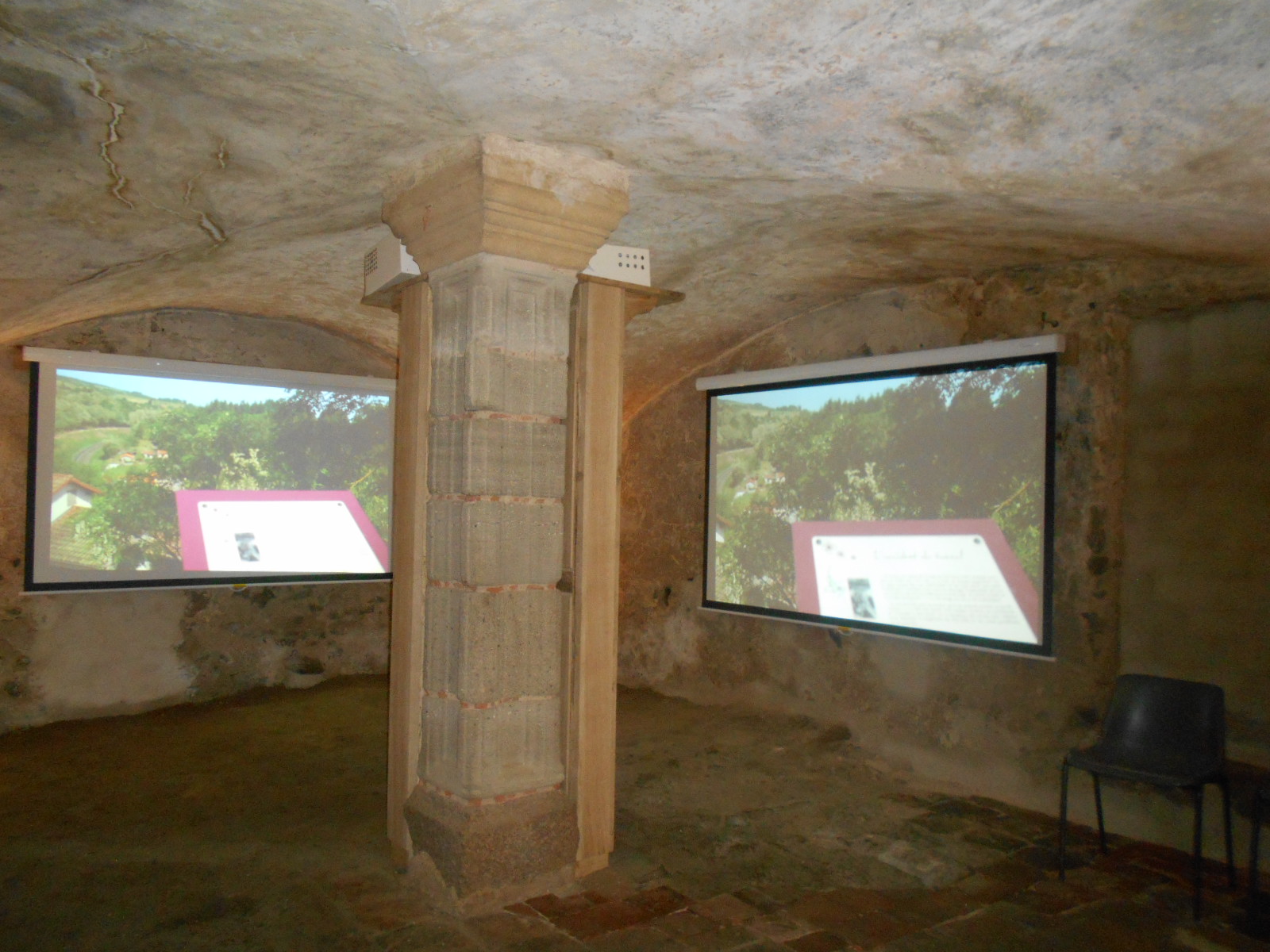
In the recessed inner courtyard of the Papon house, you enter the former kitchens of the famous Papon house. This historic monument has been restored in keeping with the spirit of its heritage. Accessible to all, a projection area has been set up where a 26-minute documentary retracing the history of the village, told by local residents, is shown on a loop.
PHILIPPE MONNET SCHOOL
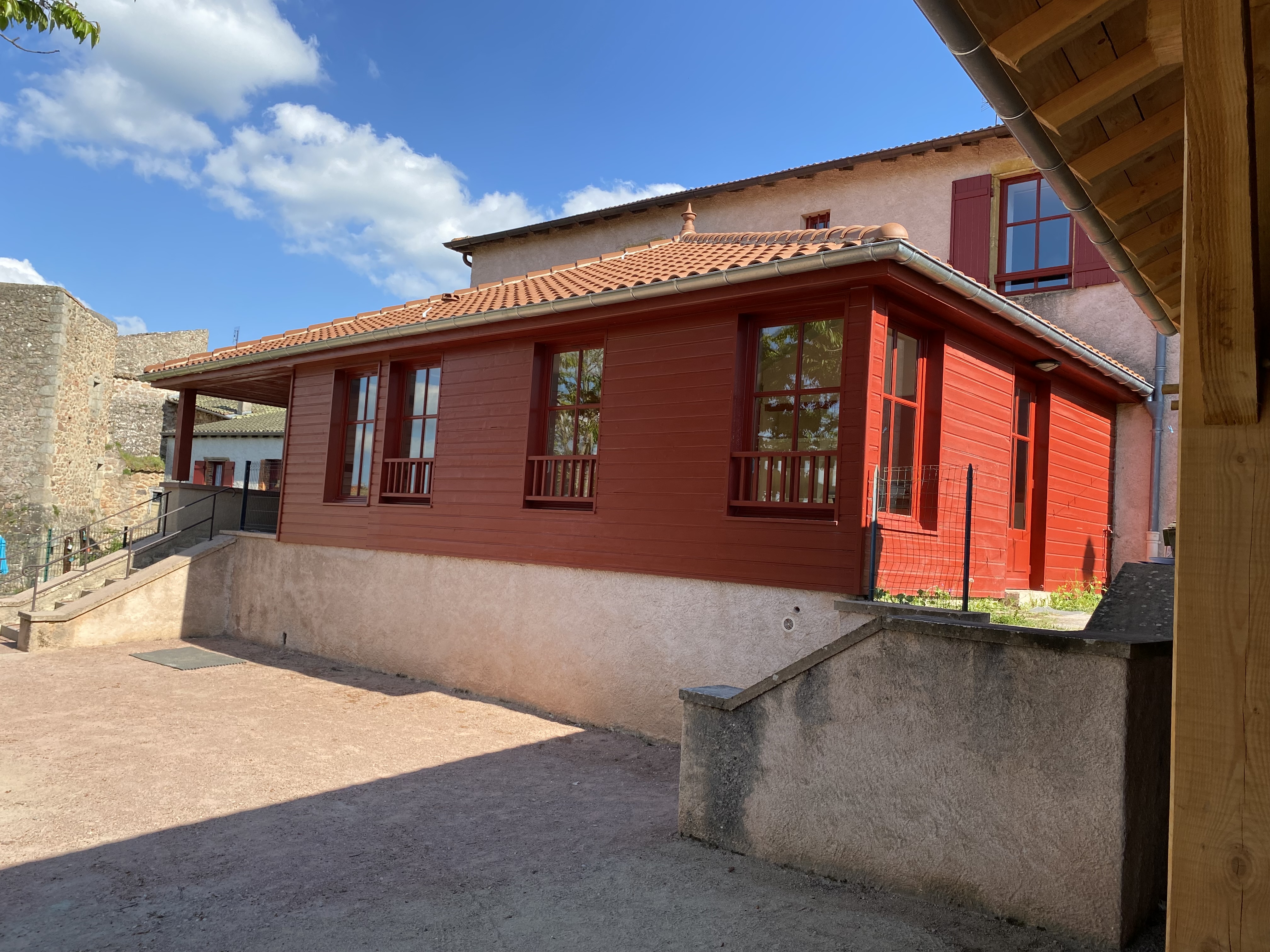
As small as LE CROZET may be as a small village of character, it has been determined to preserve its local school, which is the pride of the village. A single class, from nursery to 2nd grade, means no less than 8 levels with an exceptional French educational model, in a Philippe Monnet High Tech school. A medieval playground is accessible to all, with ample parking.
CONCLUSION
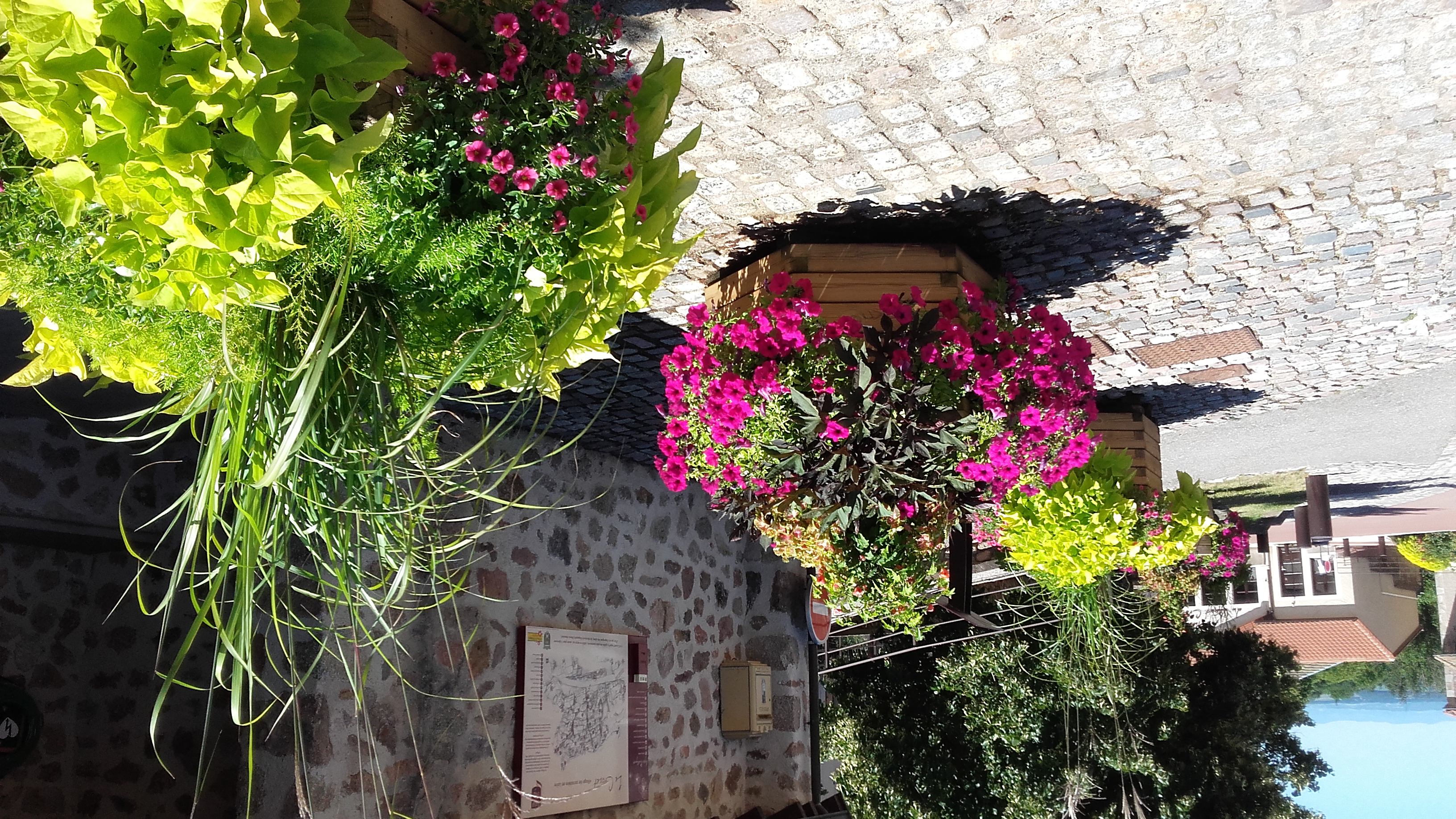
As you stroll through the town, you'll probably have appreciated the flowers and greenery, which have been awarded the Village Fleuri label for several years, guaranteeing a strong tourist appeal and an undeniable quality of life on a daily basis. At LE CROZET, your mind enjoys a feeling of sovereign peace, and you can forget the passage of time to take in the fresh air and soak up the calm and space. Once you've had your fill, we invite you to discover the small towns of character in the Auvergne Rhône-Alpes region, including our big sister nearby: the village of CHARLIEU.

Mentions légales
Ce projet de carte interactive est porté par les associations Petites Cités de Caractère® de France, Petites Cités de Caractère® en Auvergne-Rhône-Alpes et par la commune de Le Crozet, avec le soutien financier de l'Appel à Manifestation d'Intérêt "Destinations Digitales" du plan gouvernemental "Destination France" piloté par Atout France.
Le plan de la commune (visuel de fond) a été réalisé par Laura Catheline (@atelier.passage).
Les photos et capsules audios ont été produites et enregistrées par Nico Productions.
Conception et développement de la carte interactive par Tabula Rasa.



Mentions légales
Ce projet de carte interactive est porté par les associations Petites Cités de Caractère® de France, Petites Cités de Caractère® en Auvergne-Rhône-Alpes et par la commune de Le Crozet, avec le soutien financier de l'Appel à Manifestation d'Intérêt "Destinations Digitales" du plan gouvernemental "Destination France" piloté par Atout France.
Le plan de la commune (visuel de fond) a été réalisé par Laura Catheline (@atelier.passage).
Les photos et capsules audios ont été produites et enregistrées par Nico Productions.
Conception et développement de la carte interactive par Tabula Rasa.