

Marcolès
Auvergne Rhône-Alpes, Cantal
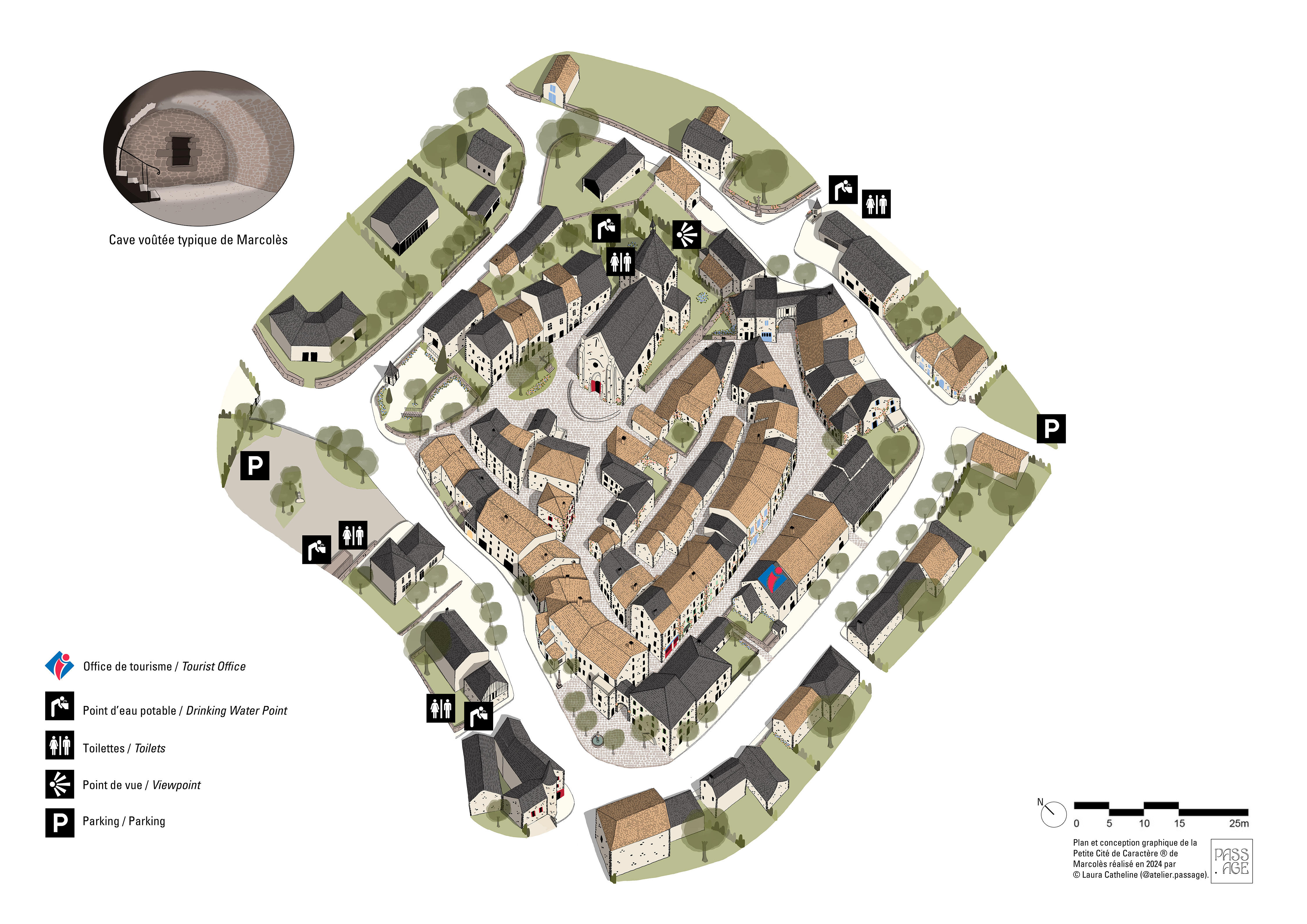
Marcolès, Petite Cité de Caractère®
Marcolès is designated Petite Cité de Caractère®. As such, it forms part of a national project aimed at promoting and protecting the architectural heritage of little towns across France. Through tourism, the initiative encourages visitors to embrace the local culture by strolling through the streets, learning about the history of the area, taking part in local events, and discovering the local way of life. In Cantal, there are several Petite Cité de Caractère® little towns to discover. The digital map will help you navigate each of them and highlight their main attractions.
Marcolès, the little town of the "carriérons"
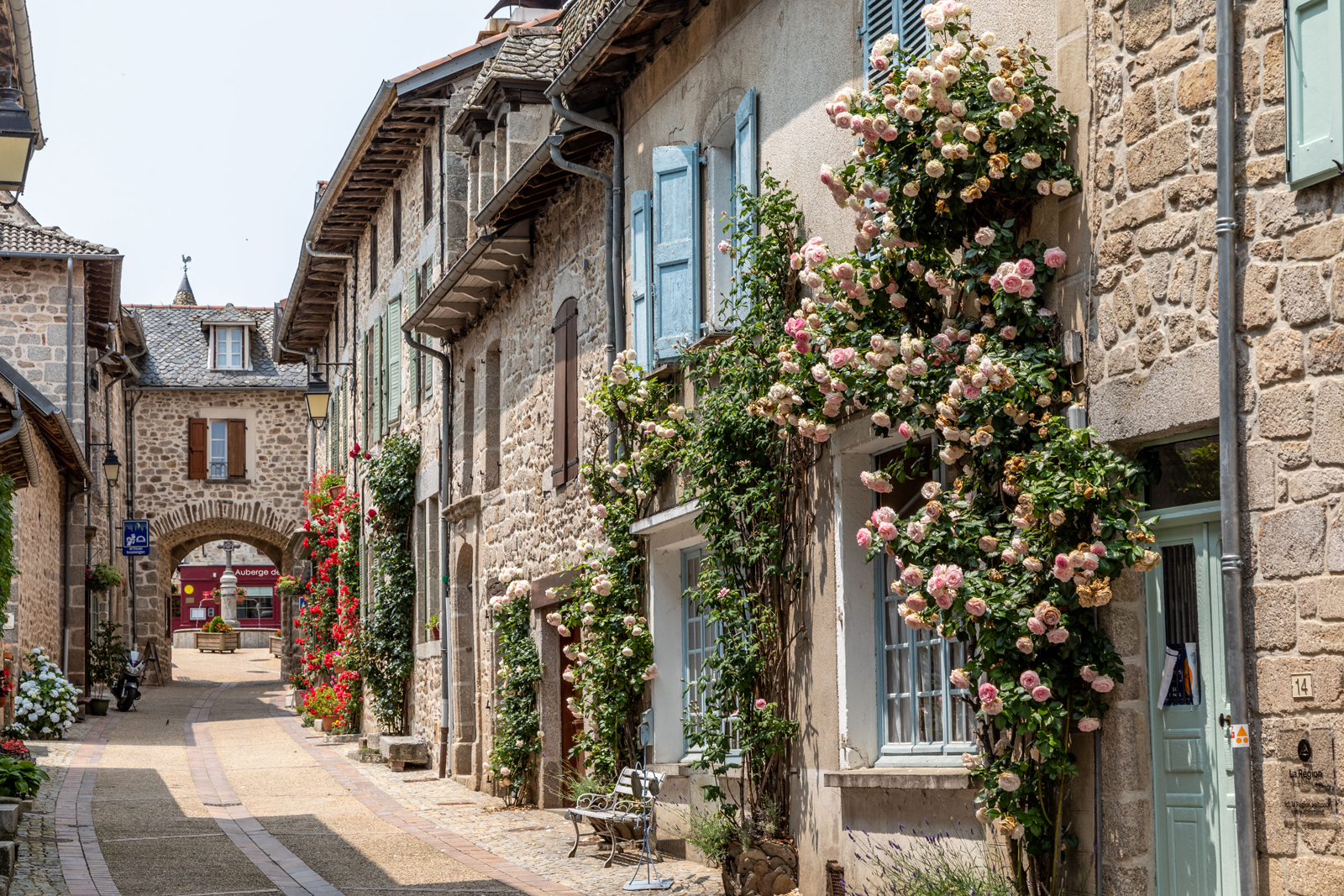
Marcolès is located in the Châtaigneraie Cantalienne, between the Volcano of Cantal and the Lot Valley. The little town is surrounded by an undulating landscape, close to the Rance Valley, an ideal place for cycling enthusiasts. Marcolès has changed over the centuries: it was fortified in the Middle Ages, then developed its commercial activities during the Renaissance, and was crippled during the Wars of Religion and the Second World War... Today, Marcolès is a little town where life is good, where several craftsmen open their doors to you. Strolling down the medieval and narrow “carriérons” (pedestrian narrow streets) in a very quiet atmosphere is a great pleasure !
Origins of Marcolès
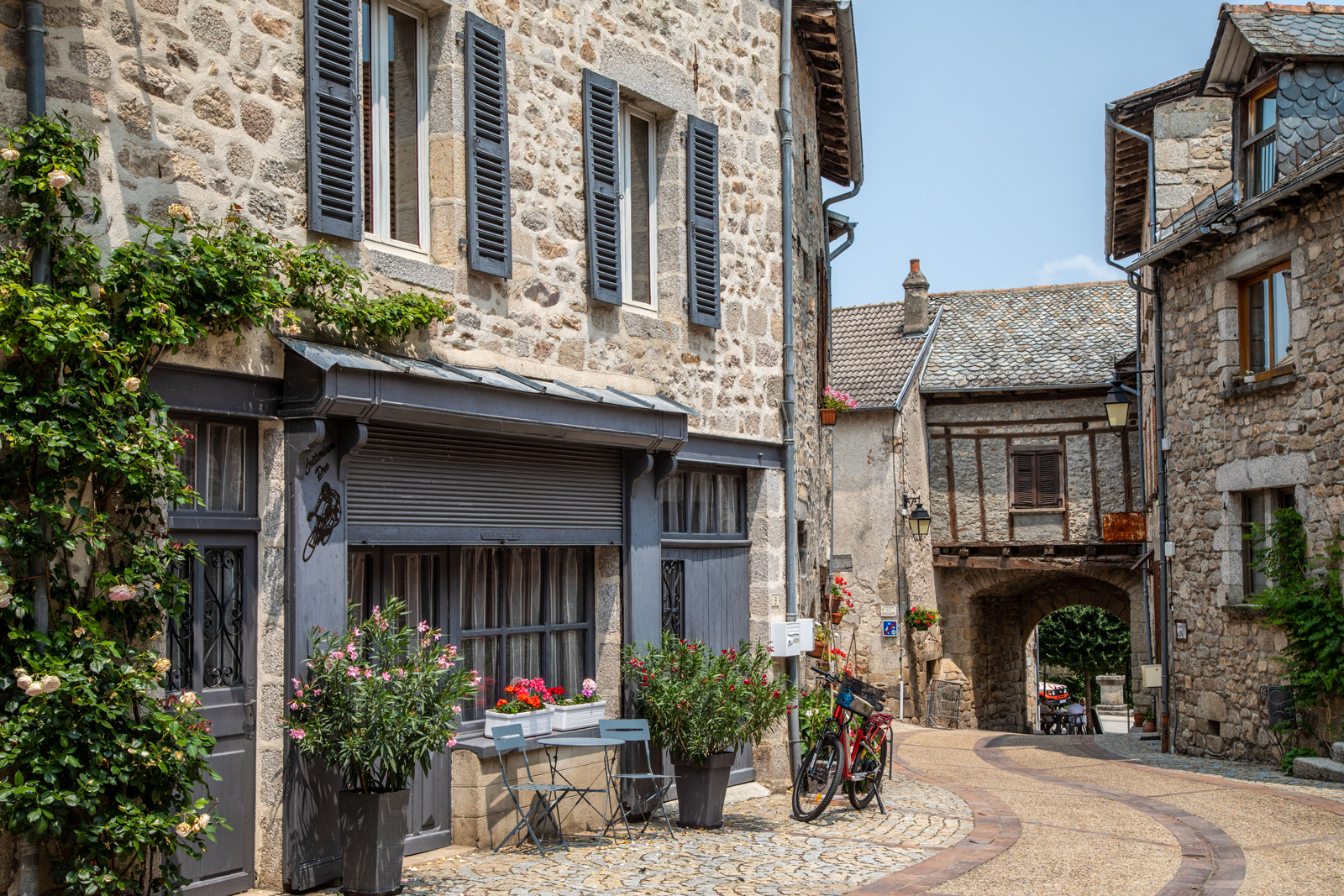
The first written mention of the existence of Marcolès dates back to the 10th century: Pagus Marculiscus then belonged to Count Gerald, abbot of Aurillac. In the Middle Ages, the first ramparts and a tower were built. The Middle Ages saw the construction of the first fortified walls and the tower, now the Maison Carrée (“Square House”), by Astorg de Conros in 1203. In the 15th century, new ramparts were built and people could enter the city through the so-called Upper and Lower Gates. The city was surrounded by moats, which were filled in during the French Revolution. Strolling along the Rue Longue, you can still see the Renaissance façades, the bourgeois houses with arcades, vaulted cellars and mullioned windows. At that time, Marcolès was a prosperous town, thanks to its geographical position between Quercy and Upper Auvergne.
Town’s gates

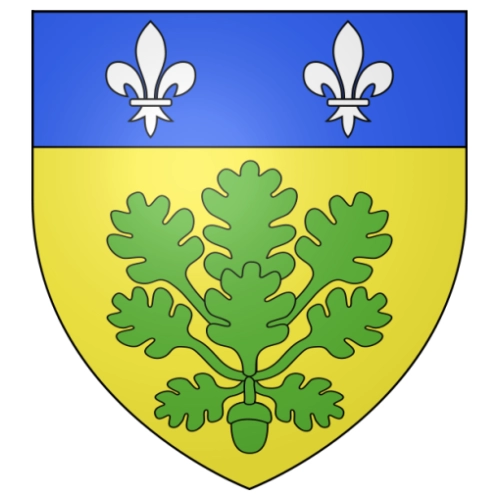
The walls that can still be seen today date from the 15th century. Access to the town was exclusively through the two east and west gates: the Upper Gate and the Lower Gate. The Lower Gate still retains the features associated with its defensive function: the hinges of the door, the locations of the security bar and of the portcullis, the enclosed staircase leading to the top of the ramparts; on the wall, loopholes and the town’s coat of arms, which belonged to the Boisset Family. A third passage, to the north-west, provided access to the town: the Fausse-Porte (‘False Gate’), which is said to have been a breach made during the Hundred Years' War.
Town’s gates
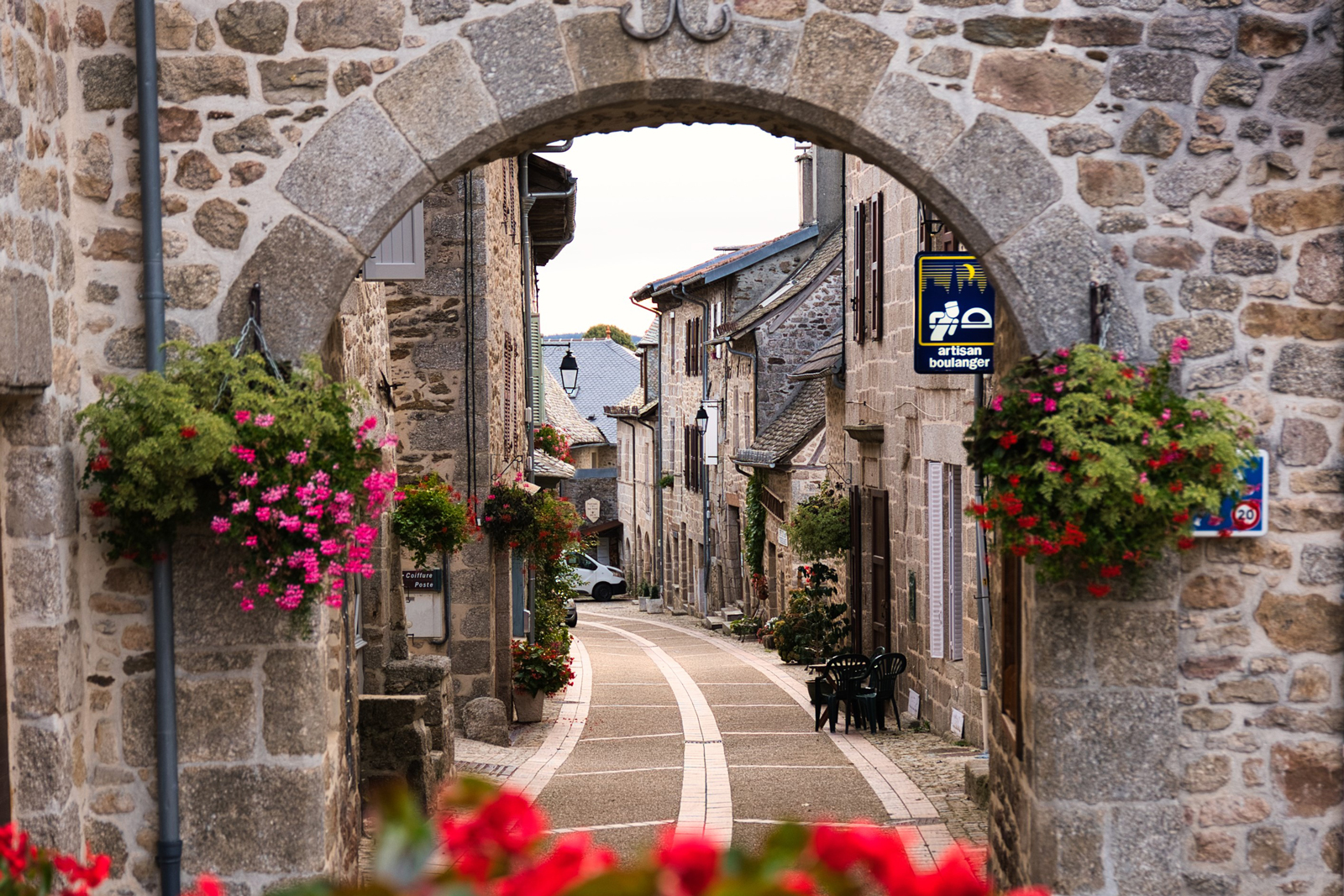
The walls that can still be seen today date from the 15th century. Access to the town was exclusively through the two east and west gates: the Upper Gate and the Lower Gate. The Lower Gate still retains the features associated with its defensive function: the hinges of the door, the locations of the security bar and of the portcullis, the enclosed staircase leading to the top of the ramparts; on the wall, loopholes and the town’s coat of arms, which belonged to the Boisset Family. A third passage, to the north-west, provided access to the town: the Fausse-Porte (‘False Gate’), which is said to have been a breach made during the Hundred Years' War.
Beautiful Renaissance façade
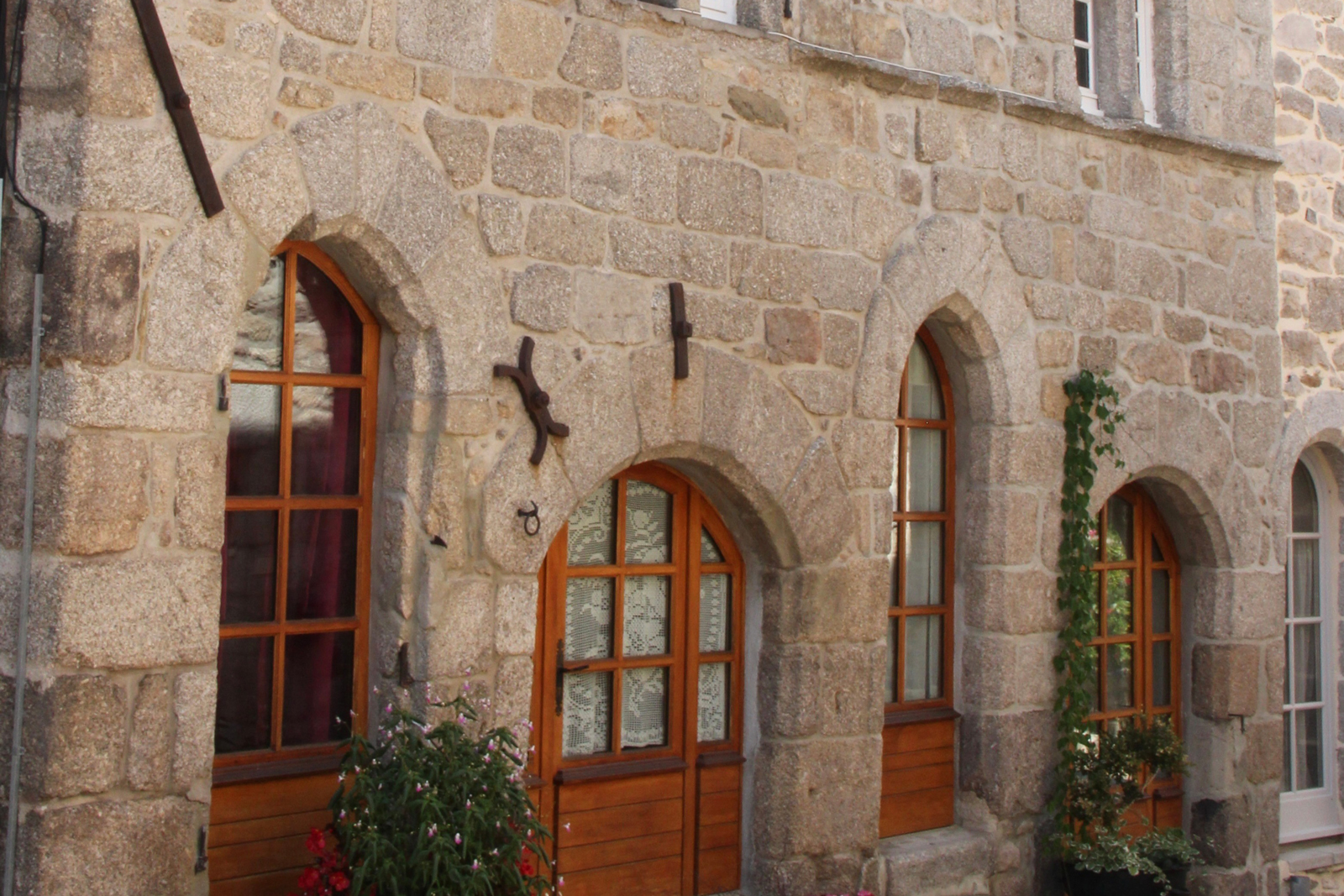
In the ‘Carriéron del Ven Negre’ (Black Wind Street), you can admire one of the most beautiful façades in the town : the exposed corbels of the old roofing framework, the two small windows that light up the attic, the Renaissance mullioned windows, and the doors on the ground floor which remind us of its medieval origins. You can see how this house, a fine example of the respectful restoration of the little town’s heritage, has evolved from its medieval foundations to its current state.
St. Martin’s Church
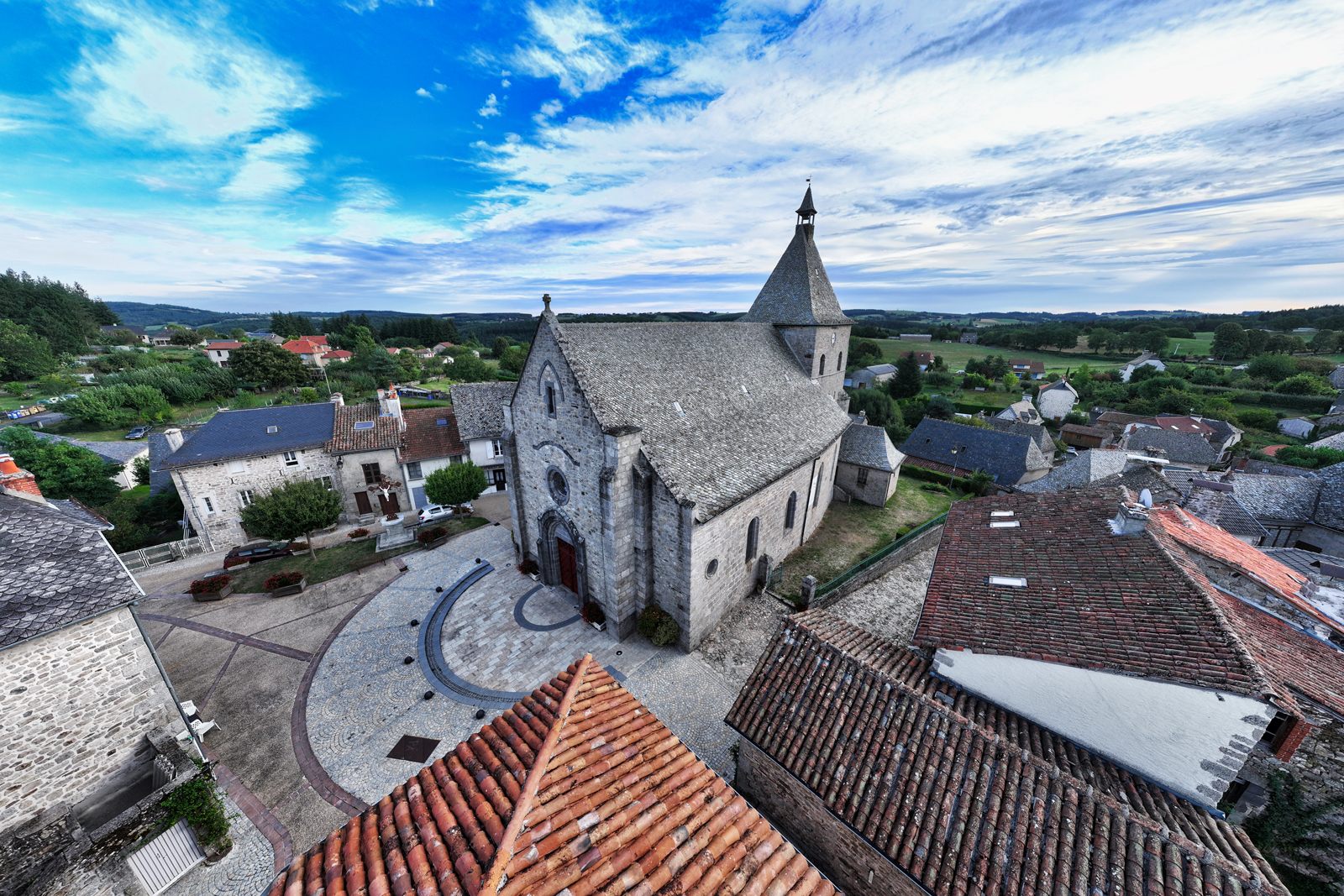
The impressive 15th century church is located in the heart of the fortified town. Built in the Southern French Gothic style, it has granite walls and its roof is covered with lauzes (local stone tiles). Altered many times over the centuries, the original church consisted simply of the rectangular nave. Later, the wealthy families of Marcolès had eight side chapels built in order to gain the right of using a family pew and of being buried there. Each chapel was an independent building adjoining the nave. It was not until the 19th century that all the chapels were incorporated into the church.
Adornments inside the church
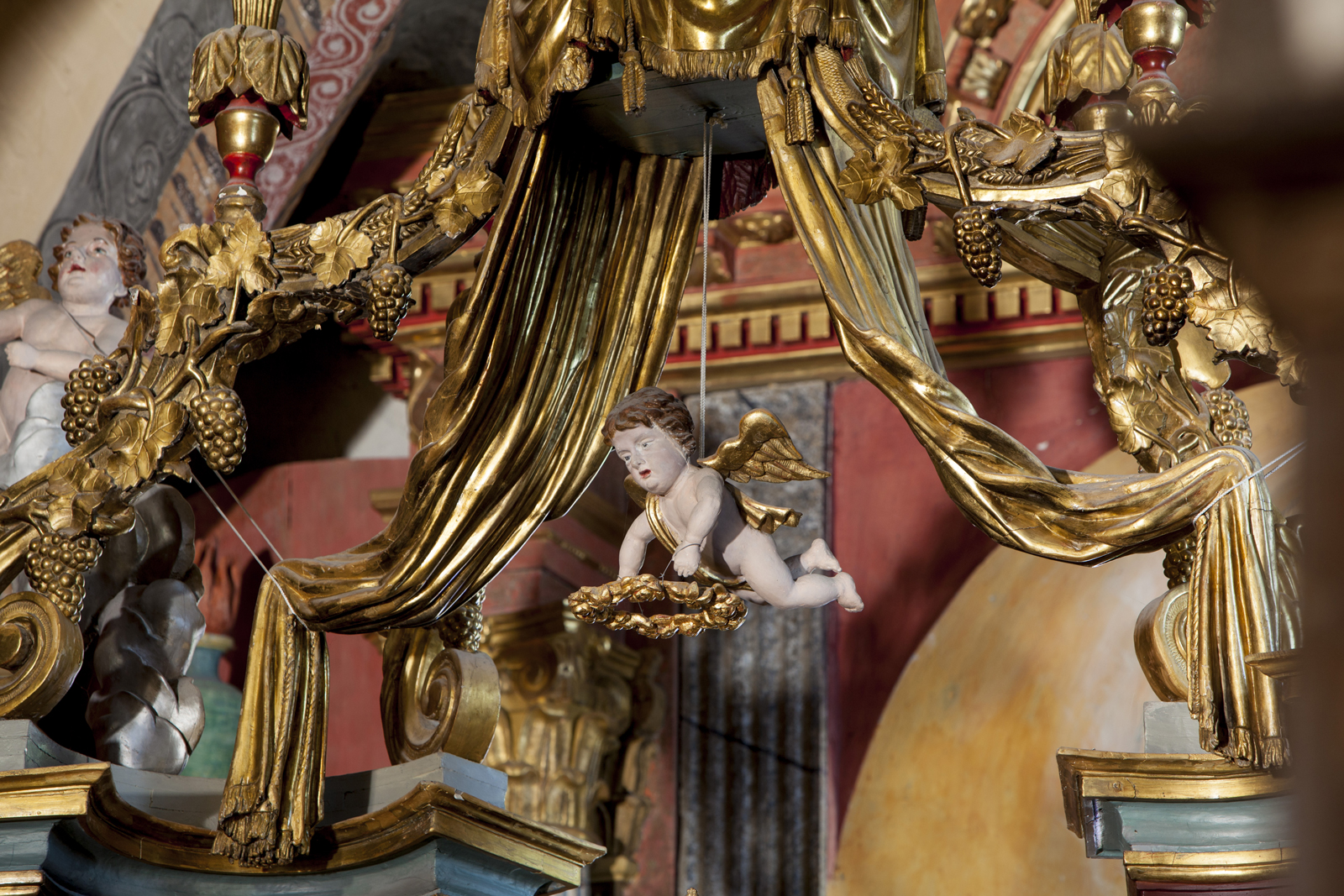
The church is packed with treasures such as the four polychrome stone statues of Saint James and of the Holy Family on either side of the entrance porch, the Archangel Gabriel and the Virgin Mary in the Chapel of the Annunciation. The pulpit of truth, dating from 1753, is remarkable for its polychromy and concave forms, as are the altarpieces and pews in the chapels, particularly the gilded wooden altarpiece in the Chapel of the Rosary. In the choir, the large painting of the Presentation of Jesus is a workshop copy of a painting by Jouvenet. The last north chapel, near the choir, is dedicated to St Martin. A 14th-century wooden reliquary statue of the holy bishop was discovered under the high altar during renovation work in 1667. It contained nineteen bones of the evangeliser of the Gauls, five of which are preserved in the gilded reliquary shrine in the centre of the altarpiece.
Restoration of the church
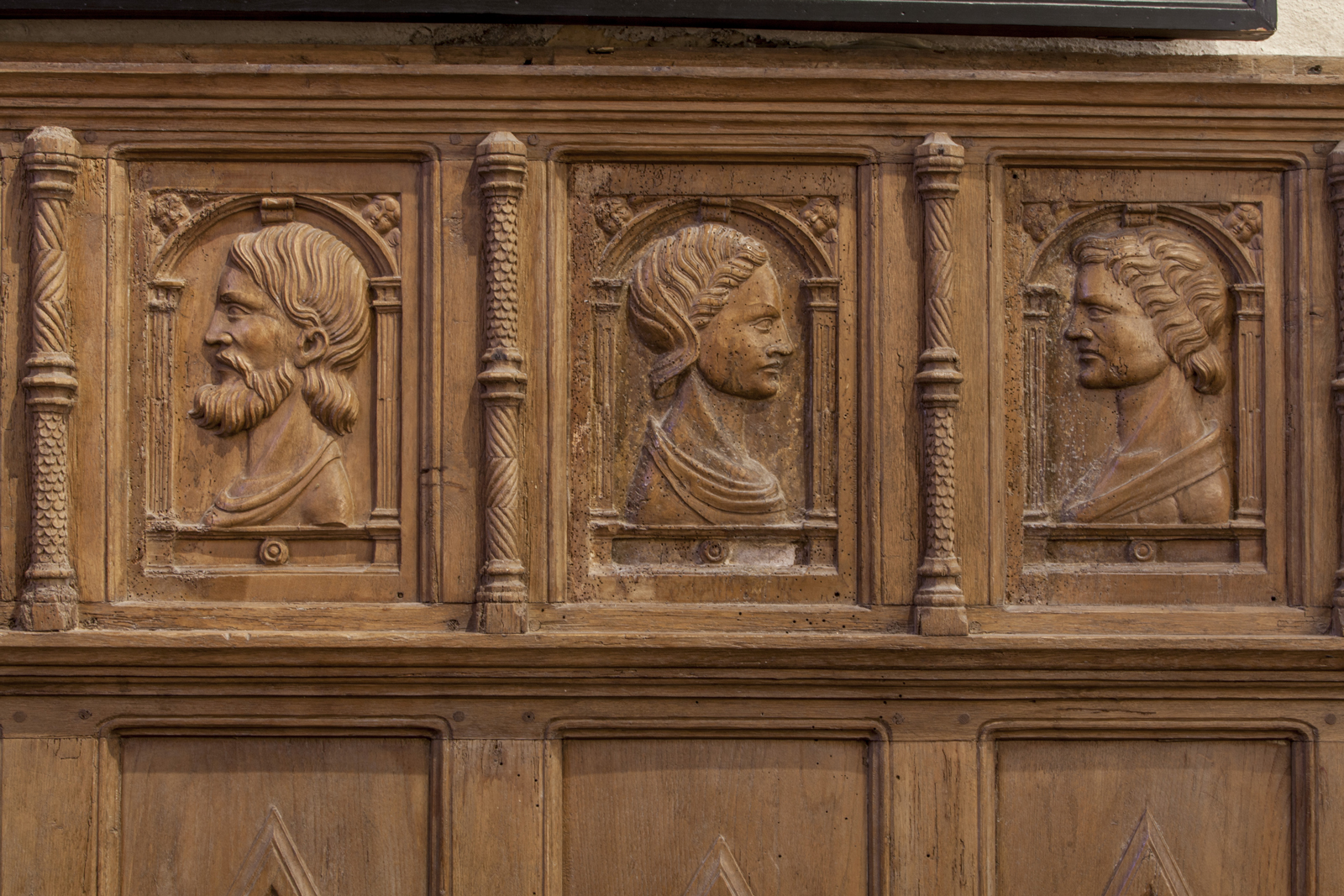
The town council has completed a comprehensive programme of exterior and interior restoration work of the church, which is now registered as a historical monument. With the support of the regional and departmental councils, the Fondation du Patrimoine, the association of the Friends of St Martin Church and of the parish, and under the supervision of the Architecte des Bâtiments de France and the Curator of Antiquities and Works of Art, St Martin's church has been restored to its original decor and colours. Paintings, altarpieces, statues, wall frescoes and parish pews reflect the diversity of embellishments made over the centuries.
Medieval shops
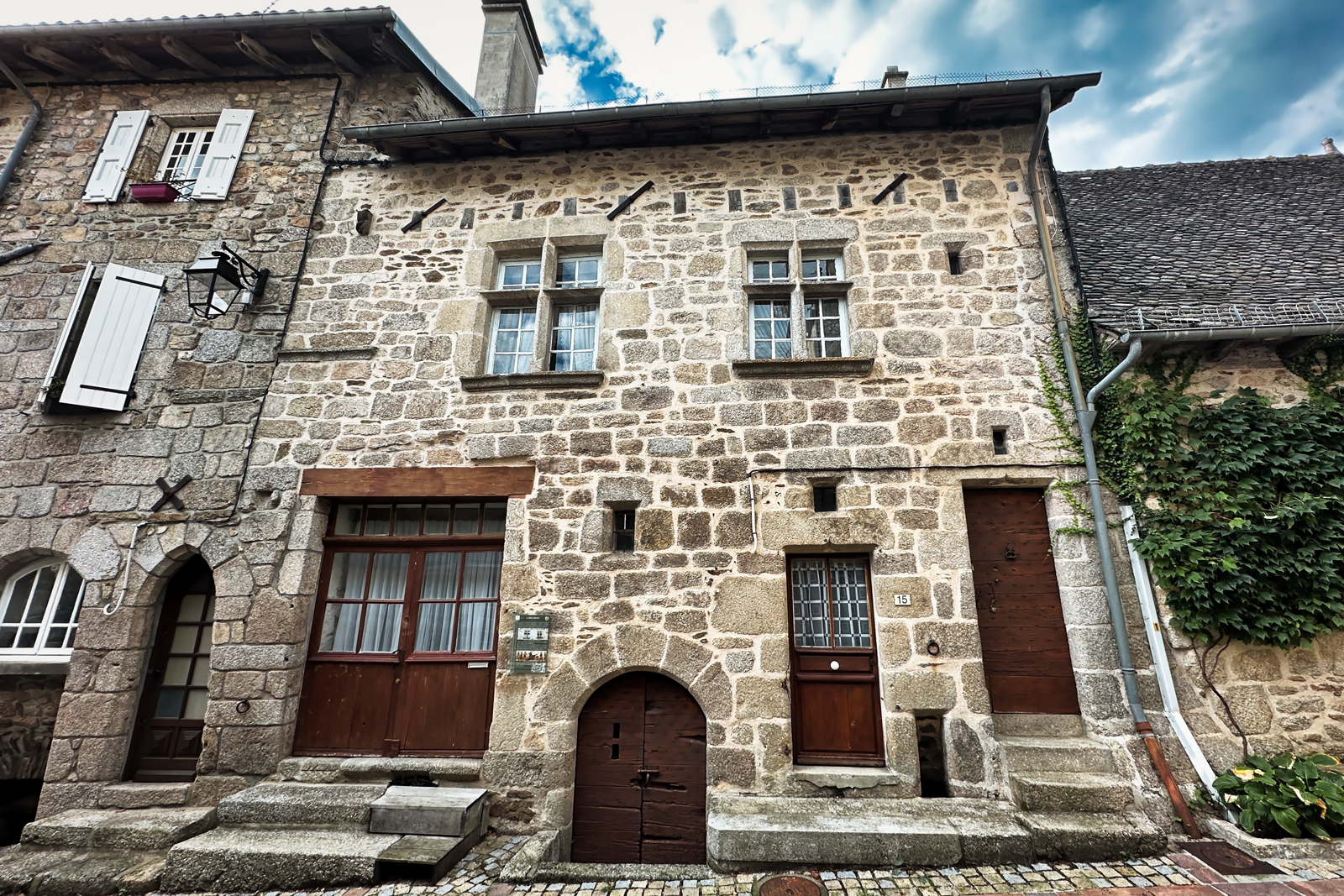
The façades of many houses still feature medieval structure, with two types of doors. The pedestrian door is a narrow ogival door, often preceded by a few steps encroaching on the street, which gives access to the dwelling and the upper floors. The wider arched doorway provides access to the shop or professional premises on the ground floor. Although they have often been altered over the centuries, many of these façades still feature this typical medieval architectural style.
Roofs of Marcolès
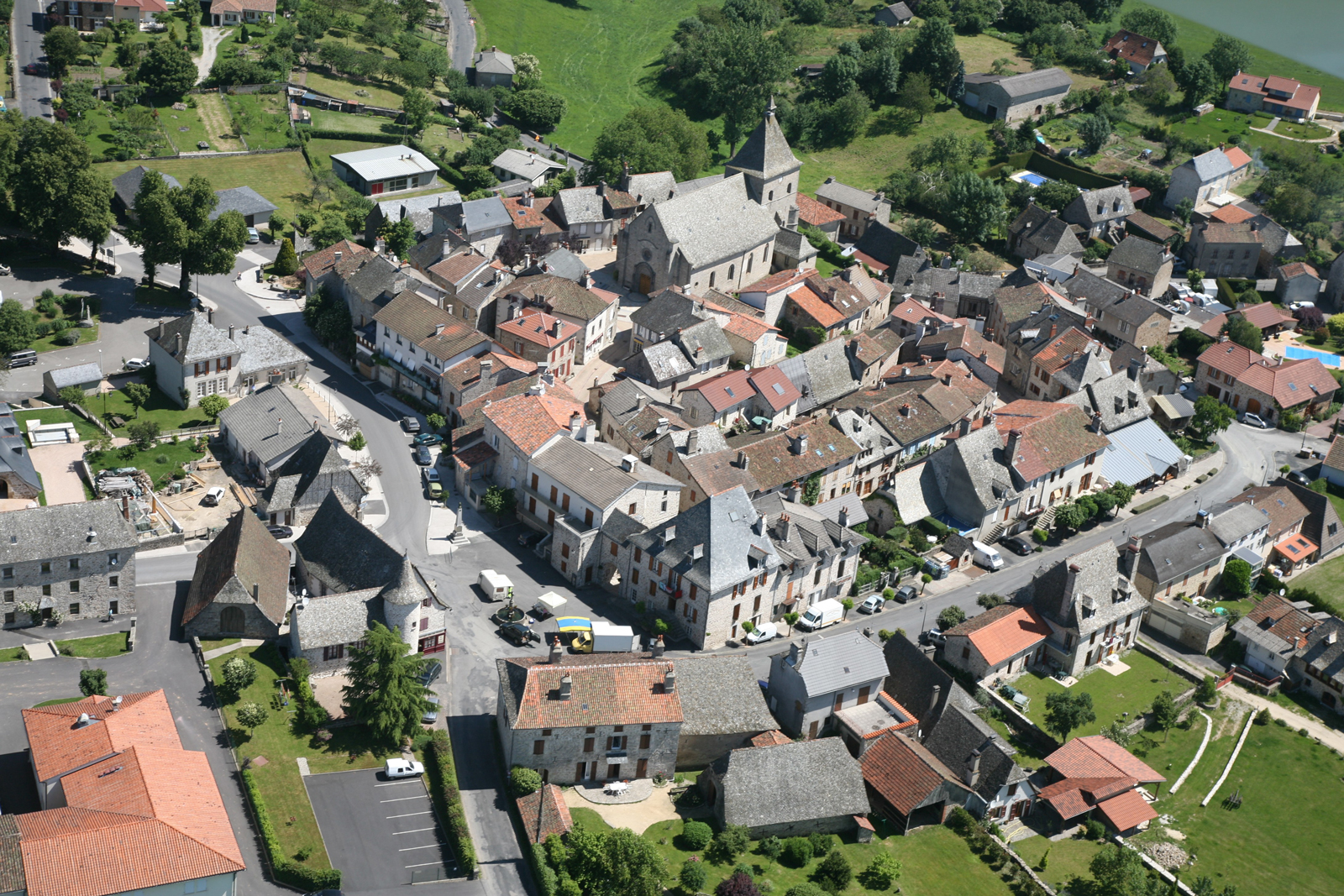
From the garden behind the church (the former cemetery until around 1875), you can see the variety of roofing materials. While the little town's walls are all made of local granite, the roofs reflect the many influences in the Châtaigneraie region. Although schist lauze dominates, it is used alongside slates and Roman tiles (an influence from neighbouring Southern France) and more modern types of tiles.
Carriérons of Marcolès
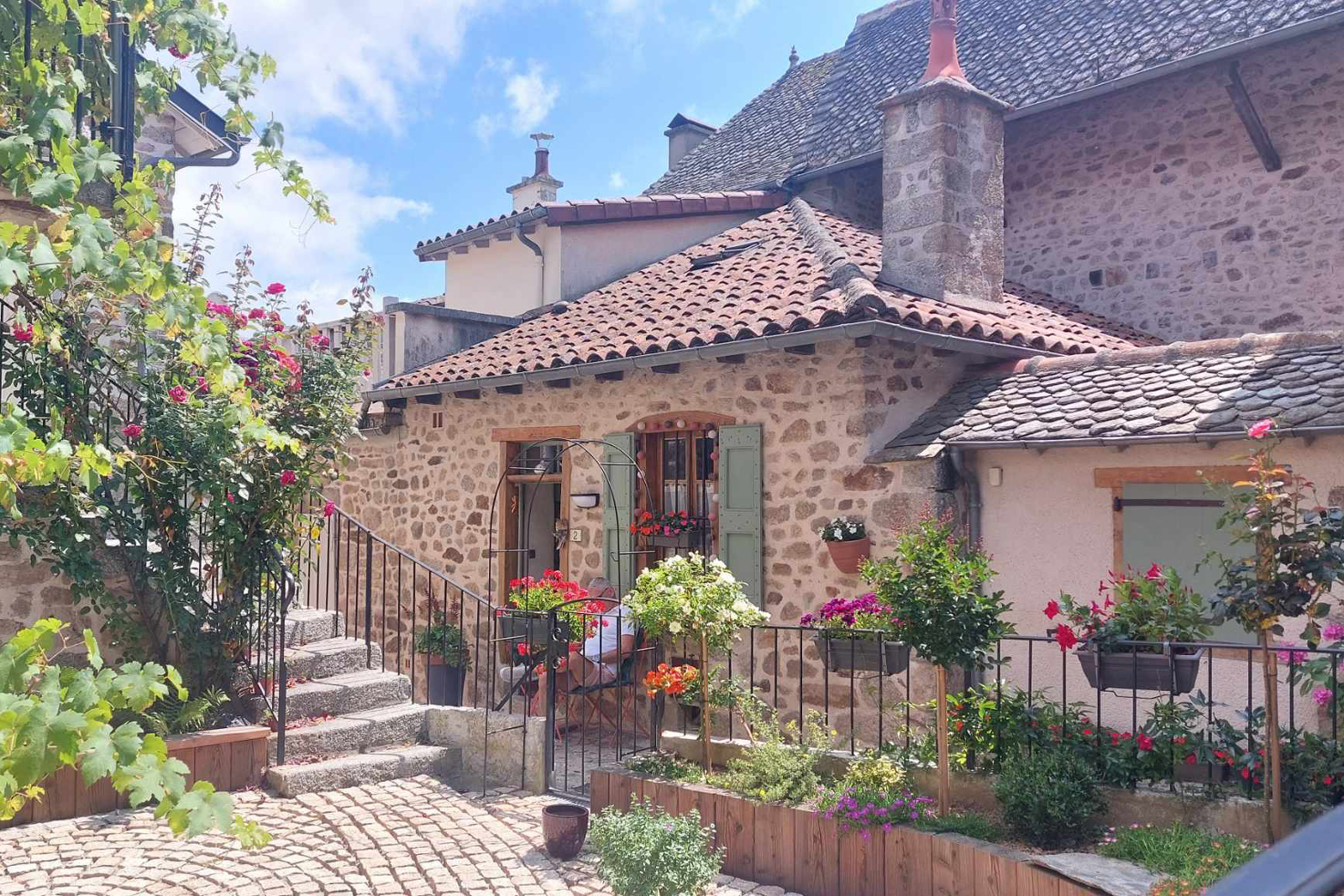
This Occitan word, pronounced ‘cariérou’, refers to the narrow streets that run through the town between the Place de l'Église and the Rue Longue. These typical little streets were lined with modest farmhouses, small barns and stables where men and animals lived together. Note the ‘pissadous’, these overhanging stones that drained dirty water into the street. One of them bore the evocative name of ‘carriéron merdos’ (‘shit street’). You will also notice the wheel chasers, these guard stones located at the corners of walls to prevent damage from vehicle wheels, and the rings on the walls for tying up animals.
Farm life in the heart of the town
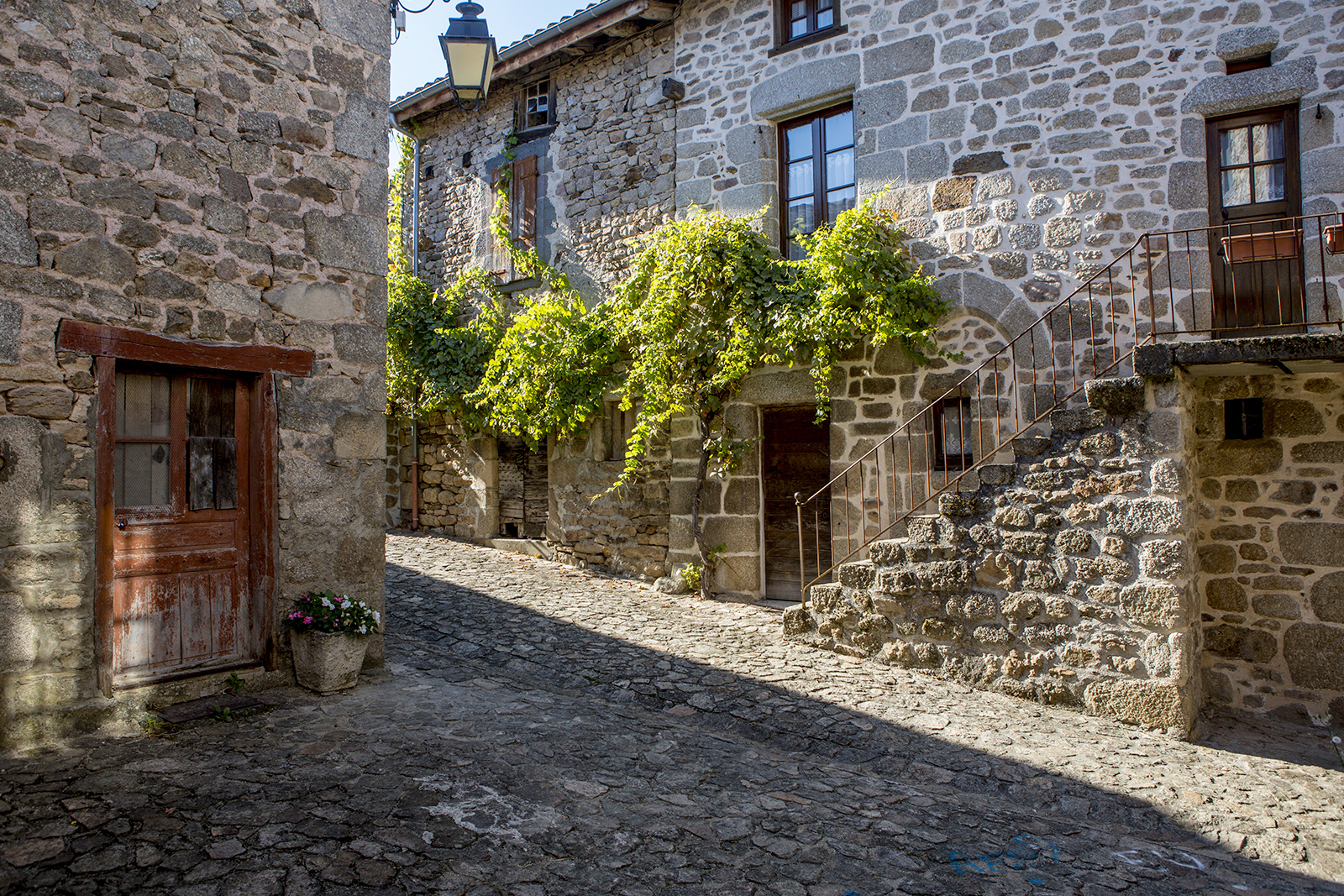
Until the beginning of the 20th century, this setting has to be imagined as a farming little town teeming with life: small, densely packed houses, each housing a family, often a large one, almost always a pig, a few chickens and sometimes a few sheep, goats or even cows. In the ‘carriérons’, piles of wood to supply the ‘cantous’ (fireplaces) stood alongside dunghills... This did not prevent the development of a large number of craftsmen and small shops: blacksmiths, wheelwrights, tailors, clog makers, haberdashers, grocers, butchers, bakers, etc. The town fairs were particularly popular, especially St John's Fair on 23 June and St Martin's Fair on 11 November. Late in the evening, the ‘cabrette’ (the local bagpipe) tunes and the bursts of voices encouraged by the successive 'pintous' (large glasses of wine) erupted from the inns.
Square House
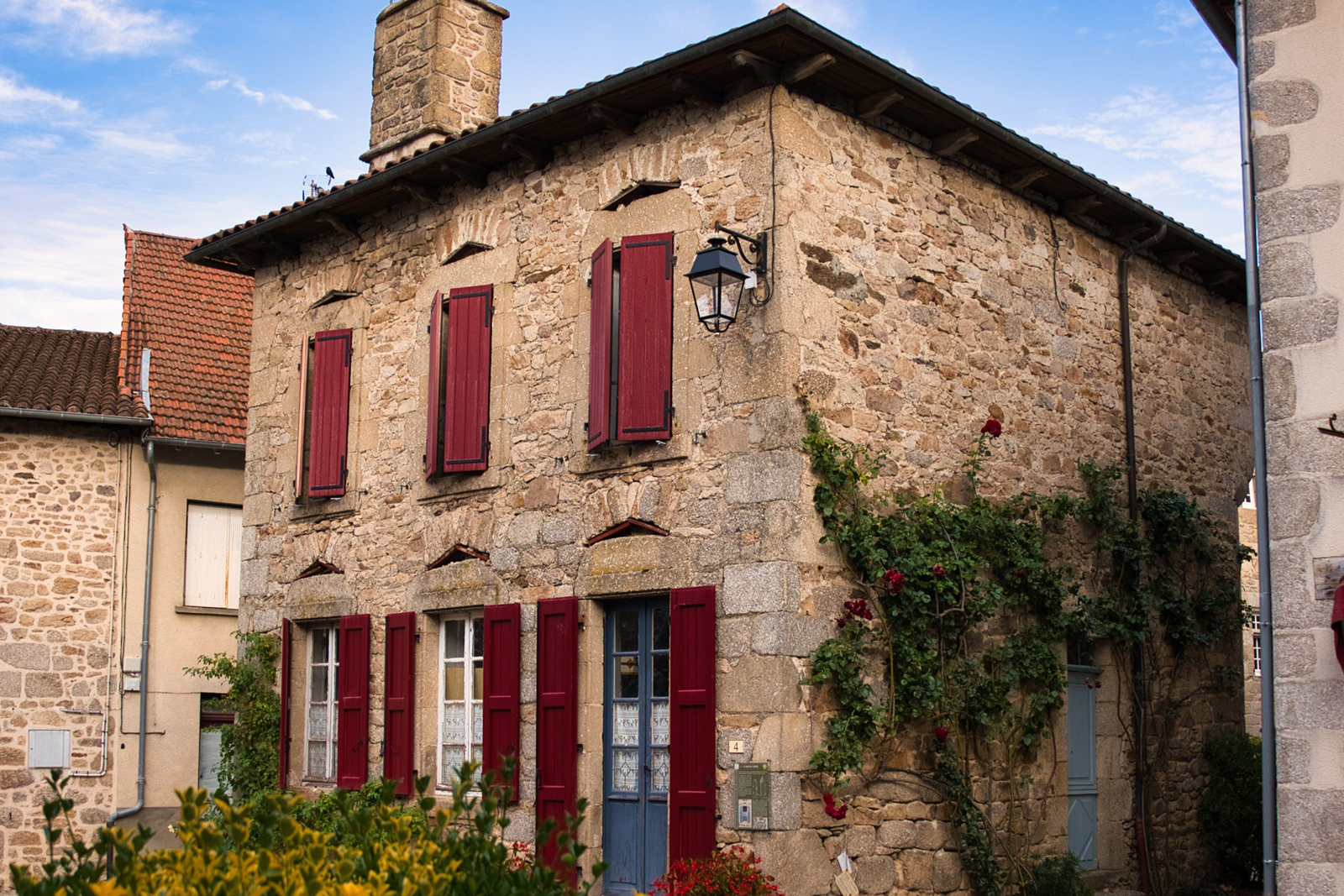
In the centre of the little town, this house stands on the site of the tower built in 1203 by Astorg de Conros. For a long time, it was the residence of the Lord Prior of the town. This watchtower and defence tower was in ruins at the time of the French Revolution, and the current house was built in 1824 by the d'Humières family. Note the clearly visible discharging arches above the window lintels, designed to distribute the weight of the façade over the window pillars and to relieve the stone lintel.
House of the Oven

This house is adjacent to the Lower Gate. It was built on both sides of the 15th century rampart and shelters a magnificent bread oven of imposing dimensions. This was probably the communal oven where the inhabitants used to bake their bread in return for a fee to be paid to the Lord Prior. In the oven room, you can see an arrow loop that overlooked the entrance to the Faubourg Saint-Martin before the present house was built.
Faubourg Saint-Martin and its fountain
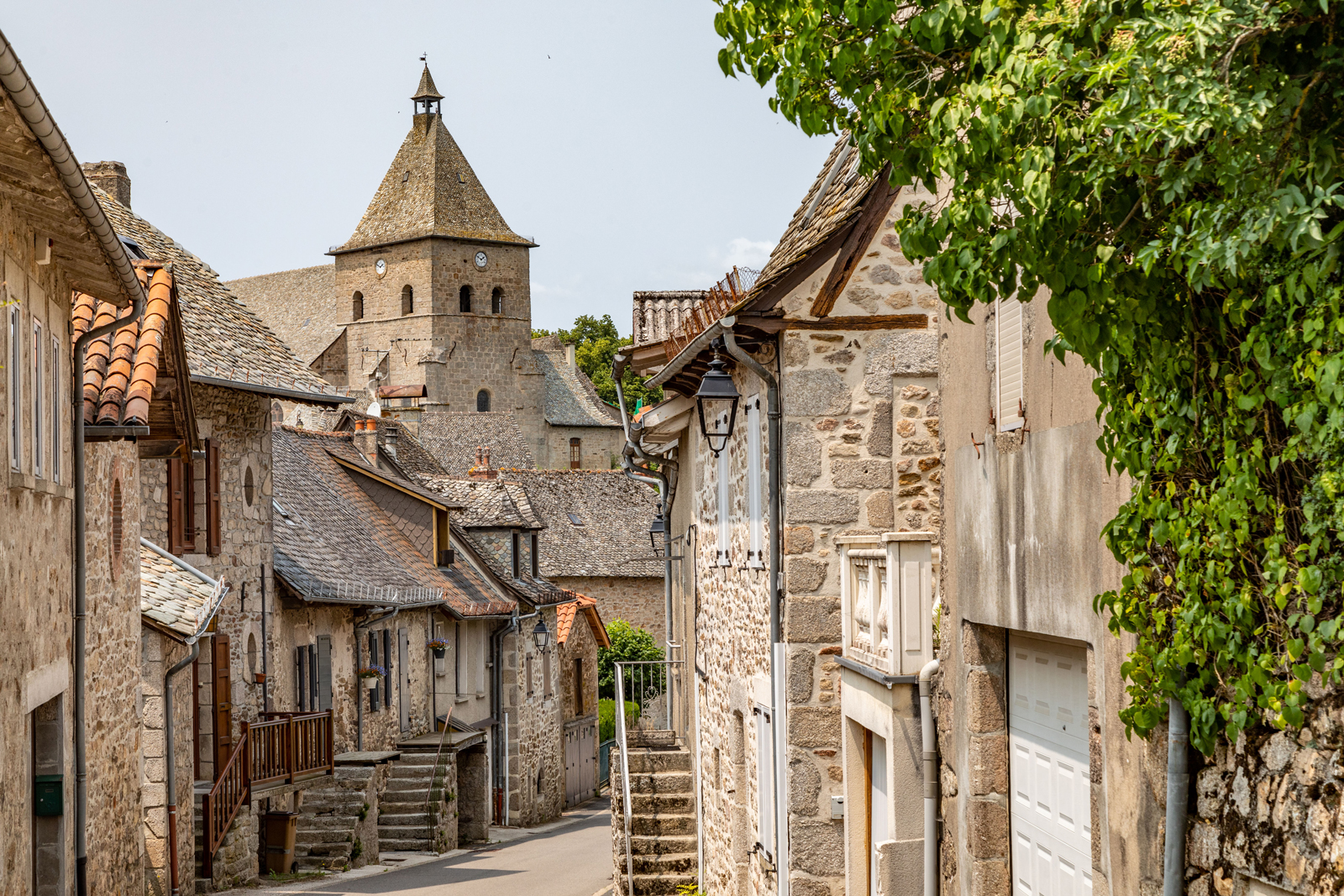
From the 16th century onwards, population grew and houses were built outside the fortified enclosure, leading to the development of suburbs. To the east, the Faubourg Saint-Martin (St Martin suburb) is made up of a fine row of old houses and offers a beautiful view of the church as you enter the little town. At the entrance, the water from the beautiful St-Martin Fountain was said to help children learn to walk when they dipped their feet in it.
Rue Longue and its cellars
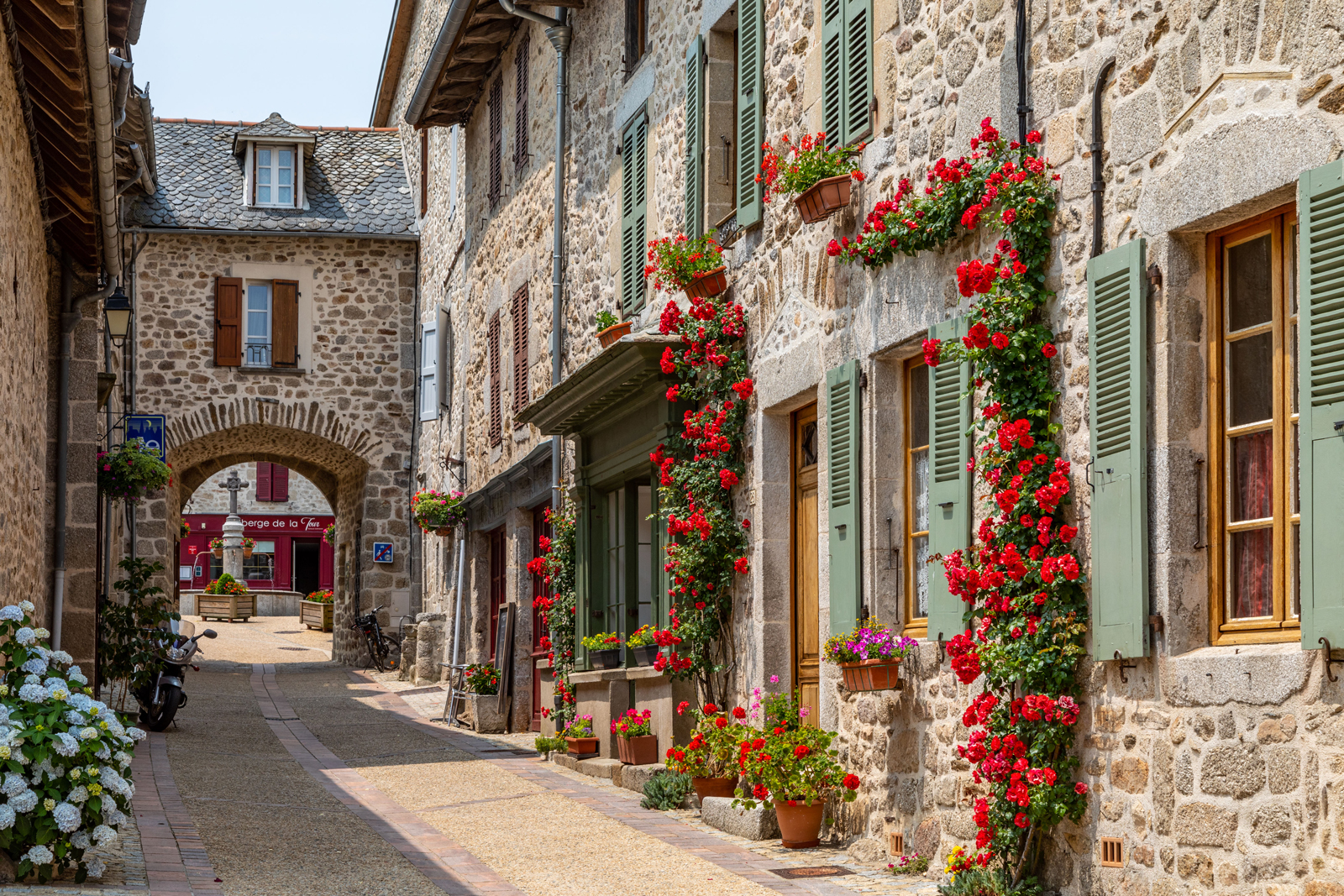
The main street, called “Rue Longue”, runs between the two medieval gates of the town. The beautiful ashlar houses dwelled by notables and merchants bear witness to the Middle Ages and the Renaissance. Many of these houses have beautiful vaulted cellars that were used to store goods from the nearby south (fruit, cereal, wine...), from Northern Auvergne (cheese, leather..) and for local produce (chestnuts, buckwheat...). At the time, the town was a thriving commercial centre located on a major communication route between Rouergue, Quercy and the Mounts of Auvergne.
Smithy, shoeing crush and weighhouse
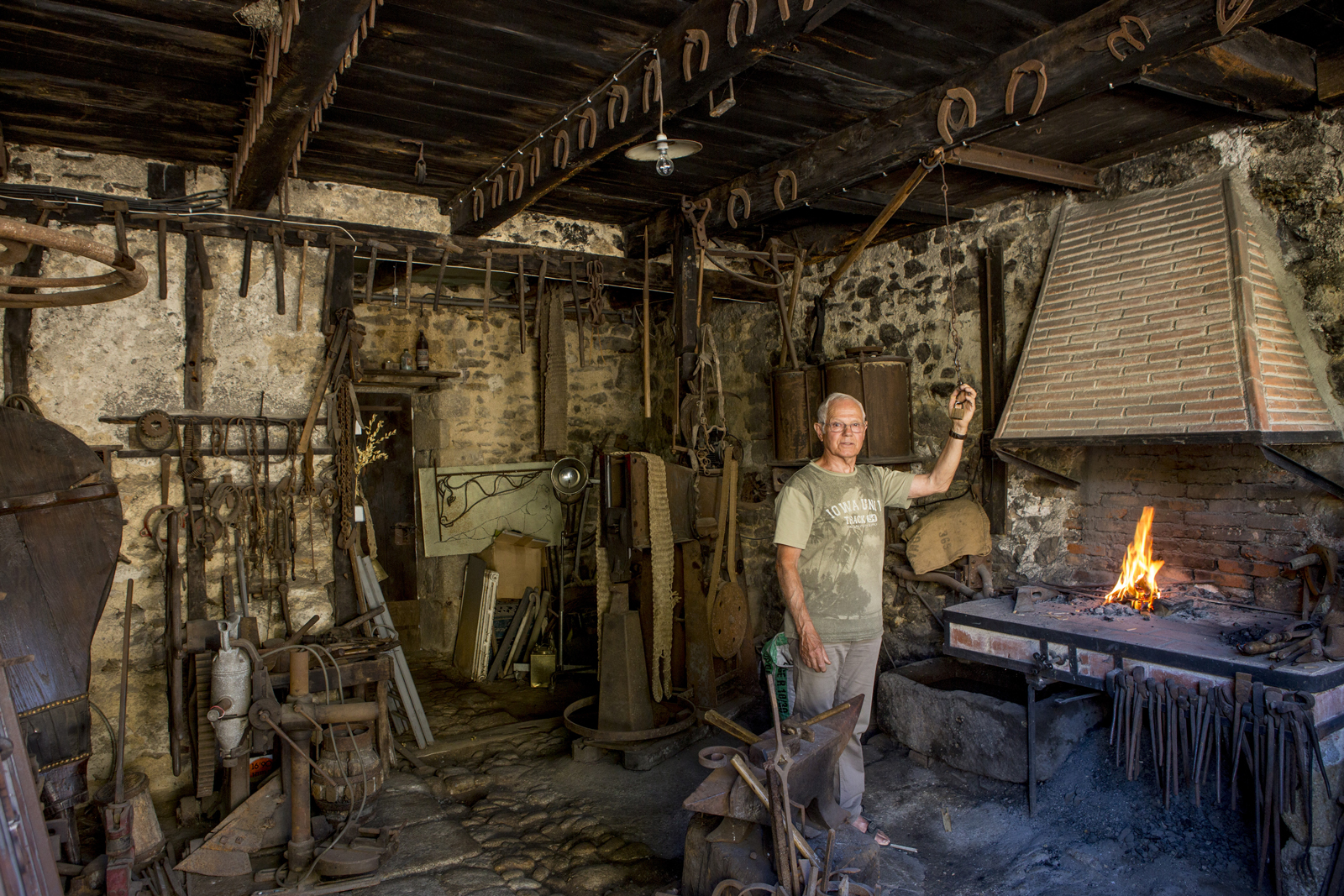
The presence of these amenities reflects the link between the town and its agricultural environment. The blacksmith was constantly called upon to make and maintain farming tools (ploughshares, hand tools...). As a farrier he shod and cared for the hooves of draught animals (oxen, cows and sometimes horses). The shoeing crush, located near the smithy, was used to immobilise the animals during these operations. On the other side of the street, a small stone building with a lauze roof bears the town’s coat of arms on its gable. Since the beginning of the 20th century, it has housed the weighhouse used for transactions involving animals and other goods.
Place de la Fontaine

The Place de la Fontaine stretches across the top of the little town. It is surrounded by pretty houses such as the Auberge de la Tour, flanked by a beautiful tower, or, across the road, the former Hôtel Peyrou and the former Notary's House. Until the mid-20th century, this was the venue for fairs. The fountain, built at the end of the 19th century, is topped by a beautiful Volvic stone cross. The Upper Gate opens onto the Rue Longue. The war memorial, inaugurated in 1927, bears the names of the 64 Marcolesians who died for France in the First World War and the 4 who were killed in 1940.
Craft tradition
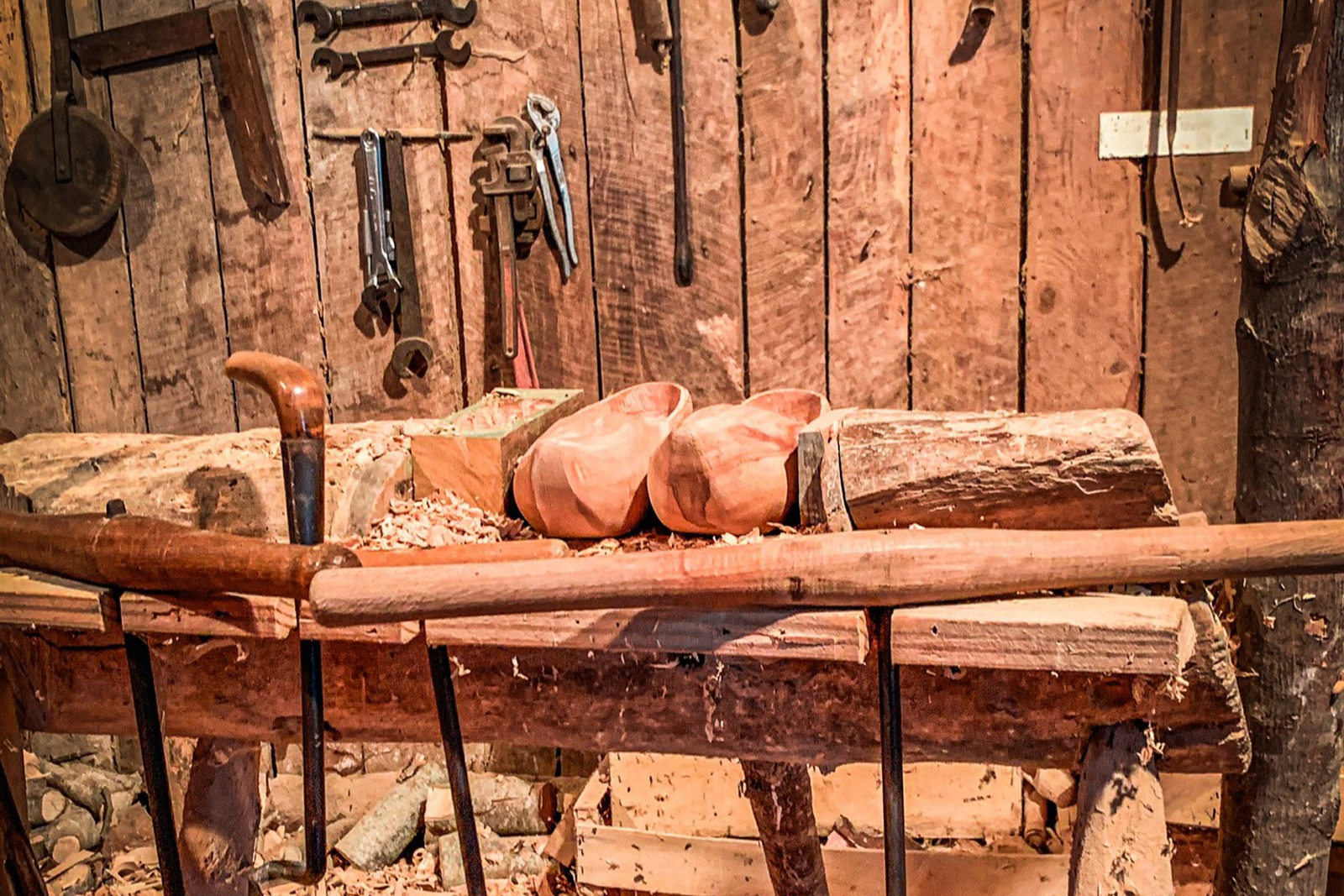
Craftsmanship is deeply rooted in the history of Marcolès. For centuries, local people have developed specific skills, linked to agriculture, construction and everyday life. Today, traditional crafts are combined with contemporary artistic creation. The old clog factory and the smithy stand alongside the studios of artists and craftspeople, who find their inspiration in this unique setting. Many talented and innovative creators have opened workshops and galleries: ‘galoche’ and clog maker, blacksmith, potter, meadmaker, tattoo artist, spa....
Lively Art in the public space
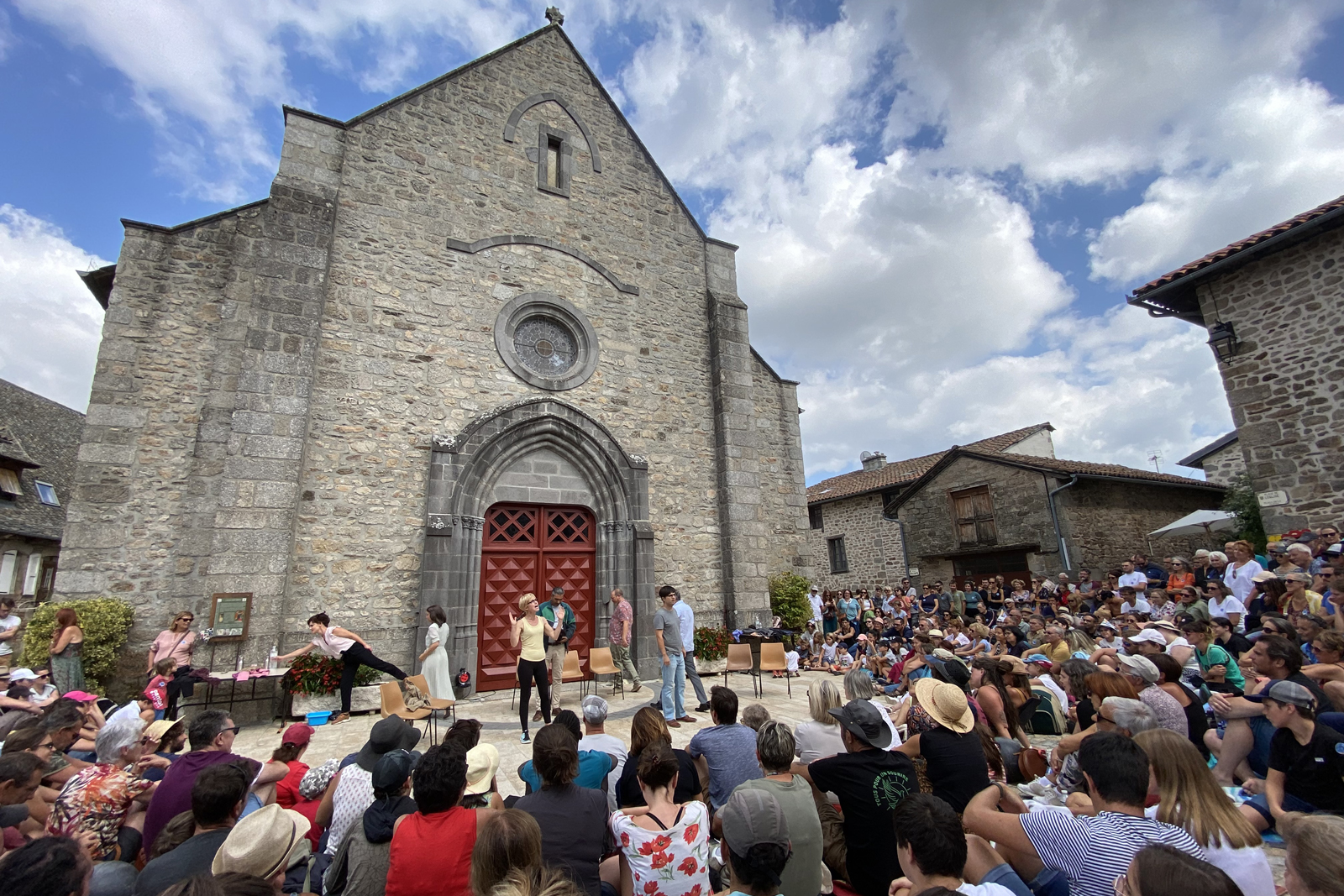
Marcolès hosts events devoted entirely to art, in a beautiful medieval setting. The whole little town becomes a stage set for the ‘Nuits de Marcolès’ in July. The storytellers take over the carriérons, and staircases, balconies and porches are illuminated, making them the focus of an amazing night-time storytelling stroll. On 15 August, the keys to the town are handed over to stilt walkers, jugglers, acrobats, musicians and actors, who put on participatory street performances. In November, the town is handed back to the craftsmen for the arts and crafts market, where you can discover their creations as you wander through the medieval centre of Marcolès.
Art of living
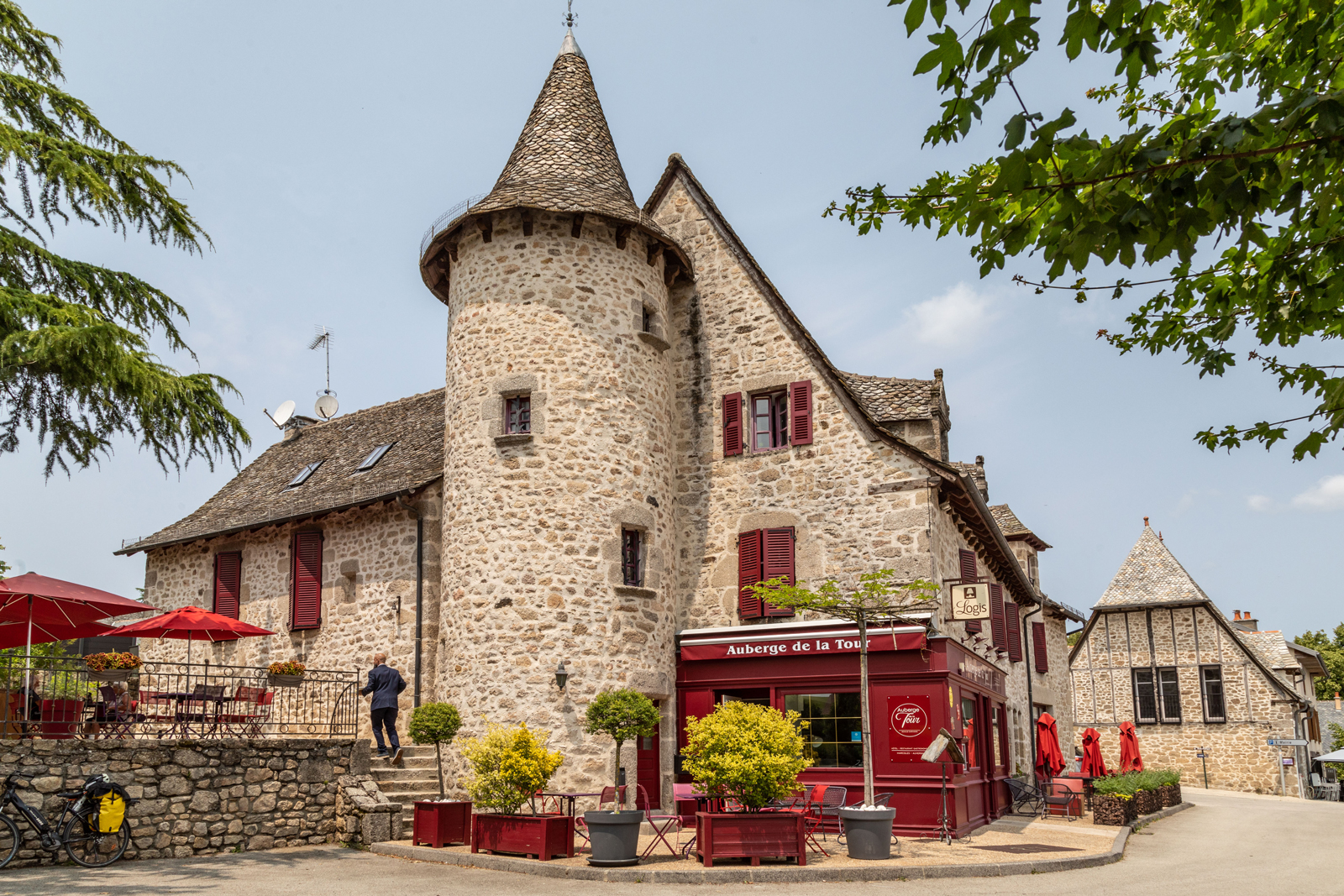
Marcolès can be visited through its medieval narrow streets, its artists' and craftsmen's workshops... but also by taking time out to enjoy its culinary delights and its famous gastronomy. The flavours of the region can be savoured in traditional or gourmet restaurants or at the Michelin-starred Auberge de la Tour. On the table, you will find mead produced in Marcolès. This ancestral nectar, made from the fermentation of honey and water, can also be tasted in the shop of the master mead maker’s workshop, in a vaulted cellar in the Rue Longue.
Marcolès by bike

In the heart of the rolling countryside of the Châtaigneraie, Marcolès is an important stop-off point for cyclists on the ‘Grande traversée du Volcan’ (Trans-Cantal cycling route), linking the Mounts of Cantal to the Lot Valley. Whatever the season, the little town can be reached for a gourmet or cultural stop-off along the winding bucolic roads of the Rance Valley. Cycling enthusiasts also gather every summer for the Marcolès Criterium. This event was created in 1993 in honour of Lucien Cantournet, a local bike lover. On this occasion Marcolès becomes the scene of an intense competition between professional cyclists.
Marcolès into Châtaigneraie Cantalienne
Petites Cités de Caractère® into Châtaigneraie

Mentions légales
Ce projet de carte interactive est porté par les associations Petites Cités de Caractère® de France, Petites Cités de Caractère® en Auvergne Rhône Alpes, Petites Cités de Caractère® du Cantal et par la commune de Marcolès.
Il est soutenu financièrement par l'Appel à Manifestation d'Intérêt "Destinations Digitales" du plan "Destination France" piloté par Atout France, par la convention FNADT du Commissariat Massif Central, par l'appel à projet "patrimoine et numérique" de la Région Auvergne Rhône-Alpes, et par la Fondation d’Entreprises du Crédit Agricole Centre France.
Le plan de la commune (visuel de fond) a été réalisé par Laura Catheline - atelier passage.
Les traductions en anglais ont été réalisées par l'Office de tourisme de la Châtaigneraie Cantalienne.
Les voix ont été produites et enregistrées par Hélène Poussin - Compagnie « les pieds bleus » (version française), Nico production (version anglaise).
Les photos ont été produites et réalisées par Antom Production - Anthony Moujol, Patrick Forget, Pierre Soissons, Mairie de Marcolès, Petites Cités de Caractère®, Office de tourisme de la Châtaigneraie Cantalienne, Virginie Liquori Instameet OT Chataigneraie.
Les vidéos ont été produites et réalisées par Petites Cités de Caractère®, Leomedias.
Conception et développement de la carte interactive par Tabula Rasa.




Mentions légales
Ce projet de carte interactive est porté par les associations Petites Cités de Caractère® de France, Petites Cités de Caractère® en Auvergne Rhône Alpes, Petites Cités de Caractère® du Cantal et par la commune de Marcolès.
Il est soutenu financièrement par l'Appel à Manifestation d'Intérêt "Destinations Digitales" du plan "Destination France" piloté par Atout France, par la convention FNADT du Commissariat Massif Central, par l'appel à projet "patrimoine et numérique" de la Région Auvergne Rhône-Alpes, et par la Fondation d’Entreprises du Crédit Agricole Centre France.
Le plan de la commune (visuel de fond) a été réalisé par Laura Catheline - atelier passage.
Les traductions en anglais ont été réalisées par l'Office de tourisme de la Châtaigneraie Cantalienne.
Les voix ont été produites et enregistrées par Hélène Poussin - Compagnie « les pieds bleus » (version française), Nico production (version anglaise).
Les photos ont été produites et réalisées par Antom Production - Anthony Moujol, Patrick Forget, Pierre Soissons, Mairie de Marcolès, Petites Cités de Caractère®, Office de tourisme de la Châtaigneraie Cantalienne, Virginie Liquori Instameet OT Chataigneraie.
Les vidéos ont été produites et réalisées par Petites Cités de Caractère®, Leomedias.
Conception et développement de la carte interactive par Tabula Rasa.