

Murat
Auvergne Rhône-Alpes, Cantal
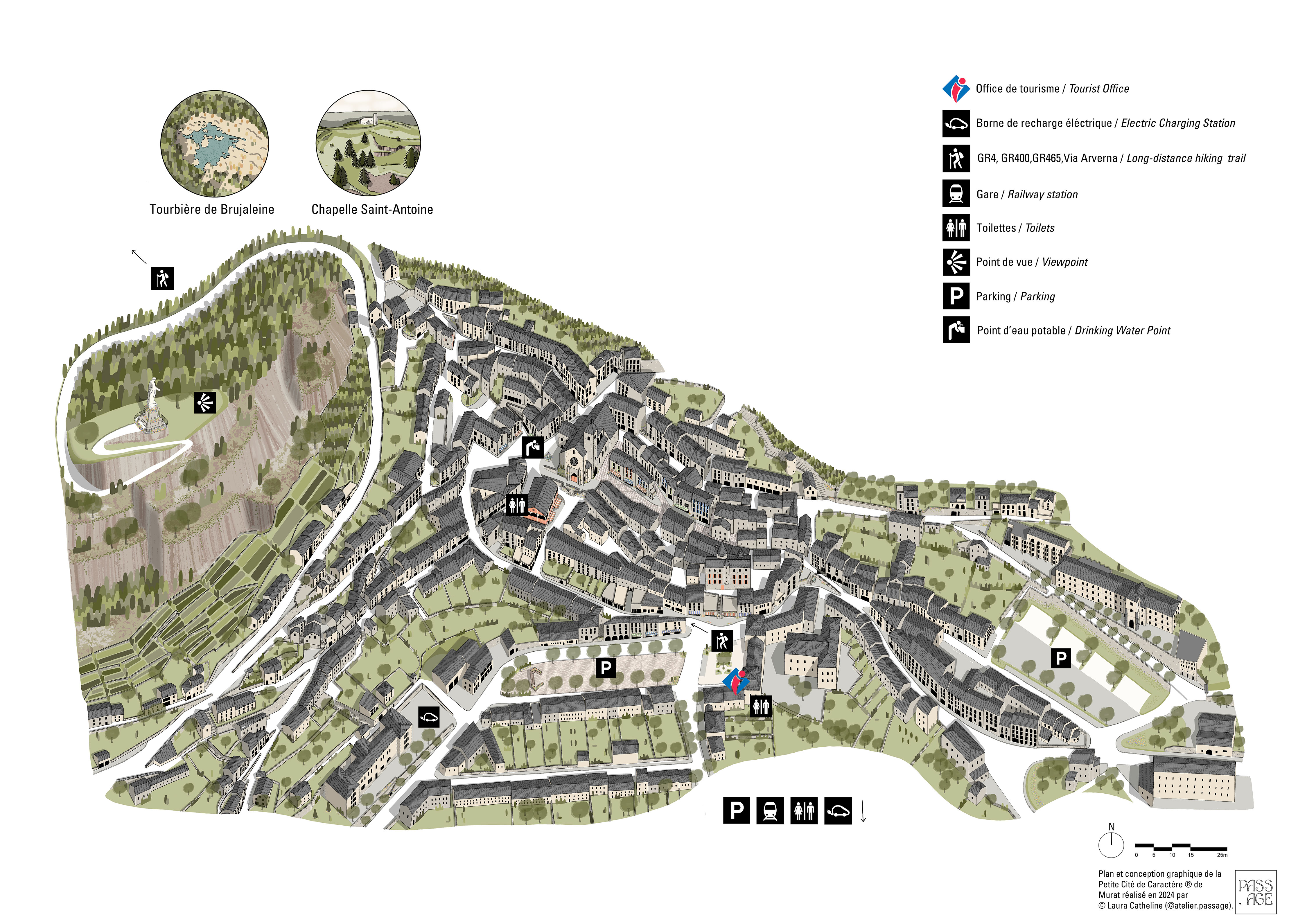
Murat, Petite Cité de Caractère®
Murat is designated Petite Cité de Caractère®. As such, it forms part of a national project aimed at promoting and protecting the architectural heritage of little towns across France. Through tourism, the initiative encourages visitors to embrace the local culture by strolling through the streets, learning about the history of the area, taking part in local events, and discovering the local way of life. In Cantal, there are several Petite Cité de Caractère® little towns to discover. The digital map will help you navigate each of them and highlight their main attractions.
Murat, town of the three rocks
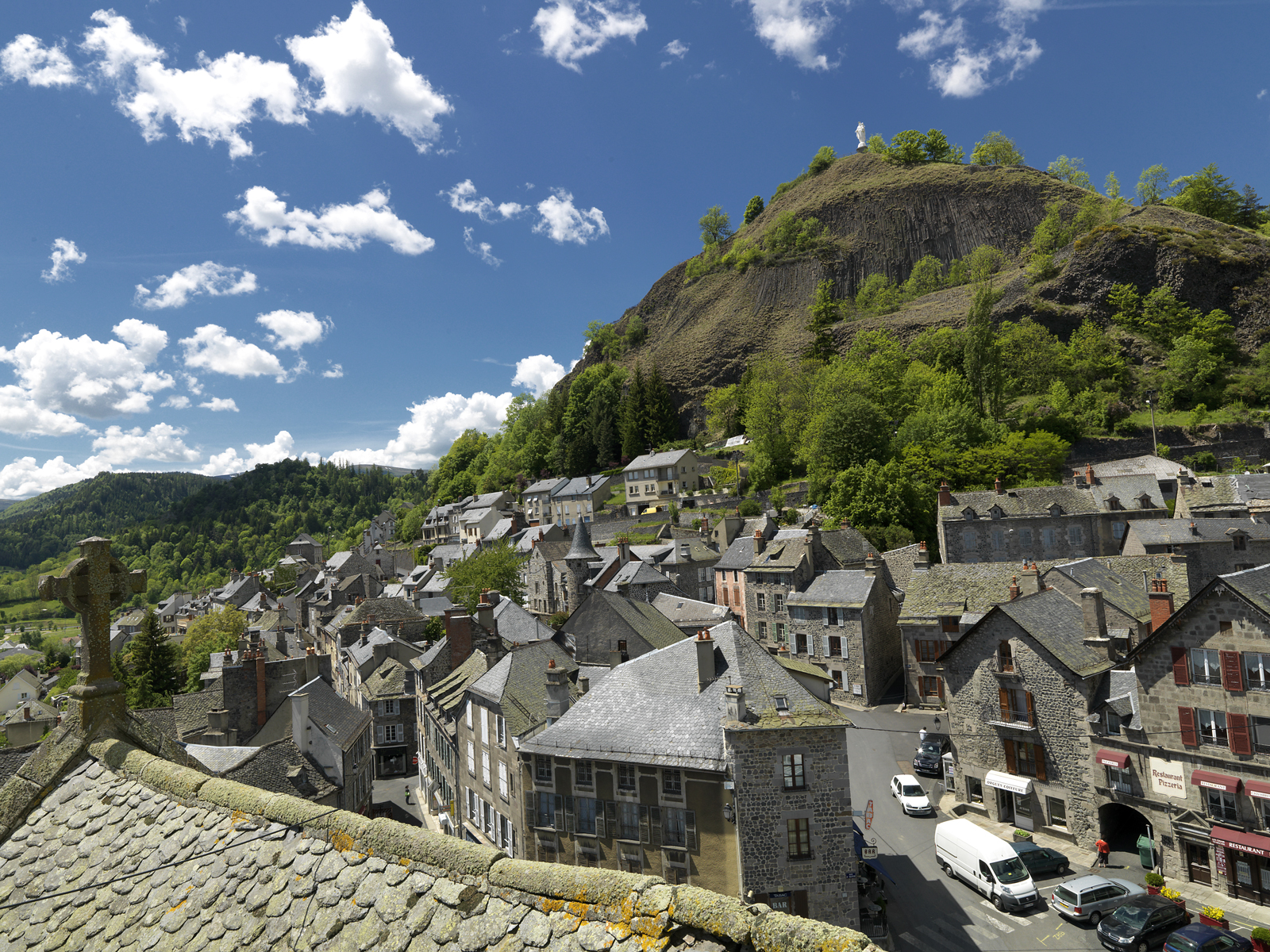
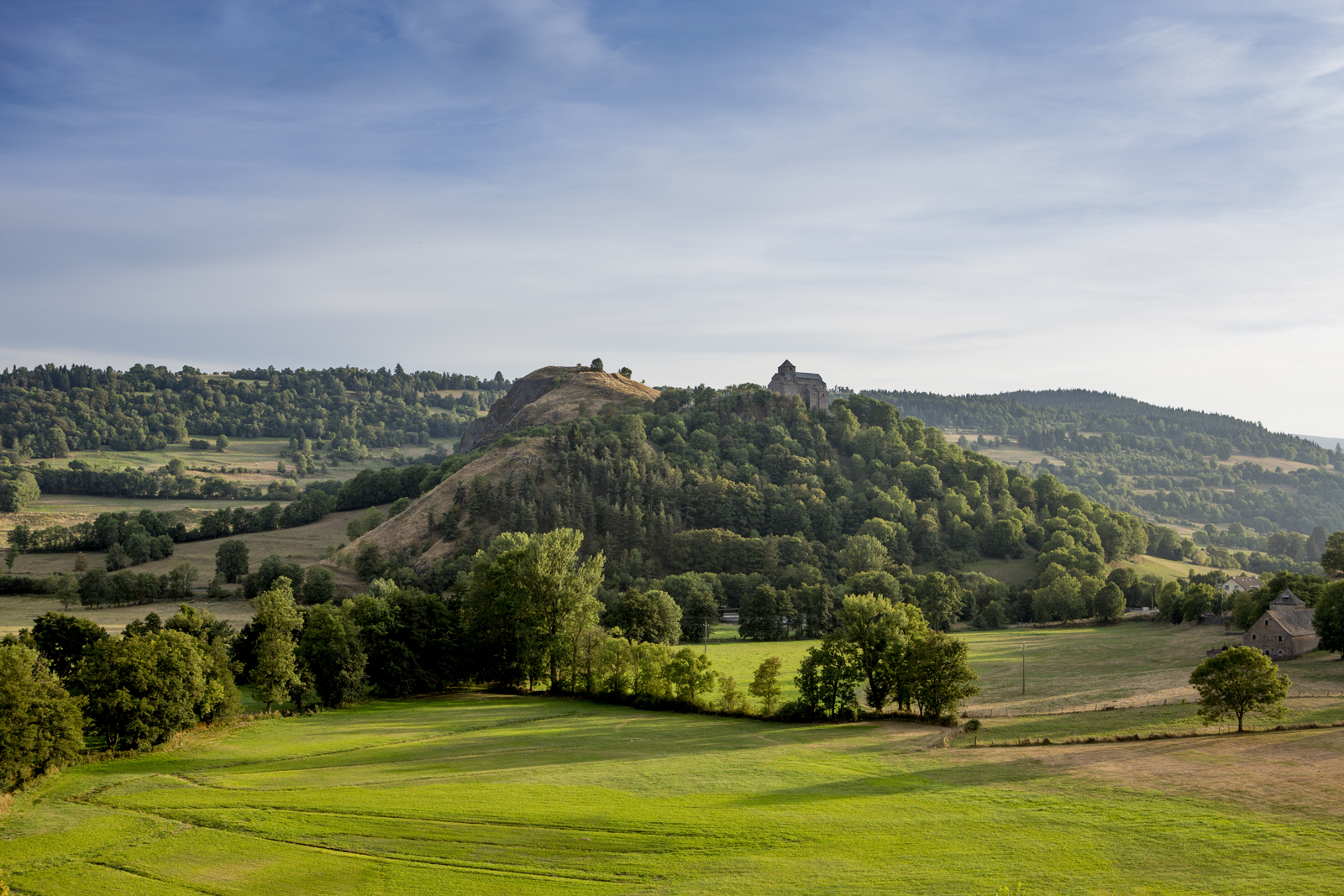
At the heart of the exceptional volcano of Cantal and the glacial valley of the River Alagnon, Murat is a mountain town with medieval charm, surrounded by three basalt rocks. These are the remains of ancient volcanic chimneys: the rocks of Bredons, crowned by its priory church, Bonnevie, topped by the statue of Our Lady of Haute-Auvergne, and Chastel, dominated by St. Anthony’s Chapel. The topography of Murat is also reflected in its Celtic name, which means 'craggy rock'.
Foundation of Murat
Murat was first mentioned in 270 during the evangelisation of Auvergne by Saint Mary. It developed in the 11th century when the Bredons Priory was built by Benedictine monks from Moissac. Murat remained under the religious supervision of Bredons until the French Revolution. At the crossroads of communication routes, Murat became a trading and service town. Integrated into the royal domain in 1531, it continued to develop despite the epidemics and famines of the 17th century. During the French Revolution, Murat played an important role in the administrative reorganisation of the country, becoming the administrative centre of a district. In 1866, the construction of the railway encouraged the town’s industrial development. World War II was a painful period that made the town a symbol of the deportations from Cantal. Today Murat is home to eleven buildings protected as historical monuments.
Rock of Bonnevie and Our Lady of Haute-Auvergne
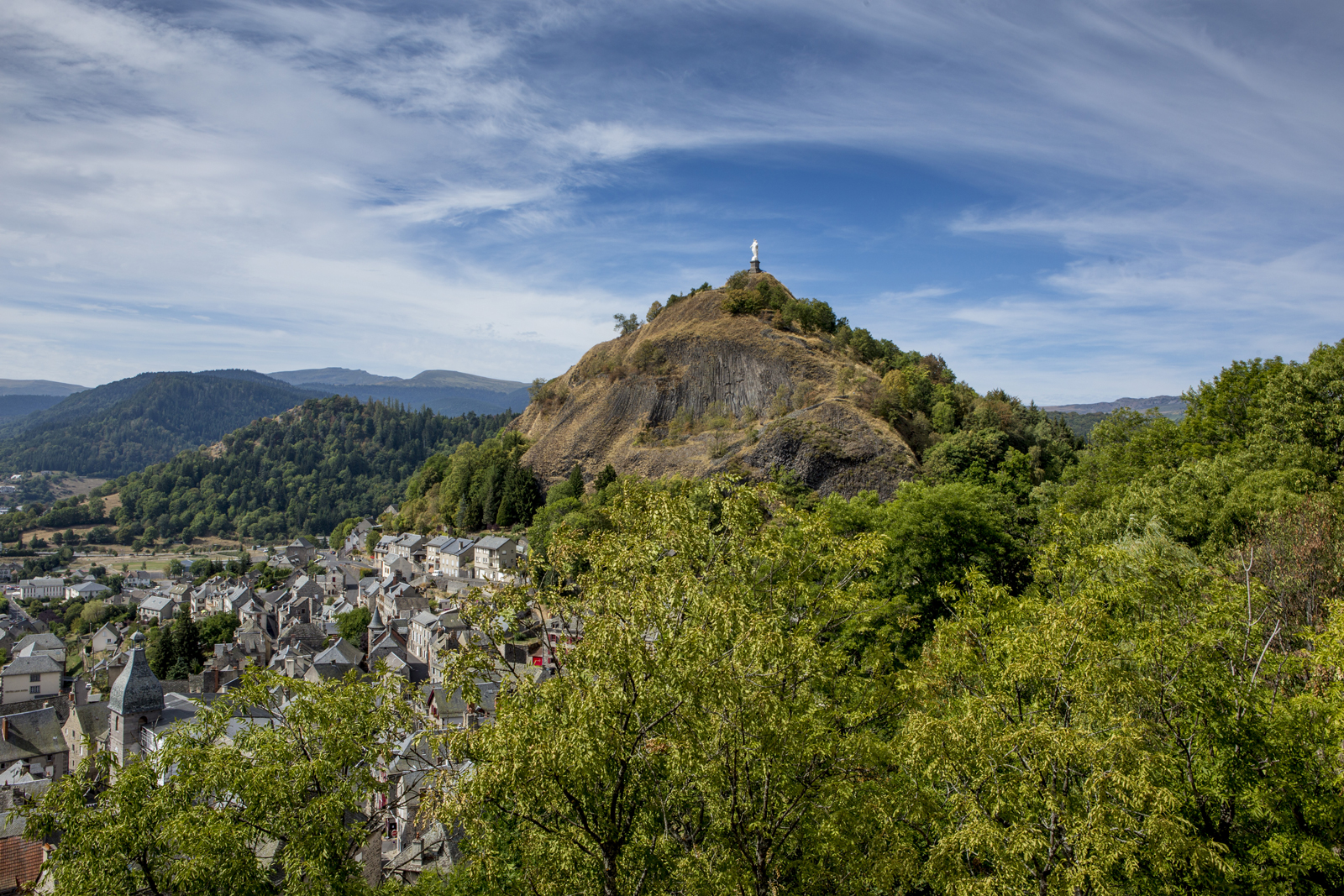
Overlooking the terraced old town, the imposing Rock of Bonnevie has some of the finest basalt organs in Europe. The fortress built on its summit by the Viscounts of Murat was destroyed in 1633. On 18 June 1878, the 8-m high and 13,780 kg cast-iron statue of Our Lady of Consolation (now Our Lady of Haute-Auvergne) was erected. It is a huge representation of a black Madonna and Child, which may have been brought back from the Seventh Crusade by the companions of King Louis IX and venerated ever since.
Memorial to the WWII deportees
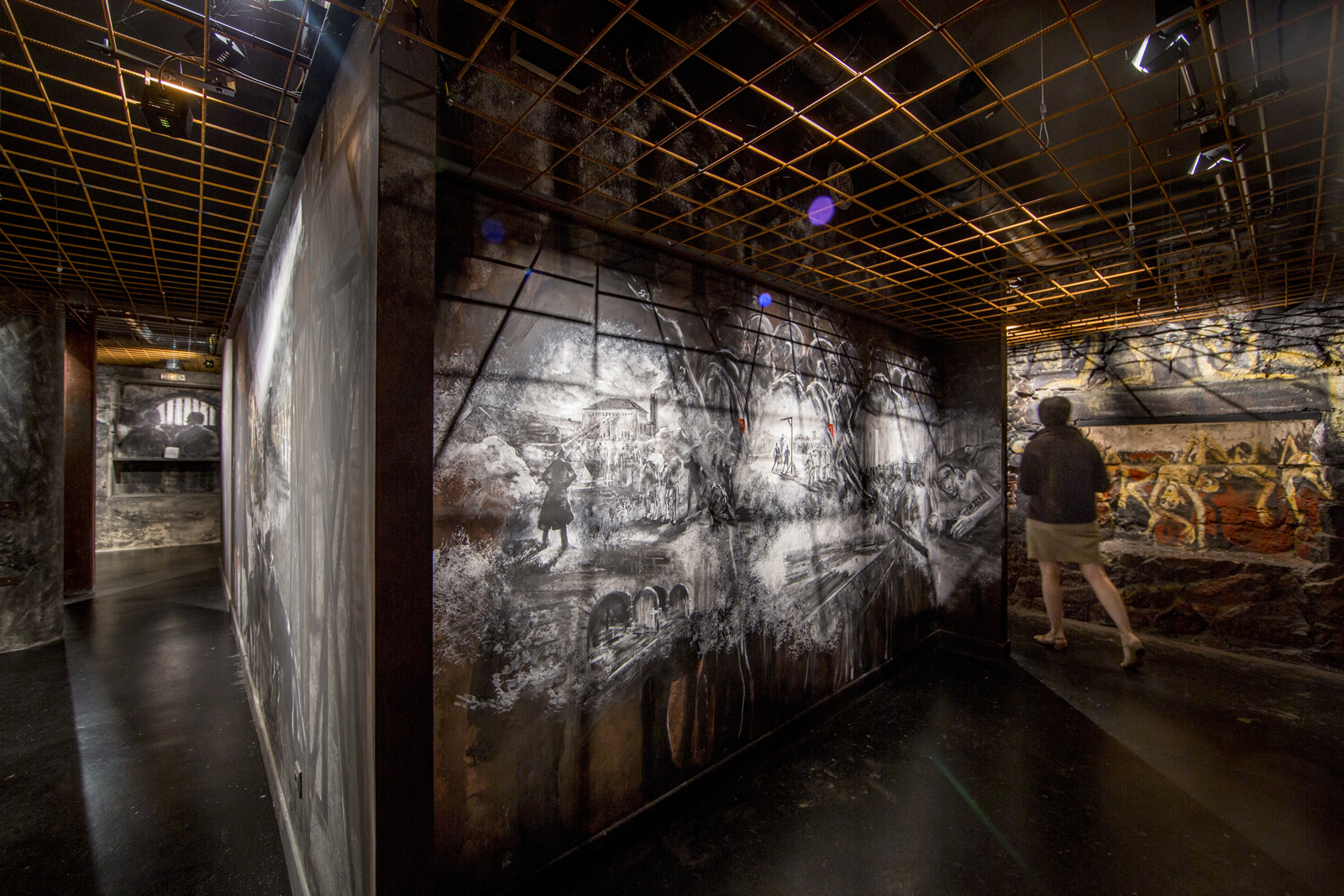
Since the events of June 1944, Murat has become the symbol of World War II deportations from Cantal. On 12 June, German soldiers and militiamen under the command of SS Captain Geissler, head of the German police for Southern France, stormed Murat in order to arrest several Resistance’s leaders. The maquisards (rural guerrilla fighters), who had been warned of this, opened fire from the heights of the town, wounding and killing militiamen and German soldiers on the Place du Balat, including Captain Geissler. In retaliation, the Germans returned in force on 24 June and arrested all the men present. 103 men of military age from Murat were rounded up and taken to Clermont-Ferrand for deportation, most to the Neuengamme concentration camp. 75 of them never returned. Find out more at the memorial dedicated to the Murat Roundup.
So-called Consul’s house
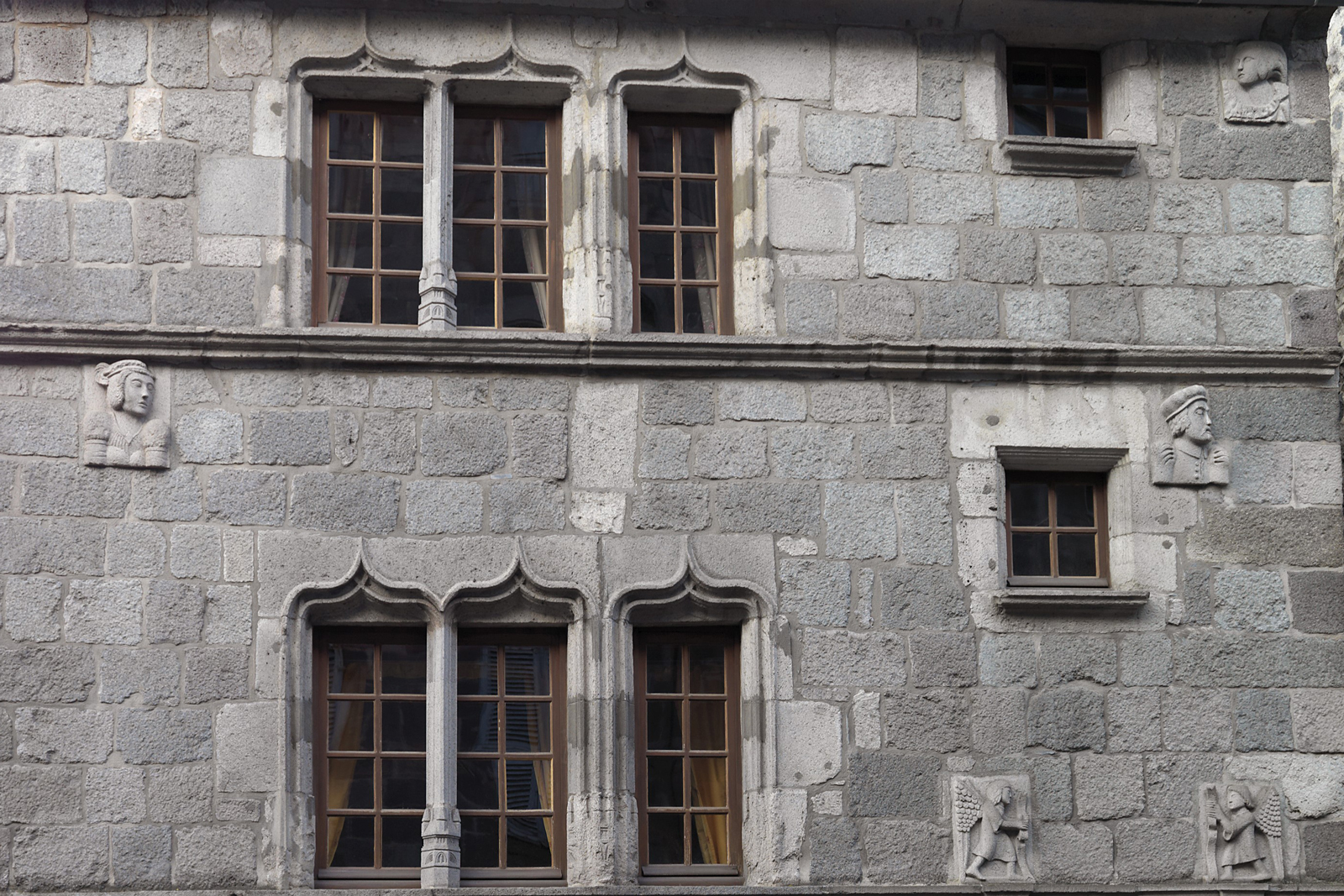
In 1263, Pierre IV, as was customary in Southern France, allowed the people of Murat to elect 3 consuls to administer the town, a privilege that lasted until the 18th century. The Consul’s House, which dates back to the 15th century, is named after the Chabanon family, who lived there for a long time and gave 7 consuls to the town. As a tribute to them, the portraits of the Chabanons were engraved on the façade of their house. Burnt in 1791 because they were considered "a sign of vanity, contrary to freedom and equal rights", they were rediscovered, restored and reinstalled a few years ago. The windows and the entrance door have ogee arches, whereas the large basket-handle arched window bears witness to the commercial past of the house. The building was inscribed as a historical monument in 1927.
Courthouse
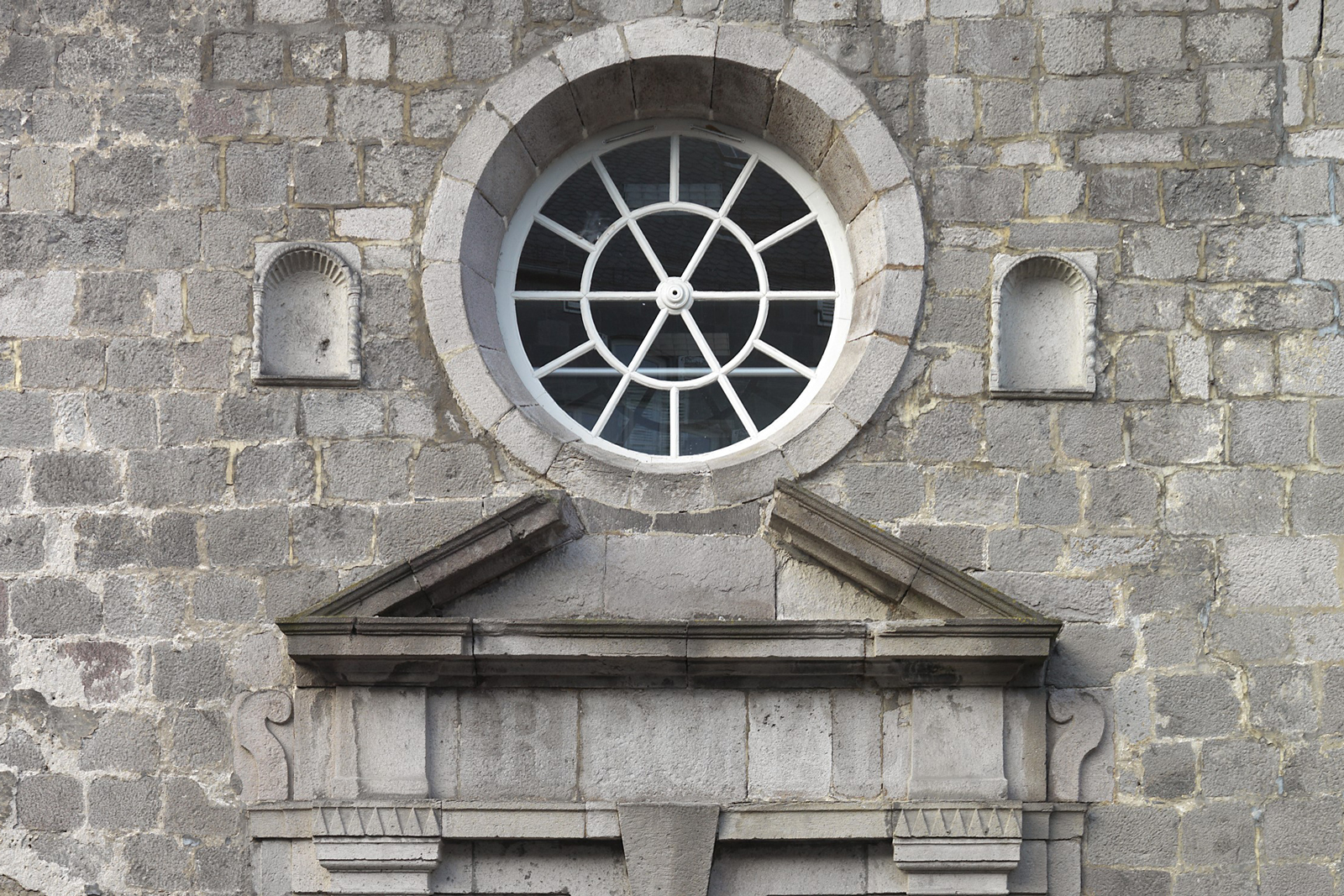
The former convent of the Dominican Sisters of St. Catherine of Siena was rebuilt between 1771 and 1780 after a fire, then converted into a courthouse after the religious properties were confiscated by the State during the French Revolution. Since 1991 it has been inscribed as a historical monument. Above the main doorway, the cornice of the broken pediment has in its apex a gap into which appears to be inserted an oculus framed by two Louis XIII style decorative niches with small slender columns. Under the pediment the still visible inscription 'Tribunal' attests to the house's original function. The building now houses the community's administrative services and a shared workspace located near a fab lab (i.e. a digital fabrication laboratory).
Tower of Bon Secours (or Molinier Tower)
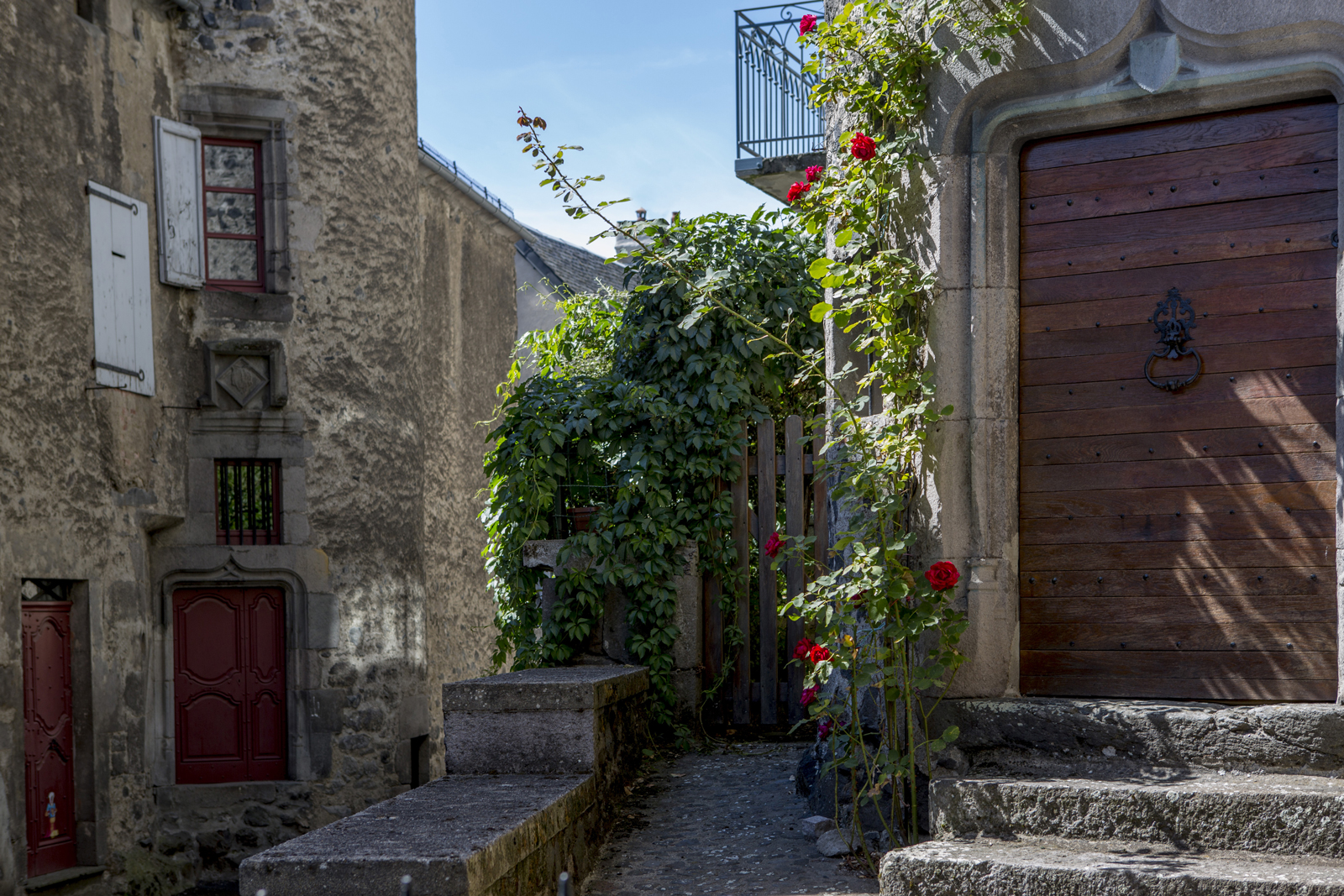
The ‘Tower of Bon Secours’ or ‘Molinier Tower’ (Bon-Secours Street being previously known as Molinier Street) is one of the town’s seven ancient gates built into the ramparts. It was used to separate the town from the faubourg, a poor district that was often prey to fire and the first to suffer from looting.
Béral family’s house
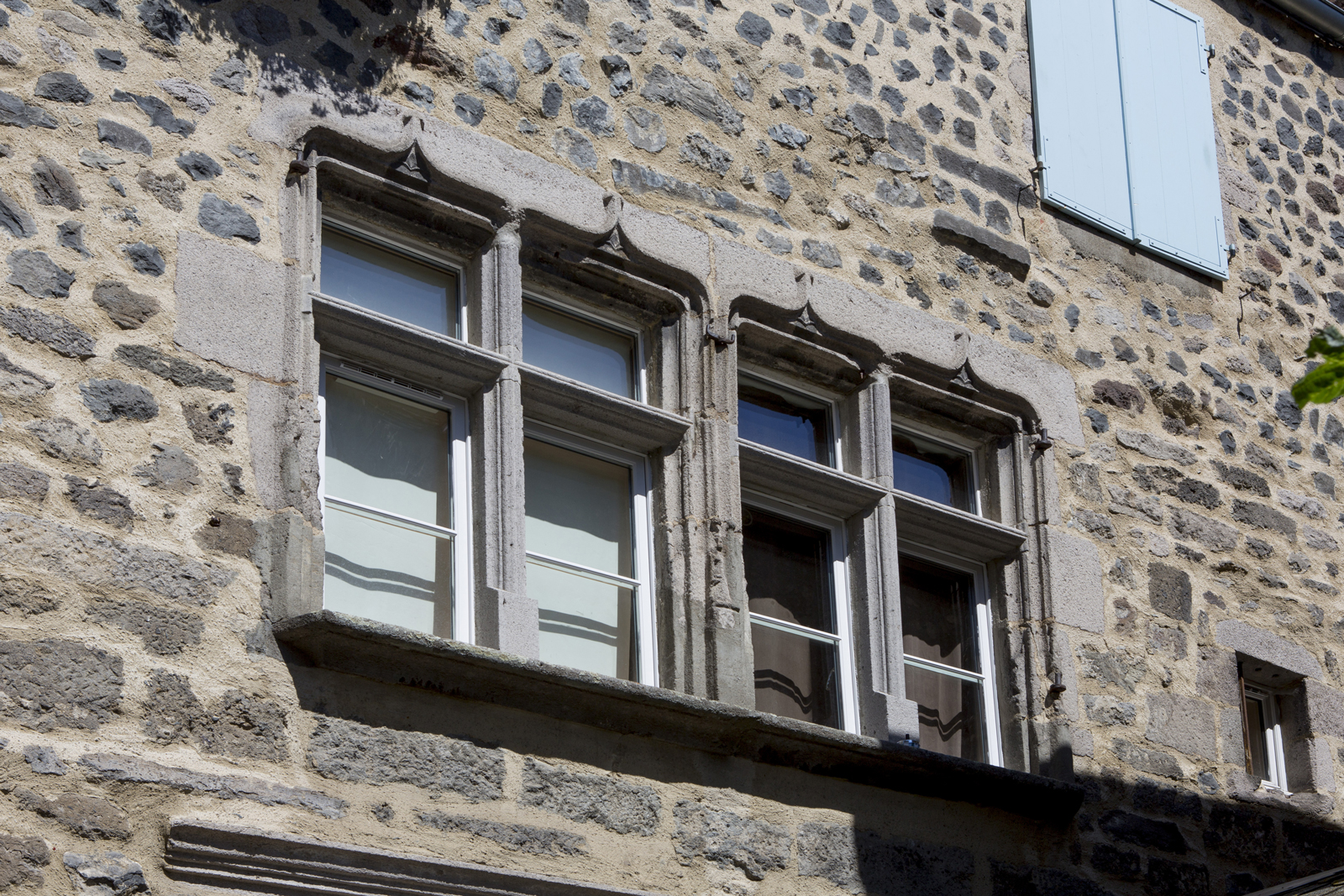
This house once belonged to the Béral family, who gave several great doctors to the kings of France. Pierre de Béral was Henry IV's physician for 32 years before being ennobled by Louis XIII. Anecdotally, he saved Henry IV ‘the Great’ from the gonorrhoea, also commonly known as the clap. Pierre-Hugues de Béral was Louis XIII's physician. On the door lintel, an angel holds a shield, the coat of arms of which has been chiseled off. If you look up, you can see two beautiful mullioned windows placed side by side.
Gaudron family's Jacquemart
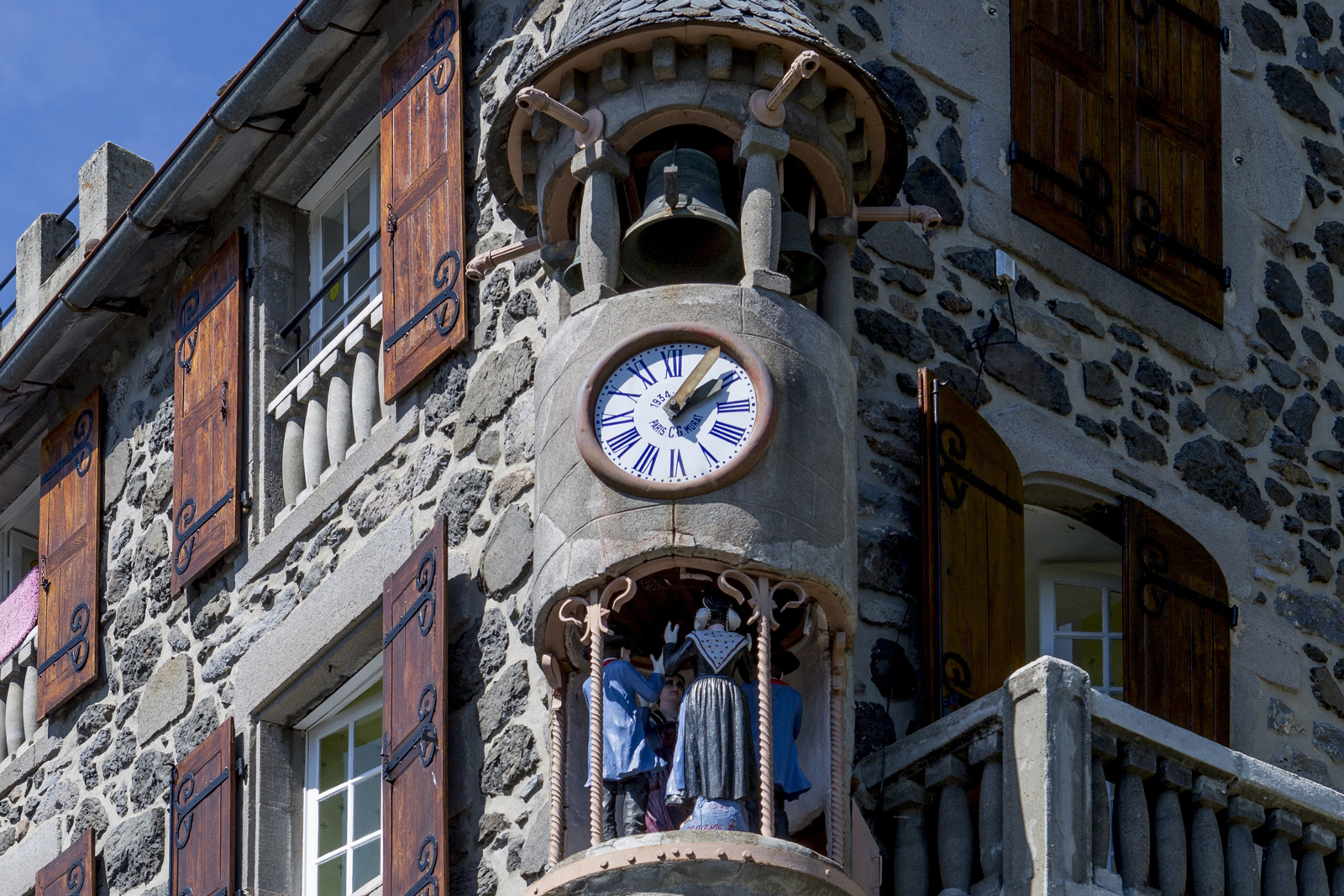
In 1938, Charles Gaudron, a dental surgeon and a clockmaking enthusiast, commissioned this clock jack or jacquemart to immortalise his children dancing the bourrée (an Auvergne traditional dance) in local costume. The four painted wooden figures rotate on a wooden base. Above them are the clock and the bells. The jacquemart takes the form of a corner turret, and on its roof a cockerel rings out the 12 strokes of noon.
St Peter’s Tower

Circular defence tower built on the old city walls (3rd enclosure). Here you can see part of the old ramparts, which have been lowered and altered, especially in the town centre, as part of successive urban development plans.
Renaissance House
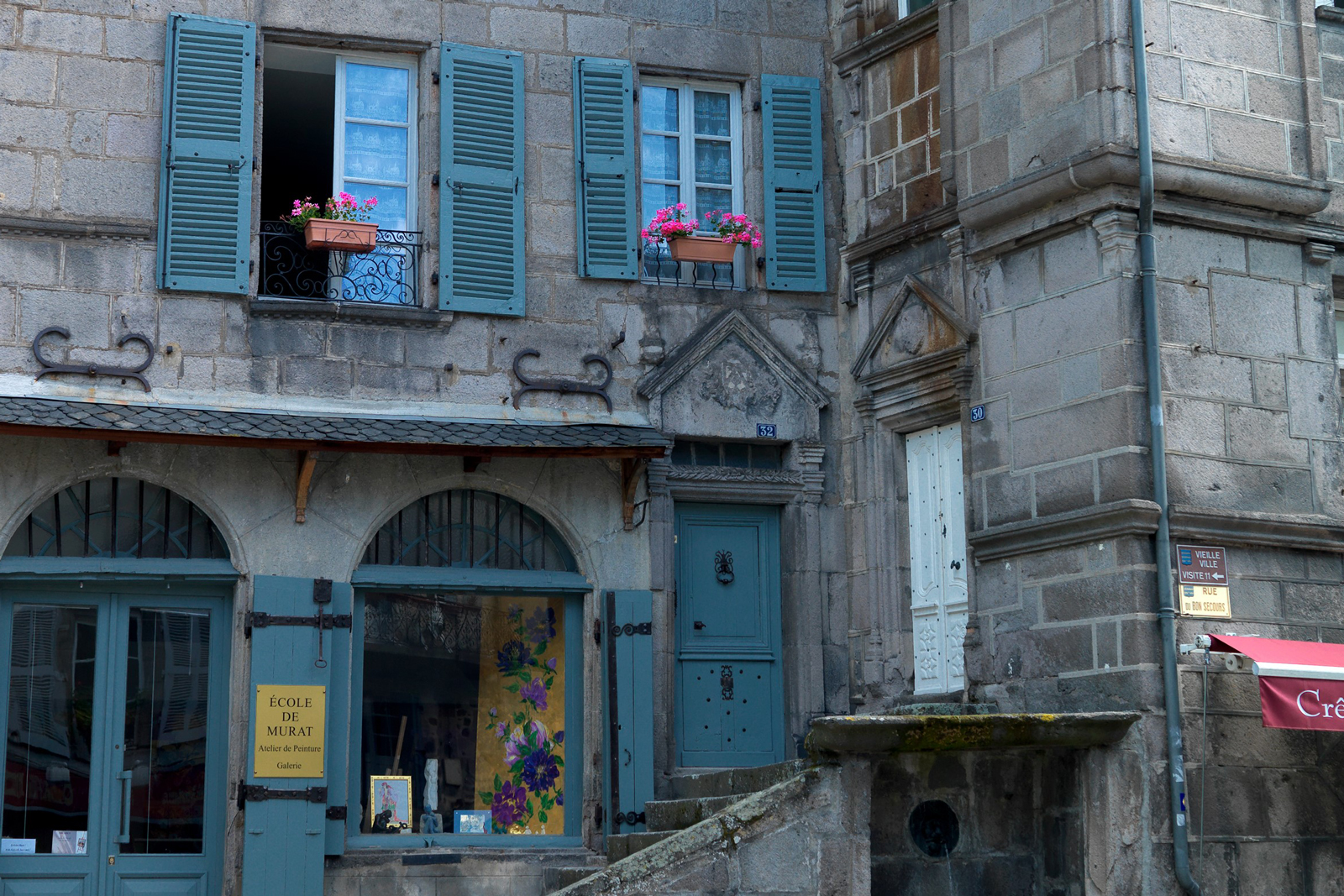
The trachyte-stonework of this Renaissance-style house has allowed the façade to be richly ornamented: moulded stringcourses, corbelled turret, corner turret, pilasters with Tuscan capitals, mullioned windows, modillions with double volutes. The doors feature triangular pediments with coats of arms.
House of the king's physicians
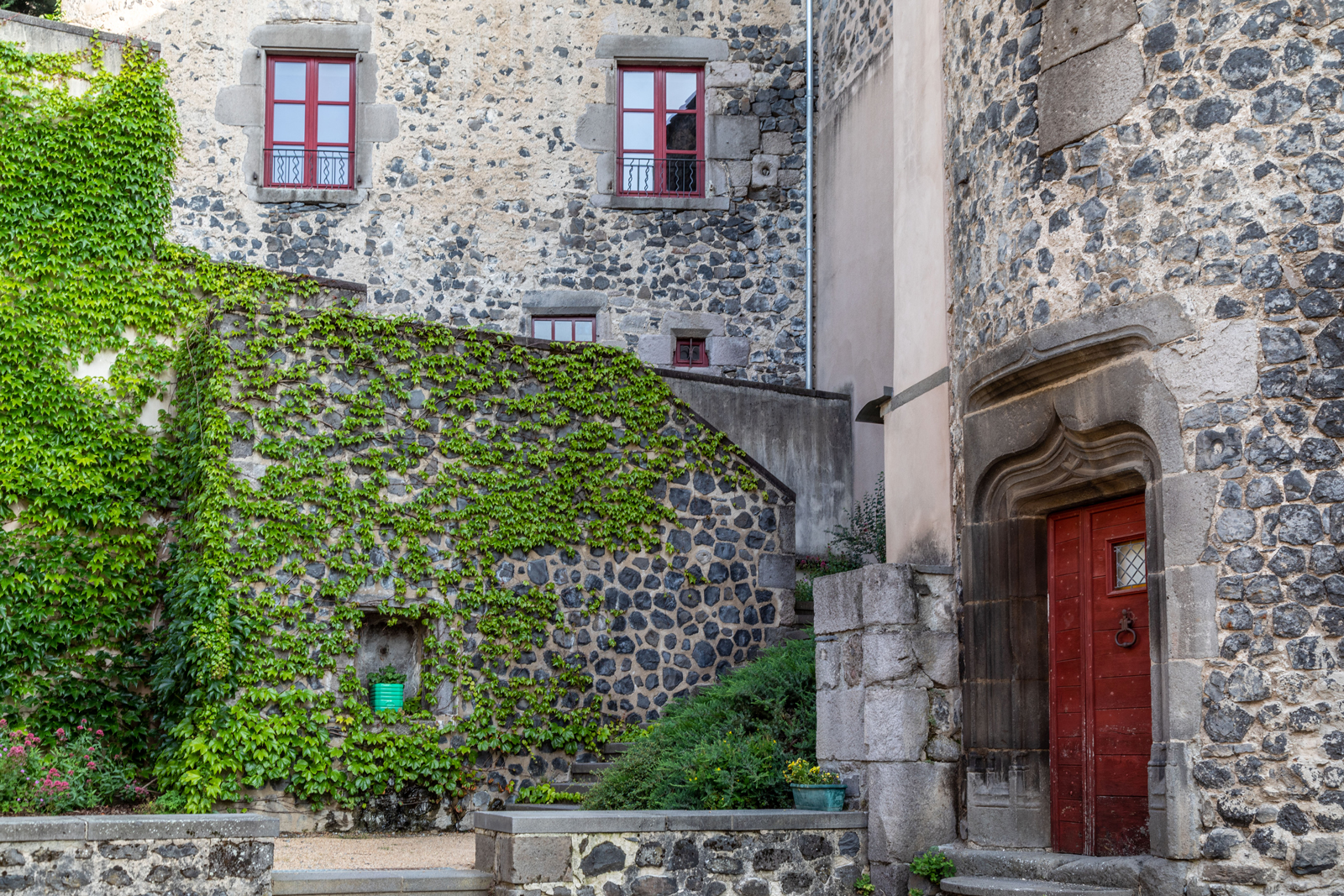
Purchased by the De Traverse family in the 15th century, this manor house evolved into a Renaissance building. It is located at the corner of the Rue de Lavergne and the Rue d’Armagnac, in one of the oldest parts of Murat. Guillaume de Traverse, advisor and physician to King Charles VII, was knighted in 1459. His son, Jean de Traverse, was the physician of King Louis XI. On the ground floor, you can admire a commercial shop with its characteristic stall. Above, a mullioned window decorated with anthropomorphic heads and framed by pinnacles overlooks the Rue de Lavergne. On the left façade, the door of the staircase has a double lintel.
Templar house

The Knights Templar formed a French military order whose original mission was to protect pilgrims on the roads to the Holy Land, which was then plagued by banditry. The order was founded in 1129 and dissolved in 1312. The Templars followed religious rules similar to those of the Benedictines, although the fasts were less severe so as not to weaken these warrior monks who were called upon to fight. A Templar coat of arms, the eight-pointed cross pattée, is still visible above the door.
Philippe Marcombes’ birthplace
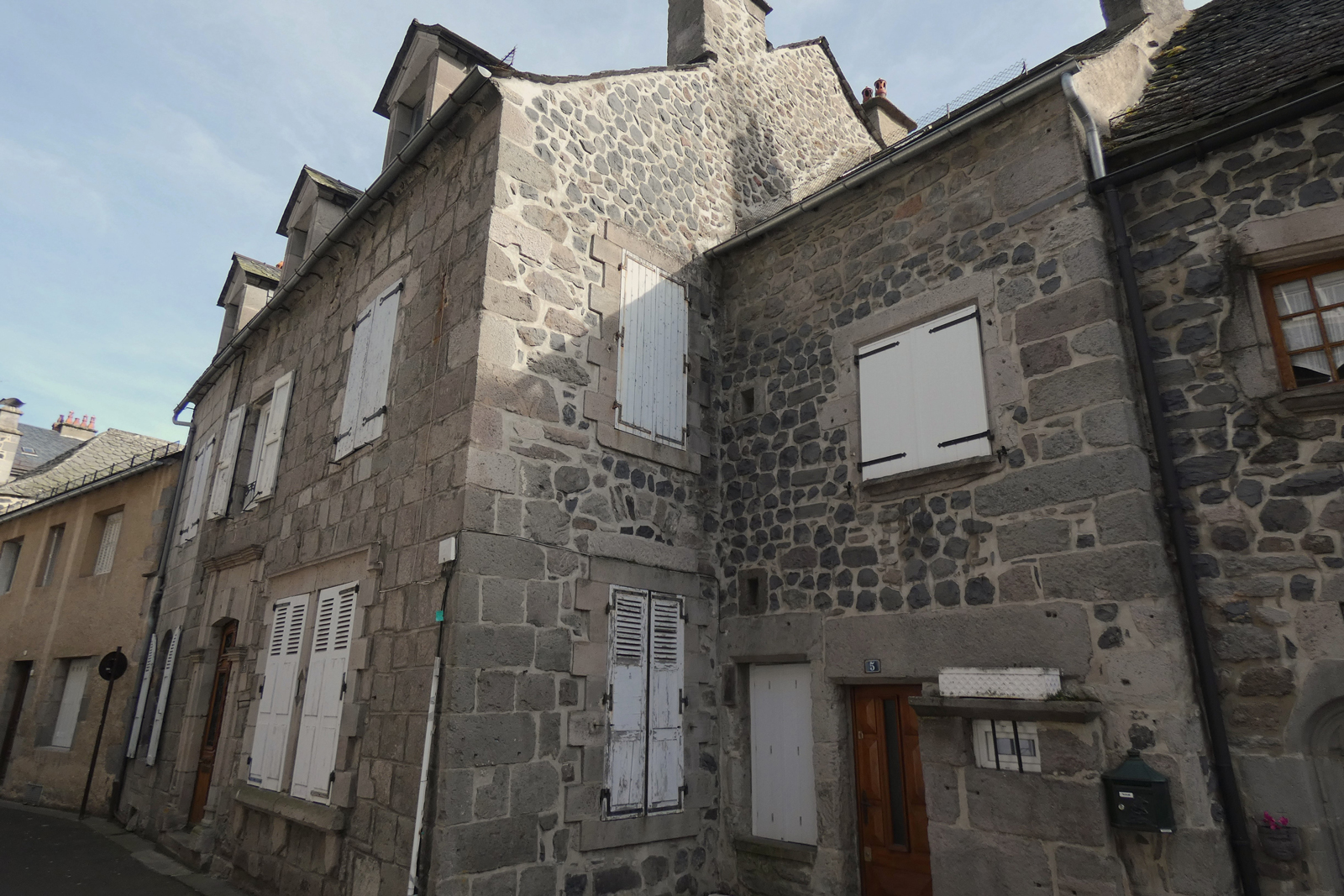
Born in 1877, Philippe Marcombes was a military doctor and later a civilian doctor in Clermont-Ferrand. He distinguished himself on the front during the First World War, where he was awarded the Legion of Honour, the Croix de Guerre and the US Army’s Distinguished Service Cross. Mayor of Clermont-Ferrand in 1919, Member of Parliament in 1923, Minister of National Education in 1935, he died of a heart attack at the Élysée Palace on 13 June 1935. He was buried in Murat.
Market hall
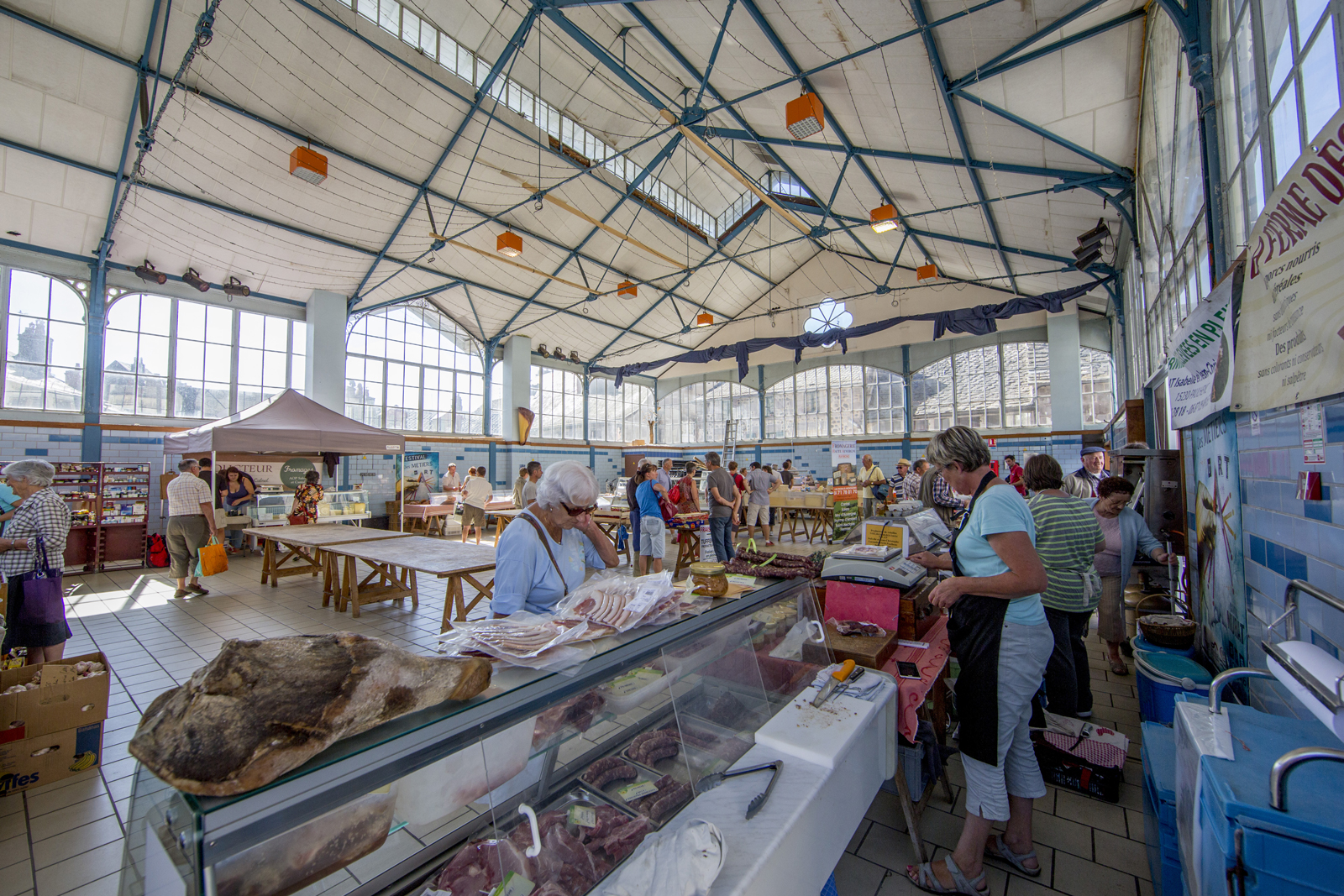
A fine example of Baltard-style steel-framed construction, the hall was completed in 1891, restored in 1988 and then registered in the supplementary inventory of historical monuments in 1991. In this steel-framed construction, space was optimised and a cast-iron column replaced a wall to provide more space for the shops. Iron was a key element, providing fire resistance and allowing the creation of superb large bay windows, which were unheard-of at that time. The so-called cheese docks were located on the ground floor.
Church of Our Lady of the olive trees
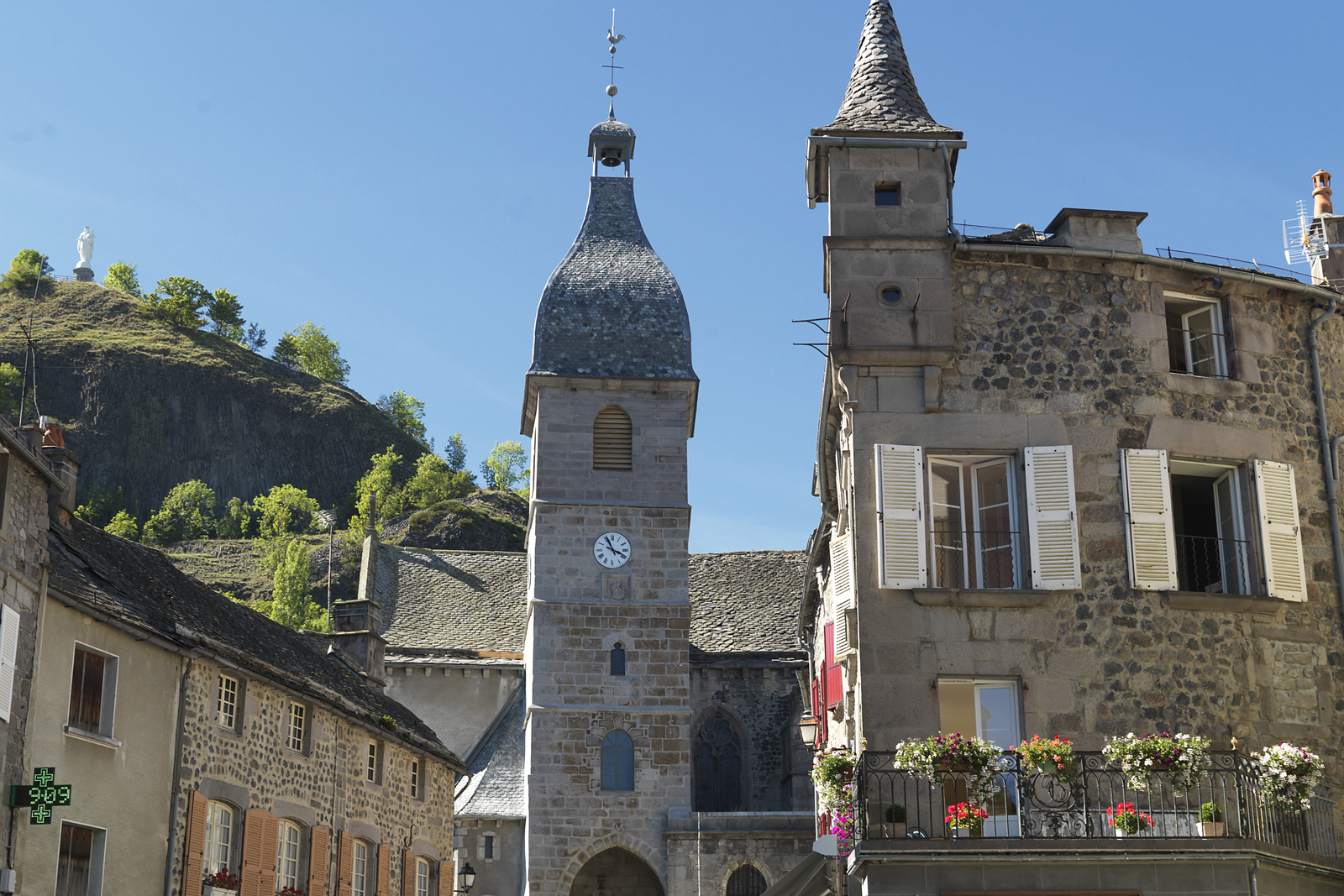
The oldest church in Murat, which no longer exists, was St Martin’s Church, built in the 9th century. Given in 1074 to the Bredons Priory, which belonged to the Cluniac Moissac Abbey, this led to an open rebellion by the people of Murat, supported by the bishop of Saint-Flour. In 1350, the bishop founded a congregation of priests and in 1380 he obtained permission to build a church (the present collegiate church). Destroyed by lightning in 1493, it was rebuilt, extended with chapels, and consecrated by order of Anne of France, King Louis XI’s daughter, Duke Peter of Bourbon’s wife and Viscountess of Murat. In 1732, after 700 years of submission to the Bredons Priory, the parish finally gained its independence. During the French Revolution, the collegiate church became a Temple of Reason. It was listed as a historical monument in 1991.
Architectural features of the collegiate church
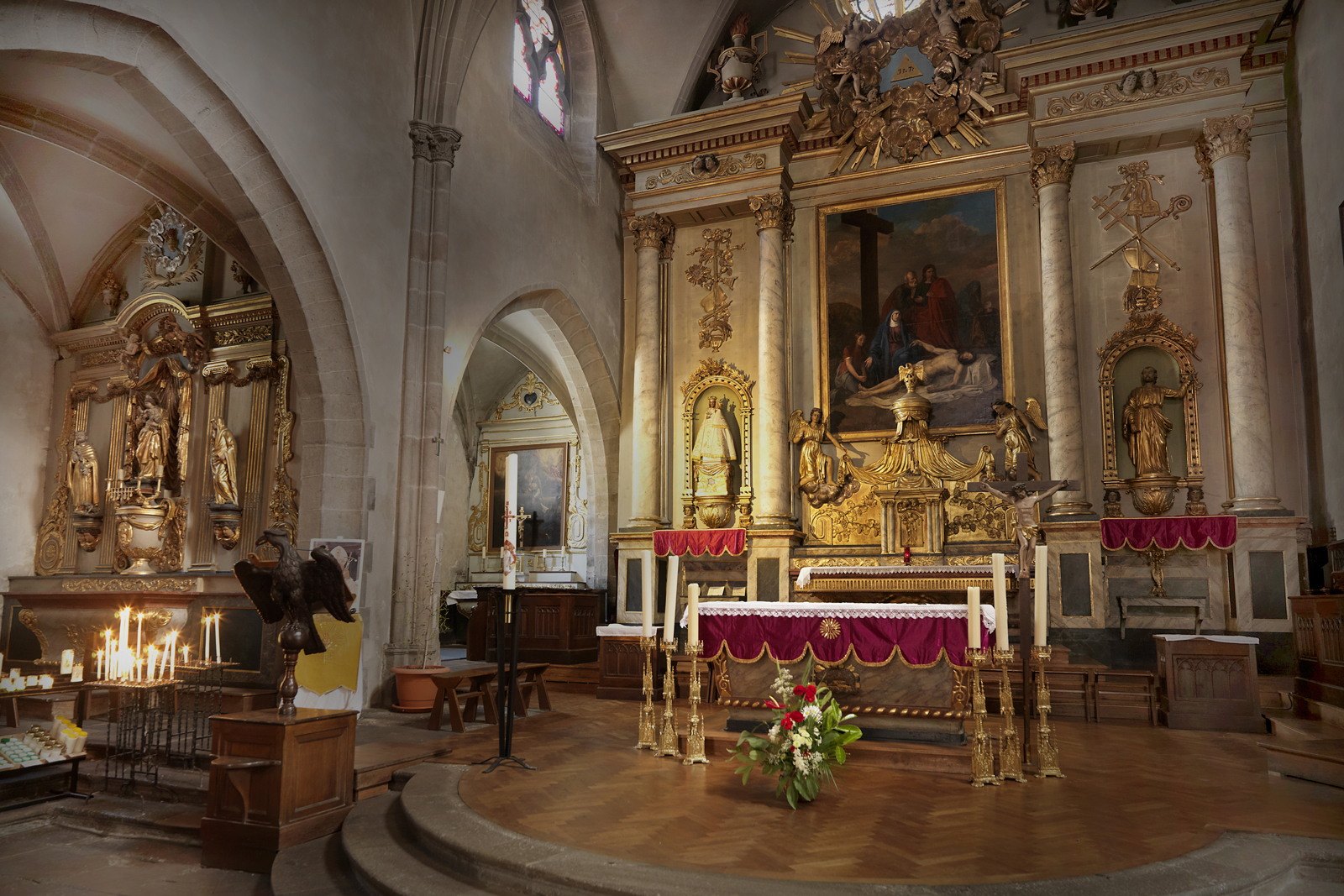
In 1926, the houses backing onto the church were demolished, revealing a corbelled turret on the gable of a side chapel, to the left of the south portal. Strangely enough for this region, the collegiate church is topped by an onion dome dating from 1842. After the restoration of the bell tower in 2011, the entire phonolite roof was renewed between 2016 and 2019. The Church of Our Lady of the Olive Trees also houses a rich collection of furnishings, including a high altar, a polychrome reredos… and a statue of the Virgin Mary, which has been worshipped for centuries. It is said to have been brought back from the Crusade of Louis IX, to have survived the fire of 1493 and to have since protected the town from lightning and its inhabitants from various diseases. Stolen in 1983, the present copy is still adorned by the faithful.
So-called Bailiff’s House
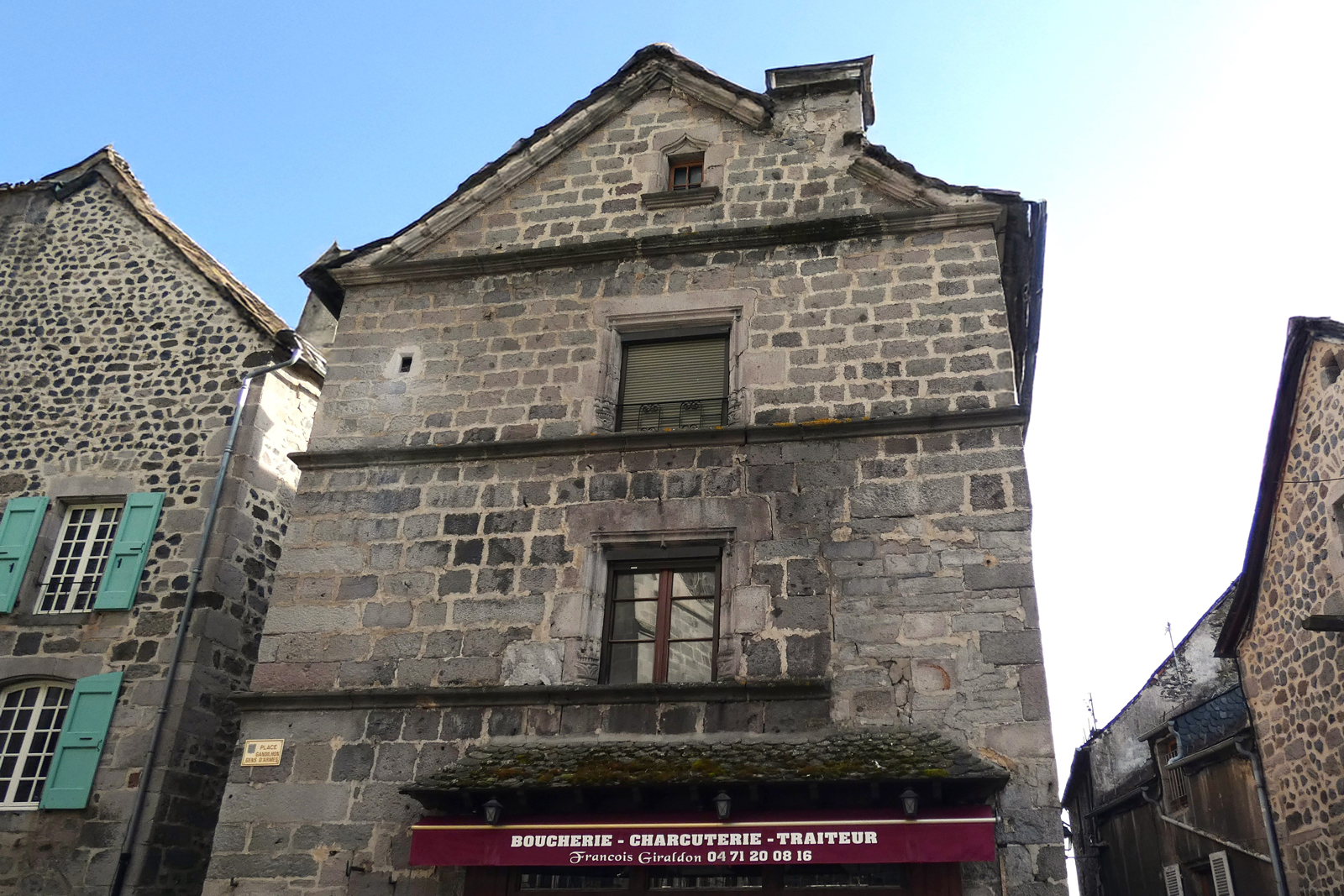
In the 16th century, the bailiwick was the territory where the bailiff of Auvergne administered justice on behalf of the King of France. One of his powers was to try criminal cases at first instance. Registered in 1985 in the supplementary inventory of historical monuments, the house has four floors highlighted by projecting cornices. The windows have moulded frames and finely chiseled jambs. A beautiful carved door with a hammered central motif opens onto the adjacent Rue de l’Argenterie, the so-called ‘Silverware Street’ being once the former goldsmiths' street specialising in amethyst cutting.
Maison de la Faune
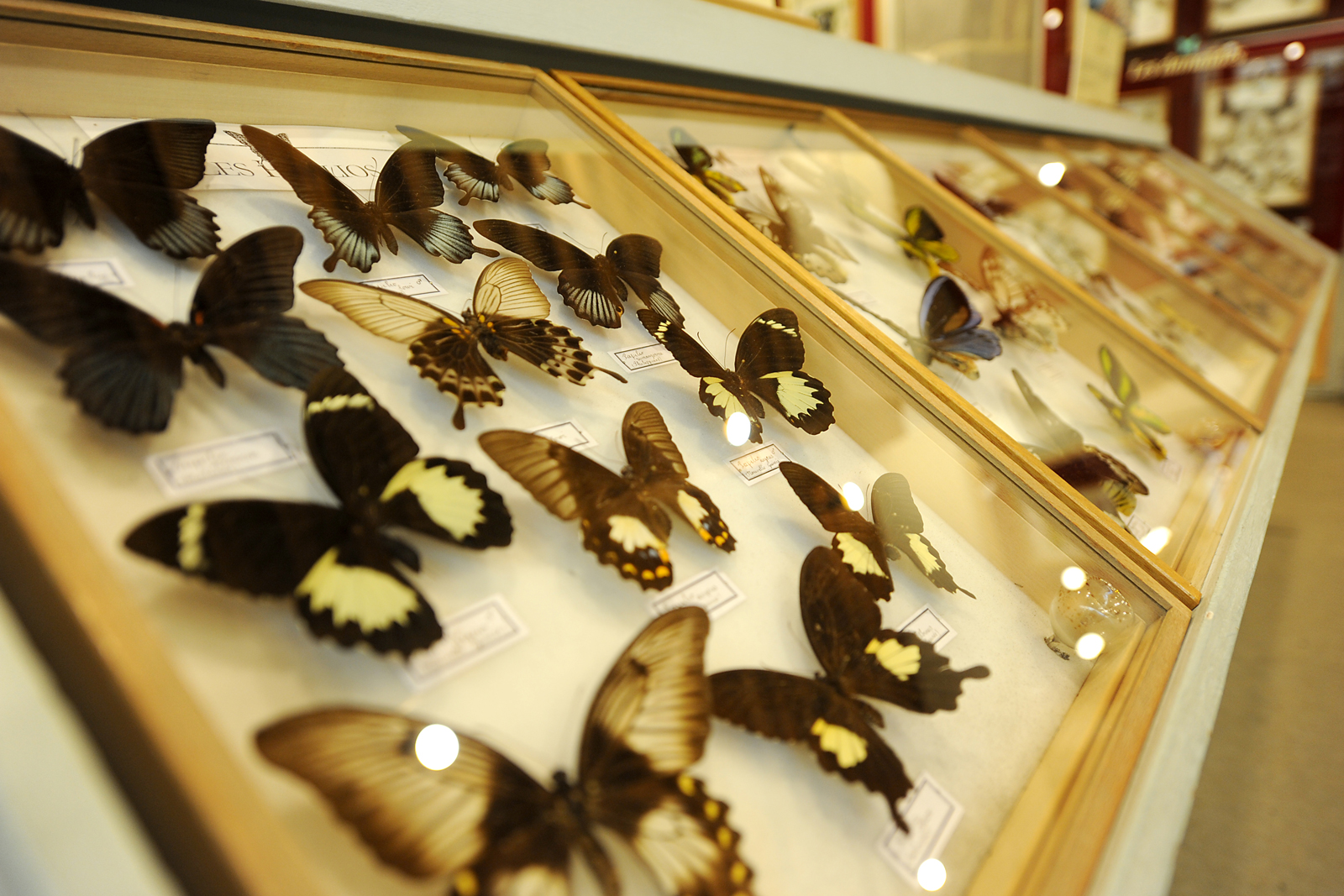
The Wildlife Museum is a former 16th century mansion belonging to the Teilhard de Laterrisse family. Sold to the departmental council in 1827, it then became the subprefecture building for the arrondissement of Murat. Since then, 61 subprefects have succeeded one another within these walls until this arrondissement was abolished in 1926. The building is a historical architectural landmark in the heart of Murat, with a façade with a corbelled tower, parquet flooring, a 15th century painted ceiling, French wooden ceilings, a spiral staircase, with parts of the framing made from single pieces of curved wood. The Maison de la Faune houses and displays a collection of 8,000 French beetles (including some extremely rare specimens) and 800 naturalised mammals and birds, presented in their reconstituted biotope. It was completely modernised in 2020-2021.
Cornets de Murat
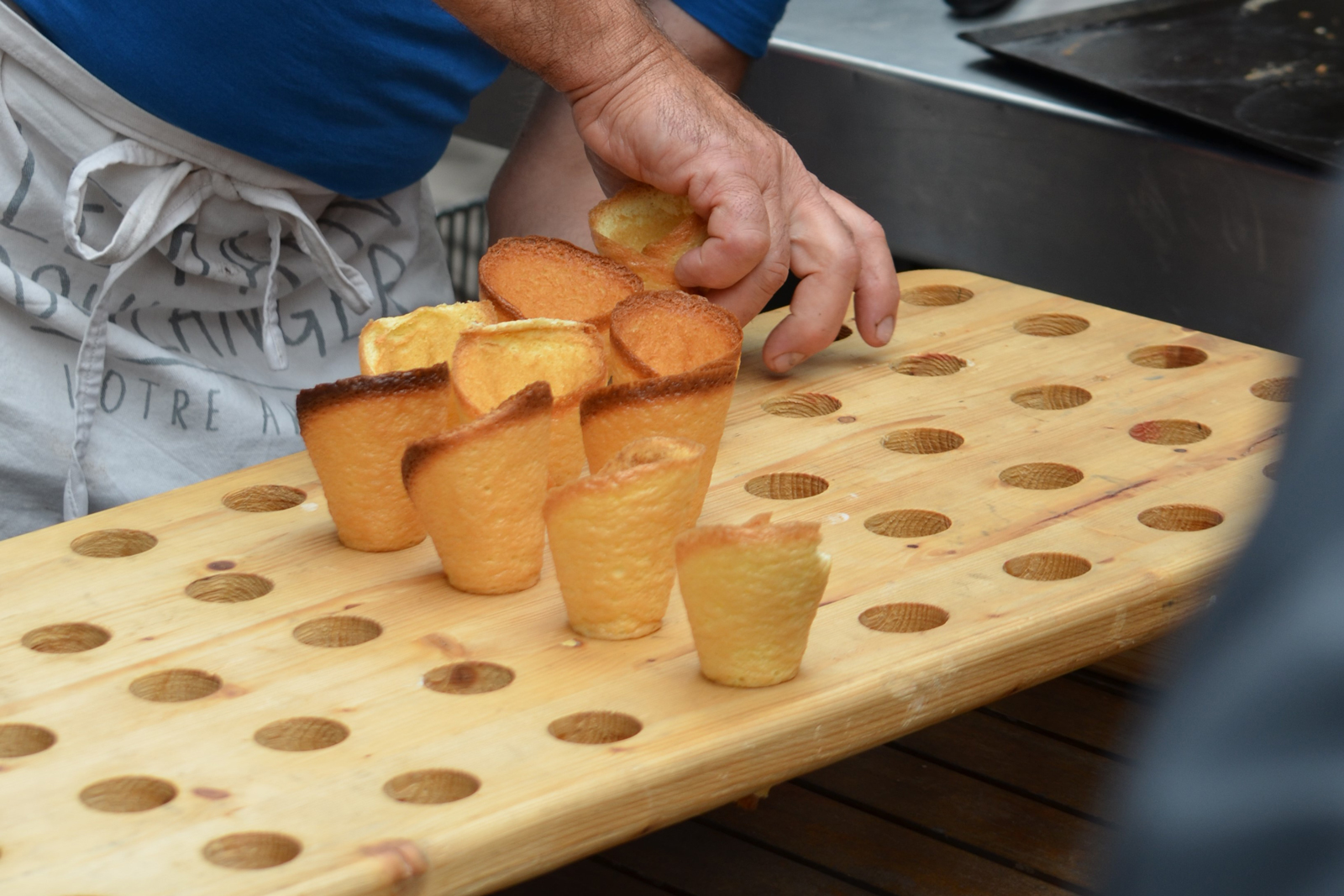
The cornet, a small hot-rolled dry cake in the shape of a Salers cow horn, is a specialty of the pastry-makers and bakers of Murat and has become an essential dessert in Cantal. The tradition dates back to the 19th century, when grandmothers used to slip these conical biscuits into the lunch bags that the young cowherds slung over their shoulder as they went off to tend their flocks in the Mounts of Cantal. This emblematic delicacy is celebrated every year in September during the Fête du Cornet de Murat, a festive and tasty event with tastings and street performances in the setting of the medieval town.
Volcanic character
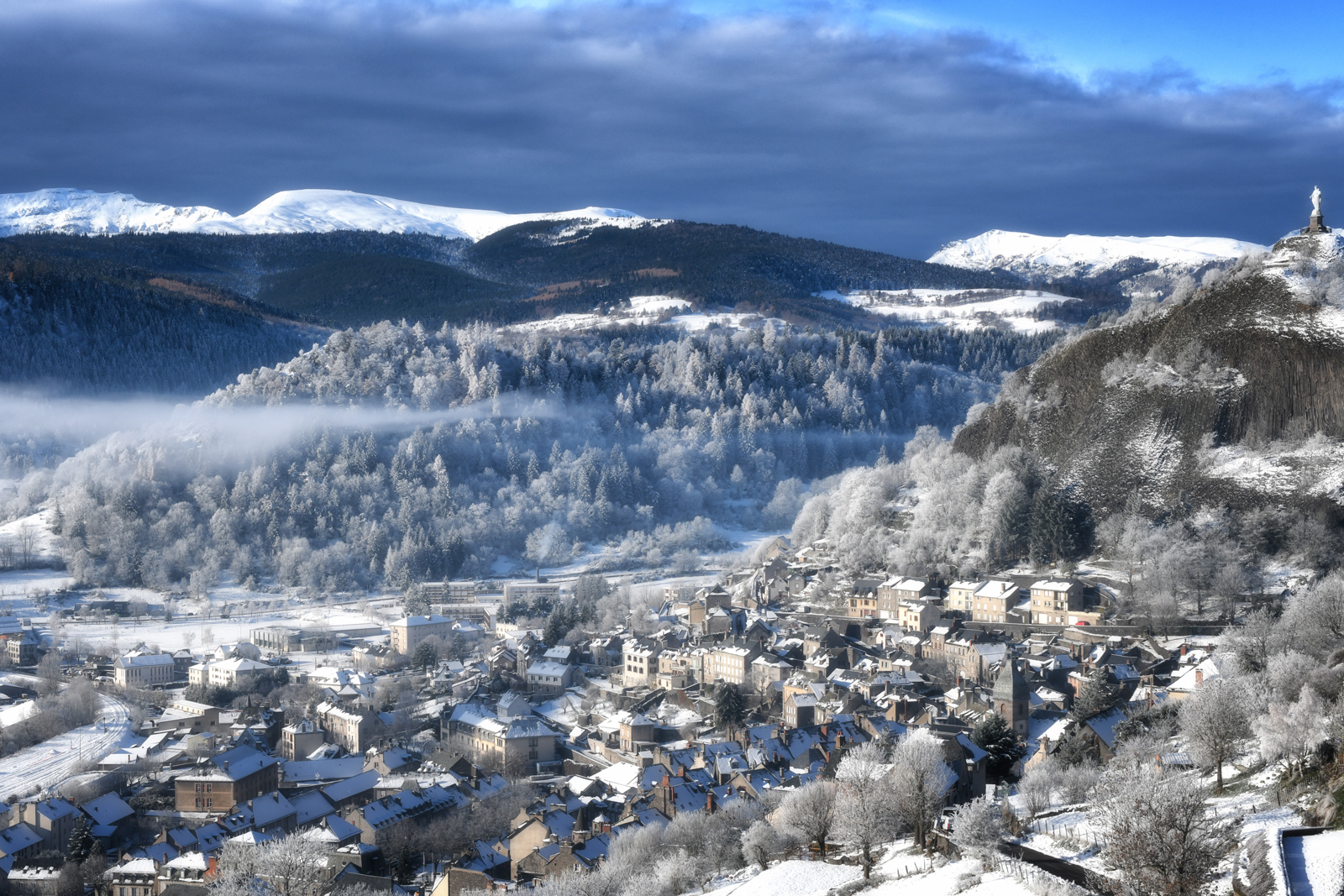
The town has a unique relationship with volcanism, which has shaped its landscape and architecture. At the heart of the Volcanoes of Auvergne Regional Nature Park, and not far from Mount Puy Mary, Murat is simply inseparable from its natural environment. The Mounts of Cantal, the largest volcano in Europe with a diameter of 70 km, provides Murat with a wealth of building materials: basalt, trachyte and phonolite. The volcano also provides diatomaceous earth, nicknamed ‘Murat's white gold’, a microscopic algae in fossil form used as a filtration agent for the food industry.
Crossroads of hiking paths
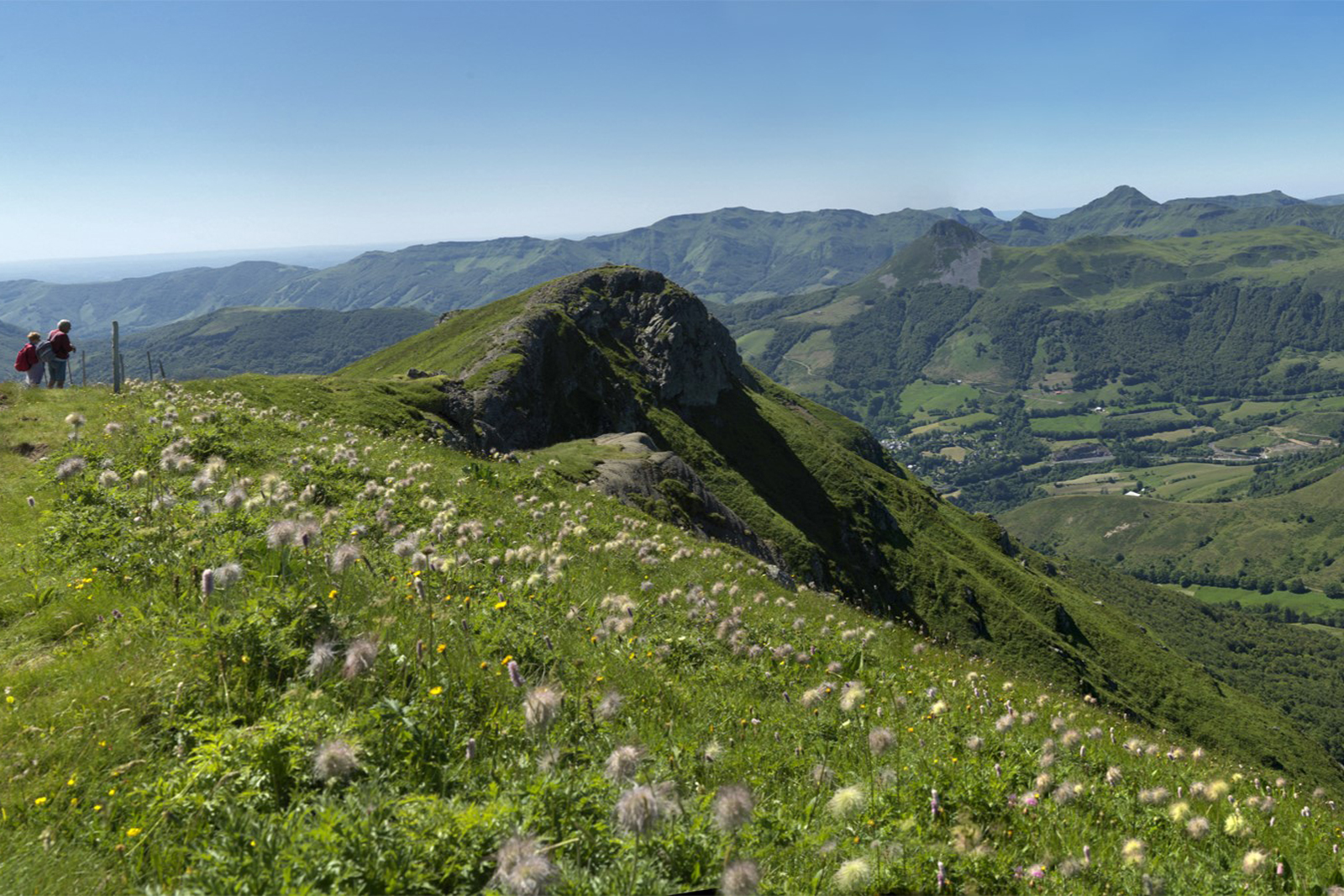
Lying at the crossroads of three long-distance footpaths, Murat promises unforgettable journeys. The legendary GR®400 crosses the Mounts of Cantal and offers breathtaking scenery. The GR®465 is a Cluniac trail linking the Petites Cités de Caractère® of Murat and Montsalvy with the Via Podiensis in Conques. The Via Arverna is another Way of St. James, crossing Auvergne and Quercy. With its railway station, Murat is an ideal starting point for all these itineraries, allowing visitors to discover the region's built, culinary and natural heritage.
Rock of Chastel-sur-Murat
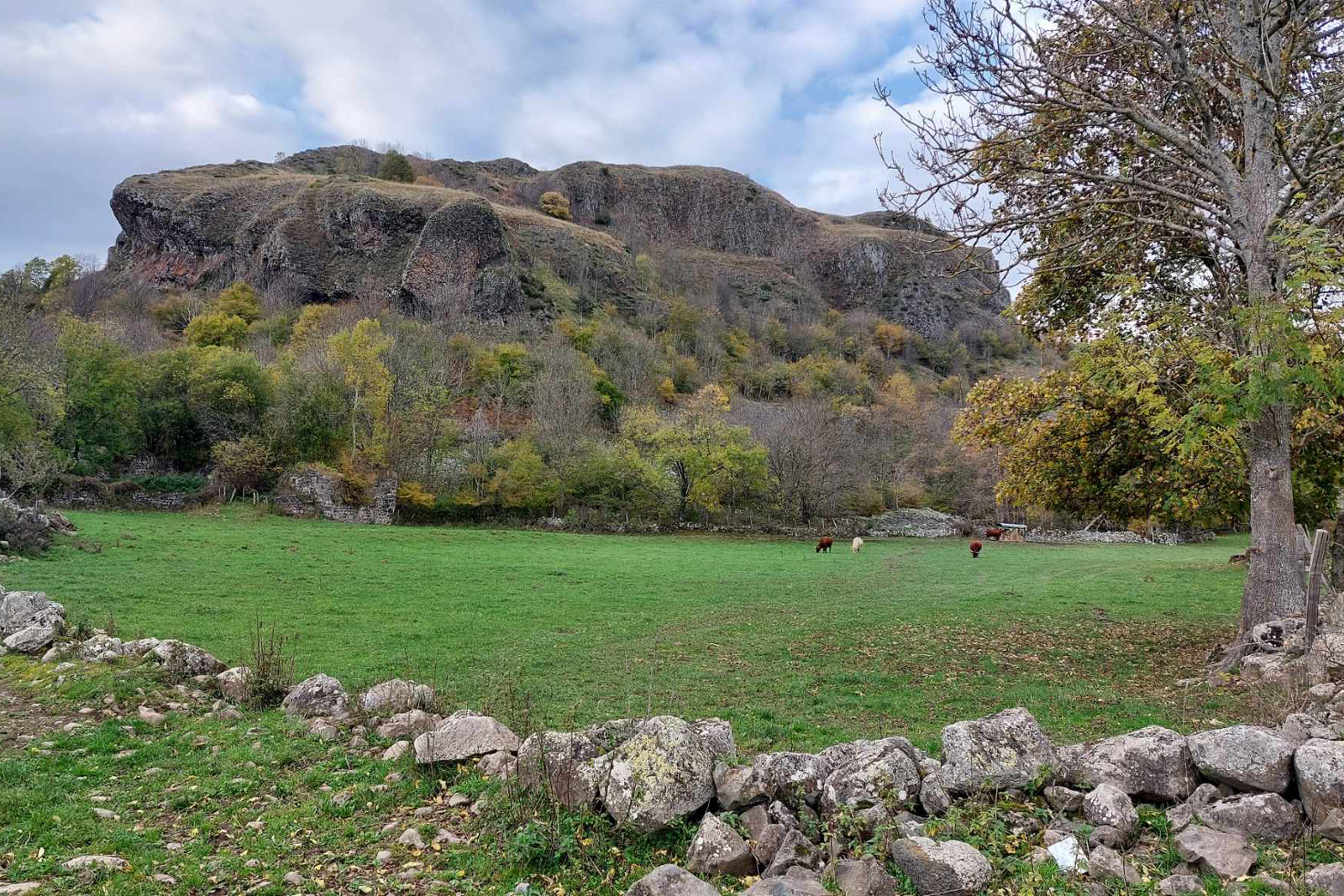
Murat is located on the perfect diagonal of its 3 basalt rocks, Bredons, Bonnevie and Chastel-sur-Murat, ancient volcanic chimneys that bear witness to the power of the eruptions that shaped the region. The St. Anthony Chapel, listed as a historical monument, stands on the Rock of Chastel, at an altitude of 1193 metres. Built in the 11th century in the Romanesque style, it is characterised by its typical bell-gable: the wall has openings to house the bells.The chapel interior features colourful frescoes from the 14th and 15th centuries depicting biblical scenes and saints. An ideal place for contemplation, the chapel provides a panoramic view of the Mounts of Cantal.
Brujaleine Bog
Located in the wild landscape of the Chastel-sur-Murat Plateau, Brujaleine is part of a network of four peat bogs designated as a Natura 2000 site, forming an Environmentally Sensitive Area. A bog is a wetland that accumulates dead organic matter, peat, formed by the incomplete decomposition of plants in water. The area has a remarkable biodiversity: insects, amphibians, dragonflies and birds, all find refuge there. There is also a specific flora that has adapted to the extreme living conditions created by the acidic, nutrient- and oxygen-poor soil: sphagnum moss, carnivorous plants such as Drosera, mosses and lichens... The Brujaleine bog is part of Murat's intangible heritage, a unique and precious ecosystem that plays a crucial role in the environment.
Murat Fablab
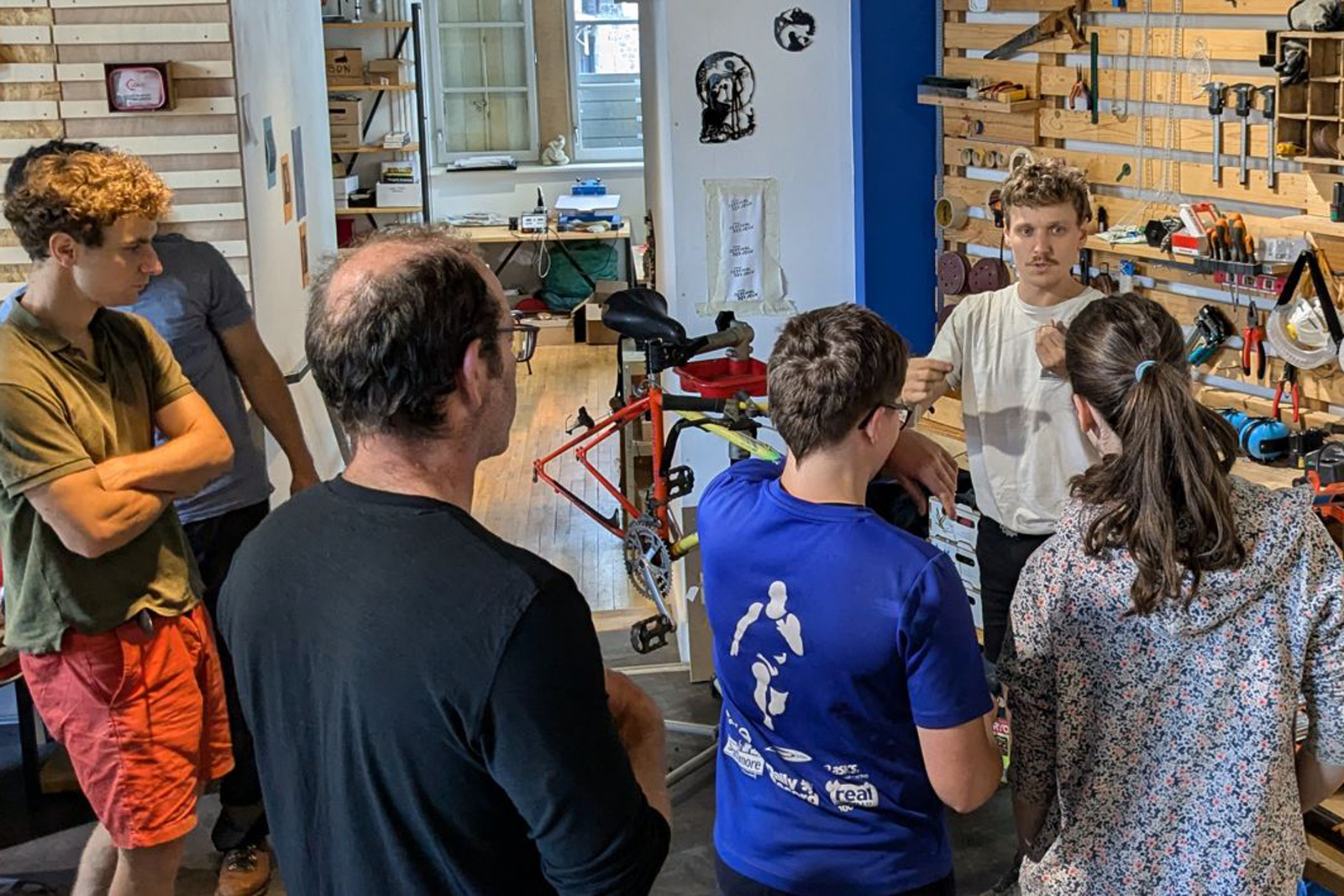
Housed in part of the 19th century premises of the town hall, the FabLab is a digital manufacturing laboratory, as its name suggests: ‘fab’ for ‘fabrication', ‘Lab’ for ‘laboratory’. Also known as ‘La Cocotte Numérique’, this space for meeting and collective creation provides access to manufacturing tools that are not usually available: laser cutter, 3D printers, vinyl cutter, CNC milling machines... Guided by a Fab manager, everyone can repair, imagine and create unique objects, prototypes, personalized gifts…

Mentions légales
Ce projet de carte interactive est porté par les associations Petites Cités de Caractère® de France, Petites Cités de Caractère® en Auvergne Rhône Alpes, Petites Cités de Caractère® du Cantal et par la commune de Murat.
Il est soutenu financièrement par l'Appel à Manifestation d'Intérêt "Destinations Digitales" du plan "Destination France" piloté par Atout France, par la convention FNADT du Commissariat Massif Central, par l'appel à projet "patrimoine et numérique" de la Région Auvergne Rhône-Alpes, et par la Fondation d’Entreprises du Crédit Agricole Centre France.
Le plan de la commune (visuel de fond) a été réalisé par Laura Catheline - atelier passage.
Les traductions en anglais ont été réalisées par l'Office de tourisme de la Châtaigneraie Cantalienne.
Les voix ont été produites et enregistrées par Hélène Poussin - Compagnie « les pieds bleus » (version française), Nico production (version anglaise).
Les photos ont été produites et réalisées par Pierre Soissons, Patrick Forget, Gilles Chabrier, Mairie de Murat, Petites Cités de Caractère®.
Les vidéos ont été produites et réalisées par Petites Cités de Caractère®, Hautes Terres Tourisme.
Conception et développement de la carte interactive par Tabula Rasa.

Mentions légales
Ce projet de carte interactive est porté par les associations Petites Cités de Caractère® de France, Petites Cités de Caractère® en Auvergne Rhône Alpes, Petites Cités de Caractère® du Cantal et par la commune de Murat.
Il est soutenu financièrement par l'Appel à Manifestation d'Intérêt "Destinations Digitales" du plan "Destination France" piloté par Atout France, par la convention FNADT du Commissariat Massif Central, par l'appel à projet "patrimoine et numérique" de la Région Auvergne Rhône-Alpes, et par la Fondation d’Entreprises du Crédit Agricole Centre France.
Le plan de la commune (visuel de fond) a été réalisé par Laura Catheline - atelier passage.
Les traductions en anglais ont été réalisées par l'Office de tourisme de la Châtaigneraie Cantalienne.
Les voix ont été produites et enregistrées par Hélène Poussin - Compagnie « les pieds bleus » (version française), Nico production (version anglaise).
Les photos ont été produites et réalisées par Pierre Soissons, Patrick Forget, Gilles Chabrier, Mairie de Murat, Petites Cités de Caractère®.
Les vidéos ont été produites et réalisées par Petites Cités de Caractère®, Hautes Terres Tourisme.
Conception et développement de la carte interactive par Tabula Rasa.